What happens when a 2-second reward outlives a 9-day refund
When a two-second purchase reward meets a nine-day refund process, the mismatch quietly reshapes how people behave around money
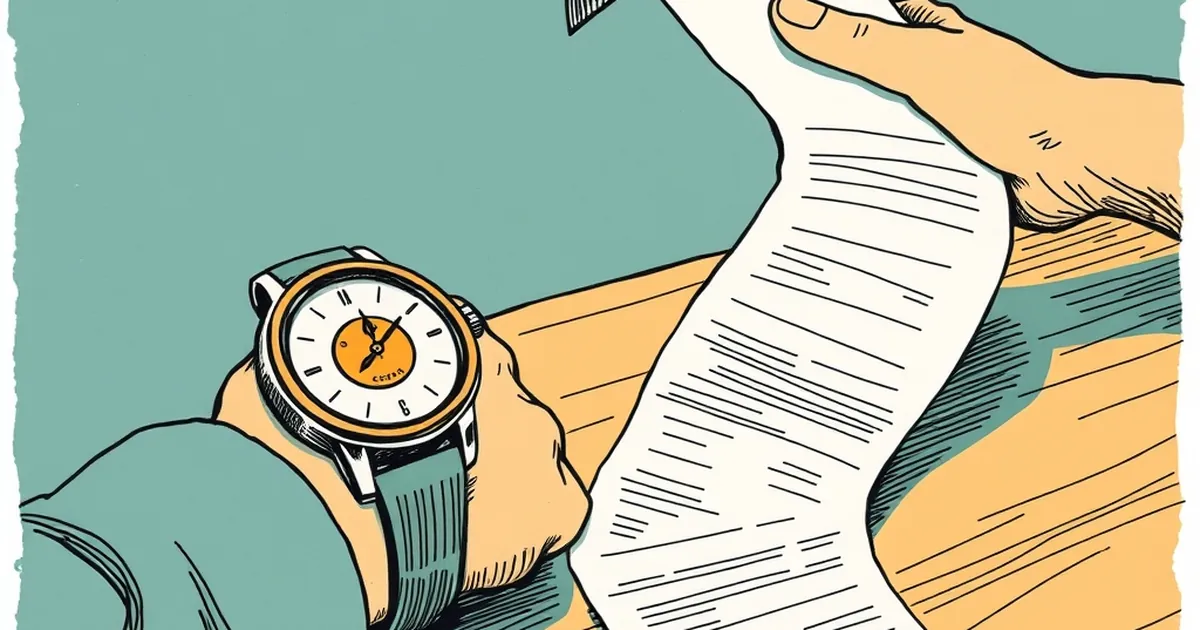
Chargebacks have a rhythm. A cardholder taps "buy," the confirmation lands in under two seconds, and the brain gets its hit of completion. Then, if something goes wrong, the dispute process unfolds over days — nine, fourteen, sometimes forty-five. Two speeds, one transaction. The interesting question isn't which one is faster. It's what happens to human behavior when the fast loop and the slow loop belong to the same event.
Two clocks, one purchase
Payment systems are engineered around latency, but they're really engineering two different psychological experiences. Authorization is near-instant by design: networks like Visa and Mastercard clear most transactions in under two seconds because merchants, issuers, and acquirers all optimized for the same thing — closing the loop before attention drifts. Refunds and chargebacks were never optimized the same way. They run through settlement cycles, issuer review windows, and in the case of disputes, formal evidence exchange.
That asymmetry isn't accidental. It reflects who bears risk at each stage. The merchant wants the sale to feel final. The issuer wants the dispute to be auditable. The cardholder sits in the middle, holding a memory of a reward that arrived immediately and a remedy that arrives eventually.
Behavioral economists have a name for the gap. Kahneman and Tversky's work on temporal discounting showed that people systematically overvalue immediate outcomes relative to delayed ones, even when the delayed outcome is larger. A refund of $80 in nine days is not psychologically equivalent to $80 today. The brain treats the future sum as smaller, more abstract, less real.
Now apply that to the buyer's experience. The purchase delivered a jolt of resolution — a decision made, a thing acquired, a dopamine-adjacent ping of "done." The refund, when it comes, feels like bookkeeping. It restores a balance but doesn't restore the moment.
What the two-second loop actually reinforces
B.F. Skinner's variable-ratio schedules are the classic reference here, and they're often invoked lazily. The precise point is worth restating: behavior becomes persistent when reinforcement is unpredictable in timing, not merely in size. A slot machine is the textbook case, but the mechanism is broader. It's why people refresh email, why social feeds autoplay, why "buy now" buttons work.
Card payments borrow from the same architecture without meaning to. Tap, authorize, done. The confirmation is immediate and slightly variable — sometimes it's a clean approval, sometimes a 3-D Secure challenge, sometimes a decline that triggers a retry. That variability is enough to keep the behavior sticky.
The refund loop is the opposite: predictable in direction, unpredictable in timing, and devoid of any reward signal until it lands. There's no "refund approved!" moment that feels like the purchase moment. There's a line item, days later, that most cardholders don't even notice unless they're looking.
This is where the asymmetry starts to matter beyond individual psychology. If the fast loop is what trains purchasing behavior and the slow loop is what's supposed to correct it, then the correction is structurally weaker than the behavior it's meant to counterbalance.
The chargeback as a slow-motion decision
Chargebacks add a second layer: they require the cardholder to make a deliberate decision under uncertainty. Will the dispute be accepted? Is the evidence sufficient? Is it worth the effort? Kahneman's work on loss aversion is relevant — people weigh losses roughly twice as heavily as equivalent gains — but the twist here is that the loss has already happened. The chargeback is an attempt to reverse it, and the effort required to pursue the reversal is itself a cost.
A concrete example: a traveler books a hotel in a city they end up not visiting. The booking was instant. The cancellation policy is buried. When they file a dispute, the issuer asks for documentation, the merchant responds, and the timeline stretches. By day nine, the traveler has mentally written off the money. By day fourteen, the refund arrives and feels like a small windfall rather than a restoration.
That reframing — refund as windfall — is the quiet problem. It means the slow loop doesn't teach the same lesson the fast loop taught. The purchase was a decision. The refund is an event that happened to the cardholder.
Where the asymmetry shows up in the data
Issuers and networks track dispute rates, win rates, and time-to-resolution. What they track less often is the behavioral residue: whether a cardholder who successfully disputed a charge is more or less likely to make a similar purchase again. Anecdotally, the answer is "less likely" — but not because the dispute failed. Because the dispute was exhausting relative to the original purchase, which was frictionless.
There's a term for this in consumer research: friction asymmetry. When acquisition is frictionless and remedy is friction-laden, the system biases toward acquisition. That's good for volume and bad for trust if the remedy friction ever becomes the dominant memory.
Some networks have started compressing the refund side. Real-time refunds, instant dispute credits, and provisional credits during investigation all attack the latency gap. The direction is clear: make the slow loop feel less like a separate event and more like a continuation of the same one.
Designing the remedy to match the reward
The forward-looking question isn't whether refunds should be faster — they should — but whether speed alone closes the gap. A refund that arrives in two seconds but still requires the cardholder to notice it, interpret it, and reconcile it against the original charge is still a slow loop in cognitive terms. The reward signal has to match the original signal in form, not just in timing.
That means push notifications that say "your $80 is back" rather than a silent line item. It means dispute status updates that feel like progress rather than paperwork. It means treating the refund as the closing beat of the same transaction, not the opening beat of a new administrative process.
Skinner's pigeons didn't care whether the pellet came from the same hopper as last time. They cared that it came. Cardholders are more complicated — they remember the purchase, the confirmation, the wait, and the resolution as a single arc. If the arc's second half feels like a different genre than its first, the memory that sticks is the friction, not the fix.
The two-second loop will always be faster. The question is whether the nine-day loop can be made to feel like part of the same story.