What 3 failed logins do to a 90-day loyalty streak
A brief 30-minute lockout from three failed logins can silently reset a 90-day loyalty streak before most players ever notice
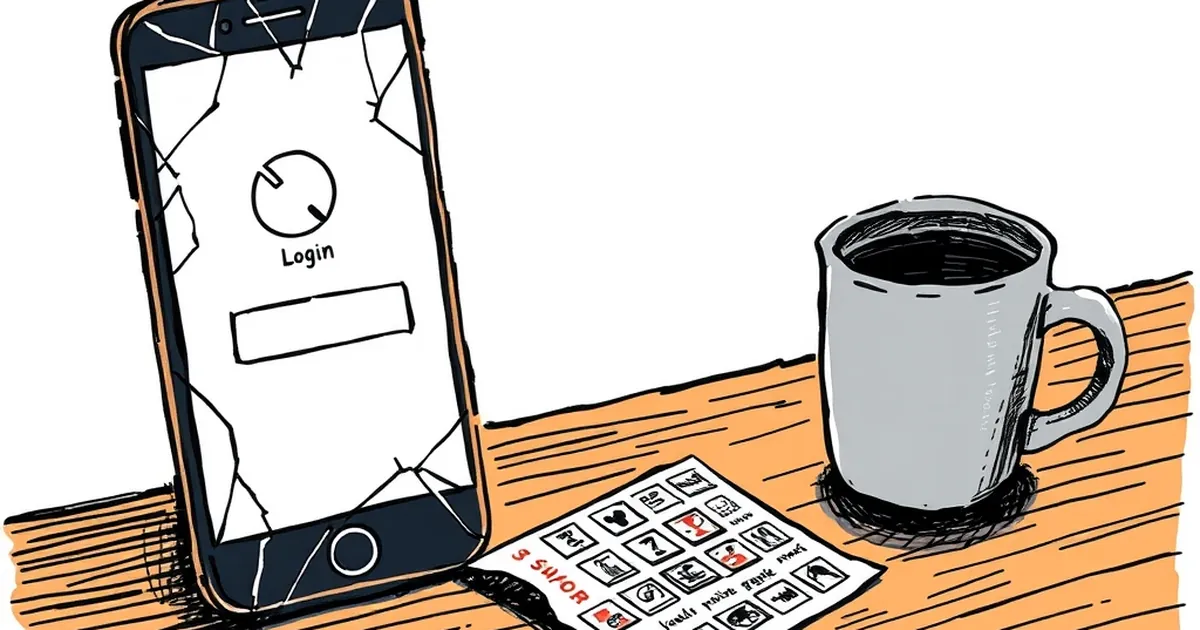
Three failed logins can end a 90-day loyalty streak, and almost nobody finds out until the fourth attempt. The mechanism isn't a ban, a bonus confiscation, or even a support ticket — it's a 30-minute account lock that quietly resets the "consecutive daily login" counter most operators run in the background. Miss the daily claim window by a few minutes and the streak is gone, along with whatever tier multiplier it was feeding.
The lockout clock is shorter than the streak logic
Most players assume account security and loyalty tracking are the same system. They aren't. The lockout is triggered by an authentication layer — usually a rate limiter that fires after three failed password attempts within a rolling window, typically 15 to 60 minutes. The streak counter lives in a separate CRM or bonus engine that checks for one qualifying action per calendar day, often defined by the operator's server timezone rather than yours.
That timezone detail matters more than it should. An operator running on UTC will roll the day over at a fixed moment. If your lockout starts at 23:40 UTC and lifts at 00:10 UTC, you've lost the day even though you were at your keyboard the whole time. Players in UTC+8 or UTC-5 feel this differently, and it's why two people with identical habits can have wildly different streak outcomes.
The failed-login threshold itself is rarely published. Three is the common default because it's what most authentication frameworks ship with, but you'll see two at some banks and five at some sportsbooks. What's consistent is that the lock is temporary, not punitive — and that the streak engine has no idea it happened.
Why "just wait it out" often fails
A 30-minute lock sounds trivial until you map it against the daily claim window. If the operator's day resets at midnight UTC and you typically claim at 23:50, a lock that starts at 23:35 and lifts at 00:05 puts you on the wrong side of the reset. The streak breaks. There's no grace period, no "you were locked out" exception, and no automatic restoration. Support agents can sometimes manually credit the day, but that's discretionary and usually capped at one or two goodwill gestures per account lifetime.
What a broken streak actually costs
This is where the numbers get uncomfortable. Operators rarely publish streak economics, but you can reverse-engineer them. A typical 90-day streak ladder might pay a 1.2x multiplier at day 30, 1.5x at day 60, and 2x at day 90 — applied to daily bonus drops, free spin values, or rakeback percentages. Lose the streak at day 87 and you don't just lose three days; you lose the multiplier tier you spent eleven weeks climbing toward.
Run the math on a modest example. Suppose the daily drop is worth $4 at base and you're on a 1.5x tier, so $6 a day. Over the final 30 days of a streak, that's $180 instead of $120 — a $60 gap from the multiplier alone. Now add the reset: after the break, you're back to 1x. Climbing to 1.5x again takes another 60 consecutive days. The real cost of three failed logins isn't the 30-minute lock. It's roughly two months of reduced value.
Some operators have started publishing streak protection mechanics — one free "streak freeze" per 30-day cycle, purchasable with loyalty points, or a one-day grace window. Where these exist, they're usually buried in the loyalty terms rather than the main bonus page. If your operator offers one, it's worth knowing where the button is before you need it.
The asymmetry nobody warns you about
Deposits don't protect a streak. Neither does wagering volume, VIP status, or a support history going back years. The streak counter checks for a specific qualifying action — usually a login, sometimes a login plus a claim click — and if that action doesn't register on the operator's clock, the counter resets to zero. A player who wagered $40,000 over 89 days and then got locked out on day 90 has the same streak status as someone who signed up yesterday.
That's the part that catches people. Loyalty programs are marketed as recognition of tenure and activity. The streak mechanic, as implemented, recognizes neither. It recognizes one thing: whether an authenticated session occurred within a defined window.
Three failed logins is a surprisingly low bar
Think about why you'd fail three times in a row. You're on a new device and the password manager hasn't synced. You're typing on a phone keyboard with autocorrect fighting you. You changed the password last month and the old one is muscle memory. You're on a hotel Wi-Fi network that's dropping packets, so the first attempt times out and the second one registers as a failure. None of these are security incidents. All of them trip the same counter.
Add a second factor and it gets worse. If the operator uses SMS or an authenticator app, a failed 2FA code can count toward the same threshold as a failed password in some implementations. Three mistyped six-digit codes is not a hard thing to do at 23:50 on a bad connection.
The fix is boring and most people skip it
Passkeys. Where operators support them — and adoption is still patchy, maybe 20-30% of major brands as of early 2025 — a passkey removes the password field entirely. No typing, no autofill failures, no lockout from a fat-fingered attempt. The trade-off is device-bound credentials, which is its own friction if you play across a phone, a laptop, and a tablet.
The second-best fix is a password manager with sync, plus checking the operator's server timezone and setting a recurring reminder well before the reset. Claim at 20:00 operator time, not 23:50. It costs you nothing and removes the entire failure mode.
The third fix is the one nobody wants to hear: don't build your play schedule around a streak counter. Streaks are engagement mechanics dressed up as loyalty. They're designed to make daily logins feel consequential, and they work — which is exactly why a 30-minute lockout feels like a loss rather than an inconvenience. If you're playing because the streak says so, the streak is doing its job, and it's doing it to you rather than for you.
The question operators haven't answered
Here's what I'd want to know from any operator running a streak program: when a player is locked out through no fault of their own — a network drop, a device sync failure, a mistyped 2FA code — does the streak engine get told? In most architectures, the answer is no. The authentication layer and the CRM don't talk to each other in real time, and the streak counter is a dumb daily check.
So the real question isn't whether three failed logins should break a 90-day streak. It's whether the operator knows it did, and whether they'd tell you if you asked. Next time you're locked out, watch what happens to your counter. If it resets and nobody mentions it, you've learned something about how the loyalty program is actually built — and it isn't built around you.