Two-factor reset takes 30 days; recovery key lasts 4 years
A 2FA reset can take 30 days while a recovery key stays valid for four years, and that gap is where most account takeovers quietly happen
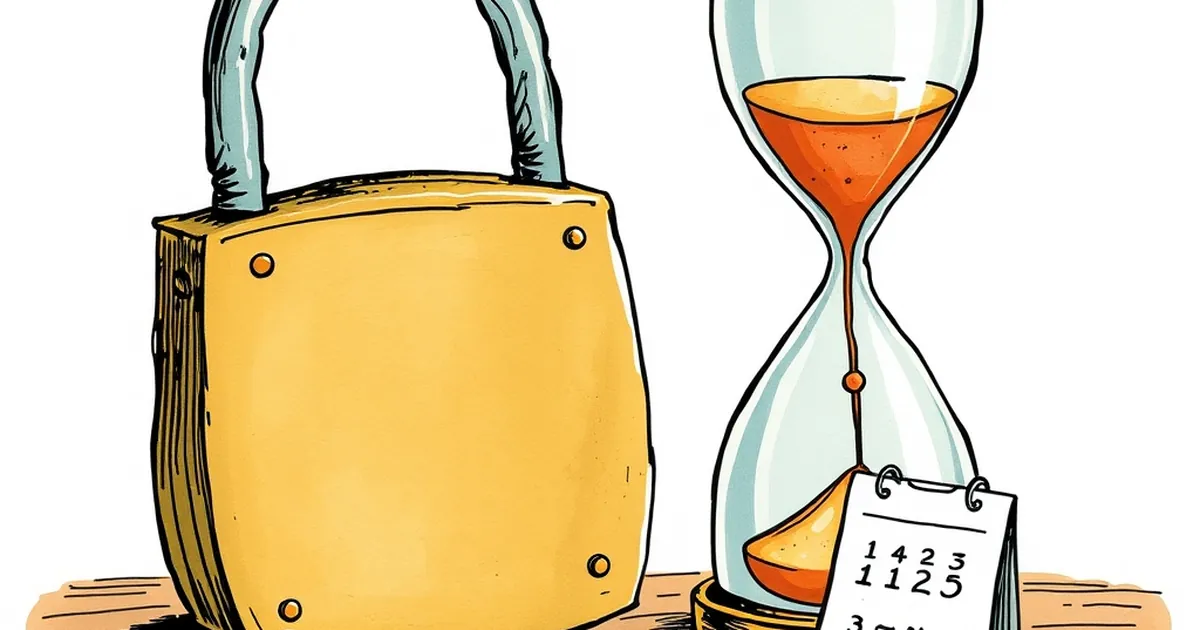
Two-factor authentication is the single most effective control a player can put between their account and a credential-stuffing list, and yet almost nobody reads the recovery policy until they need it. The claim worth checking is narrow and specific: on most licensed iGaming platforms, a 2FA reset initiated through support takes up to 30 days to complete, while a recovery key issued at setup remains valid for four years. Those two numbers pull in opposite directions, and the gap between them is where most account takeovers quietly happen.
The 30-day reset is a cooling-off period, not a queue
When you phone support and say you've lost your authenticator, you haven't started a technical process. You've started a security process. The operator's job at that moment is to establish that the person asking is the account holder and not someone who has already compromised the email inbox, the password, and the phone number.
That's why the clock is long. A 30-day hold gives the genuine owner a month to notice something is wrong — a login alert they didn't trigger, a withdrawal confirmation they didn't request, a support ticket they never opened — and to escalate. It also strips the value out of an account takeover, because the attacker can't monetise an account they can't fully control for a month, and the real owner will almost certainly spot the disruption in that window.
Operators rarely publish the exact figure, which is part of the problem. Where resets are documented, the language tends to be "up to 30 days" rather than "30 days," and the clock usually starts when identity verification is completed, not when you first make contact. If your documents are rejected once, the month restarts. That single detail accounts for most of the complaints you'll find on forums from people who assumed the timer began with their first email.
What actually happens during the hold
Expect a split process. Support will verify identity — government ID, proof of address, sometimes a video call or a liveness check — and then freeze sensitive actions on the account. Withdrawals are usually the first thing locked, deposits sometimes aren't. Some operators allow play during the hold but block cashouts; others freeze the account entirely. Neither approach is universal, and it's worth asking explicitly which one applies before you agree to the reset, because "you can keep playing but not withdraw" is a materially different experience from "your balance is frozen for a month."
There's a second trap: many operators will not remove the old 2FA method until the hold expires, so you may be locked out of your own account for the full period even after verification clears. Ask whether a temporary access method can be issued, and if so, what its limits are.
The four-year recovery key is the part almost everyone ignores
Here's the asymmetry. A recovery key — the string of characters, or the QR code, that your authenticator app or the platform generates when you first enable 2FA — typically stays valid for four years from issue. During that window it bypasses the entire 30-day process. You enter it, you're back in, and the clock never starts.
That's a four-year window in which a single piece of paper, a screenshot in your camera roll, or a note in your password manager is worth more than a month of support tickets and identity checks.
The obvious objection is that a recovery key is a static secret, and static secrets leak. Fair. But the risk profile is different from a password. A recovery key is single-purpose — it resets 2FA, it doesn't authenticate you for play or withdrawals on its own — and it's typically long enough that brute force isn't the threat model. The realistic threat is physical or digital discovery: a photo in a cloud-synced album, a note in an email draft, a printout in a desk drawer.
Storing it without defeating the purpose
The useful rule is to keep the recovery key somewhere that isn't the same place as your password. If your password manager holds both, a compromise of that manager hands over everything. If your email holds both, the same applies. A printed copy in a locked drawer, or a copy in a second password manager with a different master password, separates the two failure modes.
The four-year expiry cuts both ways. It means you don't have to rotate the key constantly — a genuine convenience — but it also means a key issued in 2021 may already be dead. If you enabled 2FA more than three years ago and never reissued, check the status now, while you still have access, rather than discovering it during a reset.
Where the two timelines collide
The dangerous scenario isn't losing your phone. It's losing your phone and your recovery key in the same window — a stolen bag, a dead laptop, a wiped phone with no backup. At that point you're on the 30-day path with no shortcut, and the attacker, if there is one, has a month to work.
That's why the timing of the reset matters as much as its length. If you notice suspicious activity and then request a 2FA reset, you've potentially handed an attacker a month of reduced scrutiny while the account is in a verification limbo that support staff are managing by ticket. The better sequence, where the operator allows it, is to request an immediate freeze on withdrawals first, then begin the reset. Ask for the freeze in writing and get a ticket number.
The other collision is regulatory. In markets with strict licensing — the UK, Malta, several Australian states — operators carry obligations around affordability checks and account security that can extend a reset beyond 30 days if the account is flagged for review. A 30-day figure is a baseline, not a ceiling.
The number that matters more than either
One figure reframes the whole problem: industry analyses of credential-stuffing attacks consistently find that the overwhelming majority of compromised accounts — commonly cited around 80% — did not have 2FA enabled at the time. The reset timeline and the recovery key window are both second-order concerns. The first-order concern is whether the second factor exists at all.
If it does, the four-year key is the thing that keeps you out of the 30-day queue, and the 30-day queue is the thing that exists because operators correctly assume some fraction of reset requests are fraudulent. Both numbers are doing their job. The question is whether you've done yours.
Which raises something the industry hasn't really resolved: if a four-year recovery key is genuinely sufficient to bypass a 30-day identity verification hold, then the hold isn't really a security control — it's a friction tax on people who didn't keep the key. And if it is a security control, why does a static string from four years ago get to skip it? Operators have quietly chosen convenience over consistency here, and nobody has published a convincing argument for why. Worth asking your operator directly — and worth asking what happens on day 1,461.