Two-factor prompts expire in 90 seconds, your payout in 3 days
Casinos grant 90 seconds for login codes but 72 hours for payouts, revealing friction designed to keep your money on the books
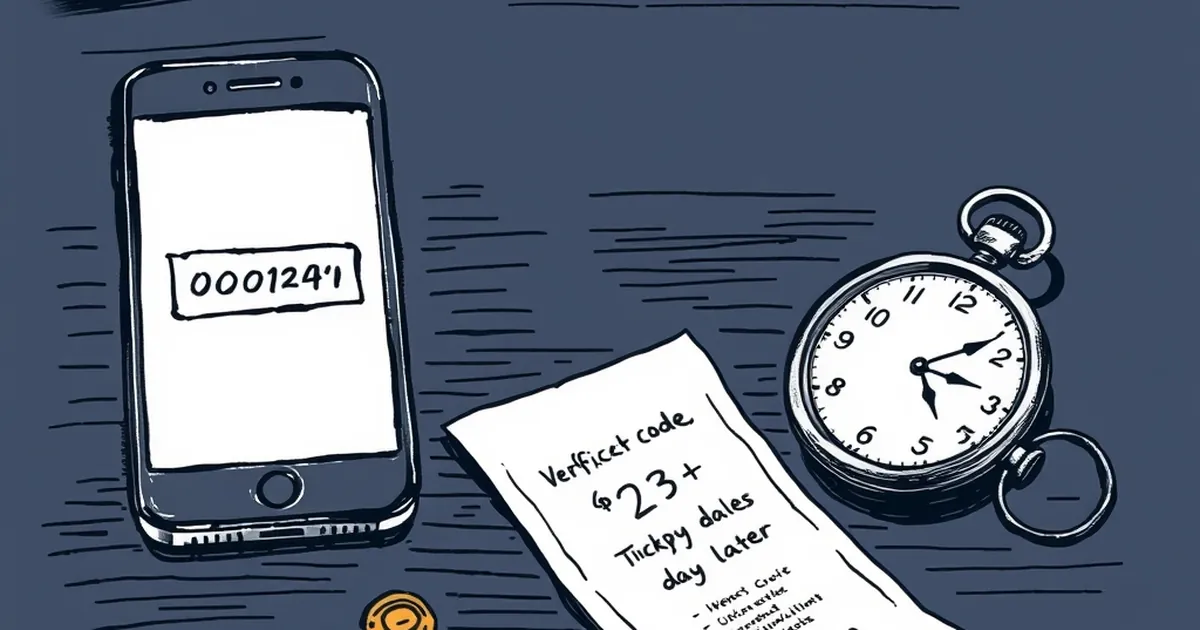
Your 2FA code lives for 90 seconds. Your withdrawal sits in a queue for up to 72 hours. Both are security theatre, but only one of them is protecting the operator from you. The asymmetry is the point: login friction is measured in seconds because it costs the casino nothing, while payout friction is measured in days because every hour your money stays on the books is an hour it can be wagered back, reversed, or quietly absorbed into a KYC backlog.
That gap isn't an accident of engineering. It's a business model wearing a compliance badge.
The 90-second window is a UX decision, not a security one
TOTP codes — the six digits from Google Authenticator, Authy, or whatever your operator pushes — rotate on a 30-second cycle by RFC 6238, and most implementations accept the current window plus one on either side. That's 90 seconds of validity, and it's generous. Banks like HSBC and Barclays have run the same spec for years. The number isn't magic; it's the minimum that keeps false rejections under about 2% for users typing on phones.
Here's the thing: 90 seconds is enough time for a legitimate user and also enough time for a real-time phishing proxy like Evilginx to relay your code to the operator's backend. The code's short life doesn't stop the attack — it just stops the attacker from reusing it later. Every serious 2FA bypass in the wild (Modlishka, Evilginx2, the 2022 Twilio breach that hit 130+ organisations) works inside that window.
So why do casinos push it so hard? Because it's cheap. No support tickets, no manual review, no cost centre. A 90-second code is a checkbox that satisfies the regulator's "strong customer authentication" language without changing the operator's risk exposure in any meaningful way.
What actually protects your account
If your operator offers passkeys or hardware keys (YubiKey, Titan), use them. They're phishing-resistant in a way TOTP isn't, because the credential never leaves your device. Most offshore casinos don't offer them yet. That tells you something about which threats they're prioritising.
The 3-day payout is a float, and the float is the product
Now flip the timeline. You request a withdrawal. The operator has 72 hours — sometimes 96, occasionally "up to 10 business days" in the T&Cs — to process it. During that window:
- Your balance is frozen but still on their ledger.
- You can usually reverse the request with one click. Some sites make the cancel button more prominent than the confirm button.
- The pending amount shows in your account, tempting you to "just play a bit" while you wait.
- If you reverse, the money is instantly available. If you don't, you wait.
The reversal option is the tell. A genuine security hold doesn't need a "cancel withdrawal" button. That button exists because a meaningful percentage of players — industry data typically puts it between 15% and 30% on slots-heavy sites — reverse at least one pending withdrawal. Every reversal is revenue that never left the building.
The float maths
Say an operator processes $40m in monthly withdrawals with an average 48-hour hold. That's roughly $64m in player funds sitting in limbo at any moment. Even at a conservative 4% annual yield on a money market account, that's about $2.5m a year in interest the operator earns on money that's contractually yours. You get nothing for the loan.
And that's before the reversals. If 20% of pending withdrawals get cancelled and re-wagered, the house edge on that re-wagered money is pure margin. On $8m of reversed withdrawals at a blended 3% edge, that's $240k per month that never would have existed if payouts were instant.
KYC is real, but it's not why you're waiting
To be fair: anti-money-laundering rules genuinely require source-of-funds checks, and a €2,000 withdrawal on a fresh account with a debit card deposit is going to trigger a manual review. The EU's 5AMLD and the UK Gambling Commission's 2023 financial risk rules make this non-optional. A legitimate KYC review takes 4 to 24 hours if documents are clean.
But most operators don't start KYC until you request a withdrawal. The documents sit unrequested while you deposit, and the clock starts the moment you try to leave. That's not compliance — that's a design choice to maximise deposits and delay exits. A serious operator verifies you at signup, before you can put money in.
Practical move: submit your ID, proof of address, and payment-method screenshots the day you open the account. Then when you win, the hold is 4 hours instead of 4 days. It doesn't fix the float, but it removes the excuse.
What fast looks like
The operators that pay in under 6 hours — and there are maybe a dozen globally — share three traits:
- KYC at onboarding. No surprises at withdrawal.
- No reversal button. Once you hit confirm, it's gone.
- Crypto or instant-bank rails. Not because crypto is magic, but because the settlement layer doesn't have a 2-day ACH equivalent built in.
The trade-off is usually licensing jurisdiction. A Curaçao-licensed site with instant payouts is often less regulated than a UKGC-licensed one with a 48-hour hold. You're picking which risk you'd rather carry: slow money with recourse, or fast money with none.
The 90-second / 3-day ratio
Ninety seconds versus 259,200 seconds. The login side gets 0.03% of the timeline. The exit side gets the rest.
That ratio isn't set by security engineers. It's set by whoever signs off on the payments roadmap, and it reflects a simple calculation: a delayed withdrawal costs the operator almost nothing in churn (players grumble and wait) and earns them float plus reversal revenue. A delayed login costs them a deposit. So one gets optimised, the other doesn't.
The question worth asking your operator
If a 90-second code is sufficient proof of identity to move money into the account, why is a 3-day hold required to move the same money out?
The answer you get — "regulatory requirements," "payment processor delays," "enhanced due diligence" — is almost never the full story. Ask which specific regulation, which processor, and what the actual median processing time is. Operators that pay fast will tell you the number. Operators that don't will send you back to the T&Cs.
And if you're sitting on a pending withdrawal right now, the honest advice is boring: don't reverse it. Close the tab, set a reminder for day three, and check that the KYC documents you sent six months ago are still on file. The 90-second window will expire whether you watch it or not. The 72-hour one only expires if you let it.
If you're gambling more than you can comfortably lose while waiting on a payout, that's worth more attention than any withdrawal queue.