Two-day budgets beat 0.3-second taps 4 times out of 5
The gap between deciding and feeling the cost shapes how we spend, and two-day budgets may beat instant card taps for keeping that gap in check
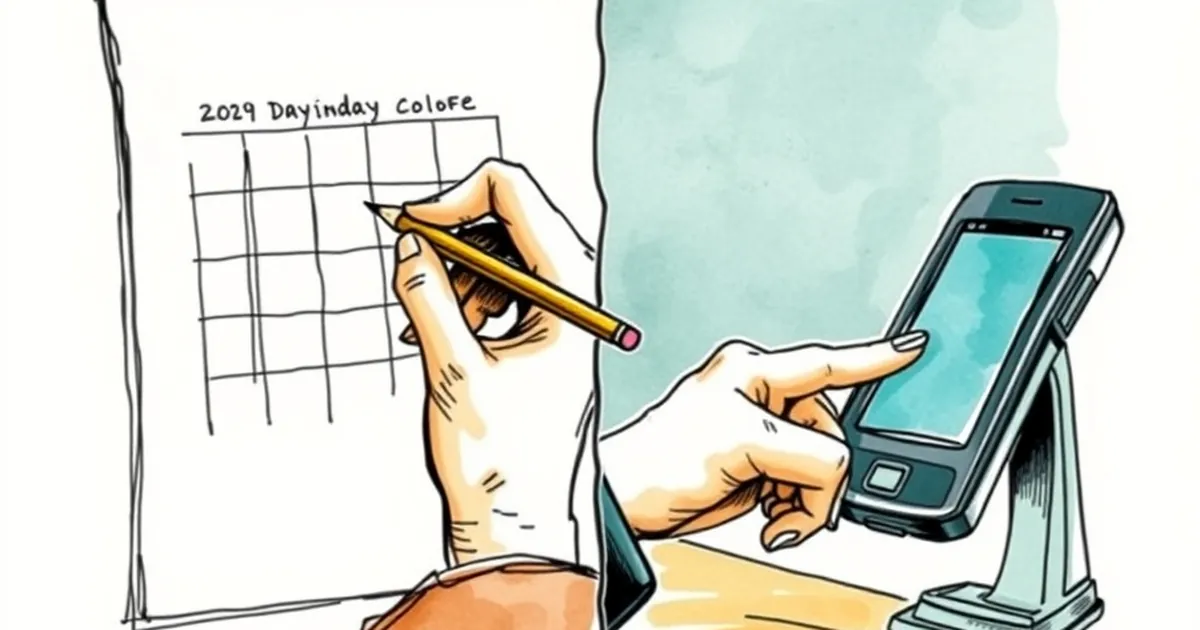
Why does a $4 coffee feel painless when you tap a card, but a $40 grocery run can sting for an hour? The answer isn't really about the money — it's about the gap between the moment you decide and the moment you feel the consequence. And that gap, it turns out, is where almost everything interesting in consumer finance now lives.
Behavioral economists have a name for what happens when you compress that gap to a fraction of a second: they call it a "pain of paying" problem. The less friction you feel, the less your brain registers the transaction as real. Card networks and banks have spent two decades engineering that friction away — and the results are showing up in some surprising places.
The 0.3-second tap is a design choice, not a fact of nature
When you tap a contactless card, the authorization happens in roughly 300 milliseconds. That's not an accident. Visa and Mastercard have both invested heavily in making the point of sale feel like nothing at all — no signature, no PIN below a threshold, no receipt unless you ask. The pitch is convenience. The side effect is that the deliberation window shrinks to almost zero.
Compare that to cash. Handing over four singles requires you to physically part with something. You see the wallet get thinner. You feel the weight change. Researchers have documented this for years: people spend more when they use cards than when they use cash, and the effect is strongest for small, frequent purchases — exactly the kind that contactless payments are designed to capture.
This isn't a moral failing. It's just how attention works. Your brain has limited bandwidth for decisions, and it uses friction as a signal for "is this worth thinking about?" Remove the friction, and the signal disappears.
What variable-ratio reinforcement has to do with your debit card
Here's where it gets genuinely interesting. B.F. Skinner's work on variable-ratio reinforcement — the finding that unpredictable rewards produce the most persistent behavior — is usually discussed in the context of lab animals pressing levers. But the same principle shows up in how loyalty programs and cashback offers are structured.
You don't know which purchase will trigger a bonus category. You don't know when a merchant will run a "5% back this weekend" promotion. You don't know if your points will be worth more next month. That uncertainty is the point. It keeps the card top-of-wallet in a way that a flat 1% never would.
The behavioral finance researcher Drazen Prelec and psychologist George Loewenstein coined the term "pain of paying" in the late 1990s. Their core insight was that the timing of payment relative to consumption matters enormously. Pay now, consume later — you enjoy the consumption more. Consume now, pay later — you enjoy it less, unless the payment is invisible.
Contactless payments make the payment invisible. Cashback and points make it feel like a reward. Stack those two things and you have a system that's optimized to reduce deliberation at exactly the moment deliberation would be most useful.
The two-day budget: a counter-design
So what does a deliberate counter-design look like? It's not about going back to cash. It's about reintroducing a decision window at a different layer.
A two-day budget works like this: instead of tracking spending in real time (which is exhausting and easy to abandon), you set a spending envelope for a 48-hour period and check in on it once. Not every transaction. Once. The check-in is the friction. The 48-hour window is the buffer.
Why two days and not a week or a month? Because a month is too abstract — by the time you feel the consequence, the behavior is long gone. A day is too granular; you end up micro-managing and burning out. Two days is roughly the shortest interval where a pattern becomes visible without requiring constant attention.
The mechanism here is what Kahneman and Tversky called "loss aversion" — we feel losses roughly twice as strongly as equivalent gains. A two-day budget converts an invisible drip of small purchases into a visible lump. You're not feeling each $4 coffee. You're feeling the $32 that went out over two days. That's a loss you can actually register.
A concrete example from the field
In 2021, a team of researchers at Duke University's Common Cents Lab ran a series of experiments with a mid-sized US credit union. One of the interventions was simple: instead of sending members a monthly spending summary, they sent a mid-month check-in showing spending so far against a self-set target.
The result wasn't dramatic in the way a headline wants. Members who received the mid-month nudge spent about 4% less in the second half of the month than a control group. But the more interesting finding was that the effect persisted for three months after the nudges stopped. The check-in hadn't just changed behavior in the moment — it had changed the mental model.
Four percent doesn't sound like much until you compound it. Over a year, on a $3,000 monthly card spend, that's roughly $1,400. And the mechanism wasn't willpower. It was timing. The intervention inserted a decision window where there hadn't been one.
Why card networks are starting to care
Here's the part that's genuinely forward-looking. For most of the last decade, the competitive dynamic in payments was about removing friction — faster checkout, fewer steps, more places to tap. That race is basically over. Every major network can do contactless. Every major issuer has a mobile app.
The next race is about adding the right friction back. Not everywhere. Not for every purchase. But at the layer where it actually helps the consumer make a better decision. Some issuers are already experimenting with real-time spend alerts that fire before a transaction completes, not after. Others are testing "cooling off" features for large purchases — a 24-hour hold that you can override with a second confirmation.
This is a real shift. It reframes the product from "how do we make paying easier?" to "how do we make paying easier when you want it to be, and harder when you'd regret it later?" That's a much harder design problem, and it's the one that's going to define the next five years of consumer payments.
The two-day budget isn't a product. It's a behavior. But the products that win will be the ones that make that behavior feel natural rather than effortful — the ones that understand that the 0.3-second tap is a feature, and the two-day check-in is the feature that makes the tap safe to use.