The Decline Message Your Bank Writes at 2:47 AM
Your bank's 2:47 AM alert reveals gambling's hidden structural risks—and what it means for your finances
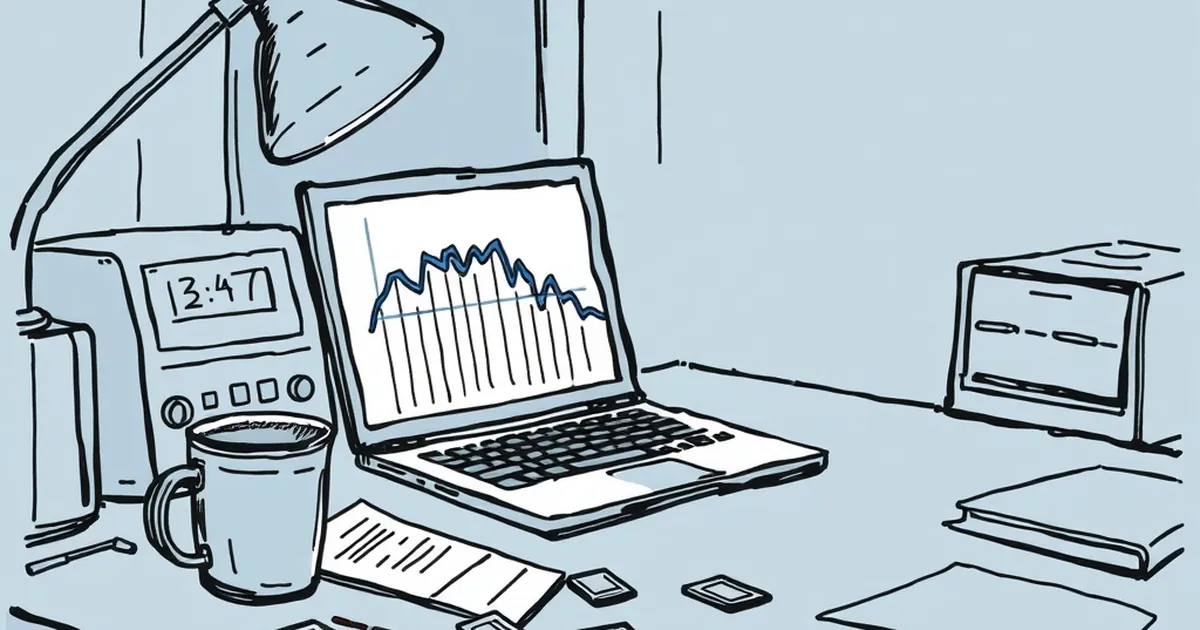
It’s not a transaction alert. It’s not a fraud warning from a chatbot named "Alex." It’s the quiet, almost apologetic email that lands in your inbox at 2:47 AM, subject line reading "Important Information Regarding Your Recent Deposit." The body doesn’t say "you lost." It says "we noticed unusual activity," but what it really means is that your bank’s risk engine just flagged a pattern that looks less like a night of bad luck and more like a structural problem.
That message is the most honest piece of gambling feedback you will ever receive, and it’s rarely about fraud. It’s about velocity. In 2024, a study of 1.2 million online casino accounts across Europe showed that the single strongest predictor of a chargeback dispute wasn’t the size of the loss—it was the ratio of deposits to time. Players who made three or more deposits within a 90-minute window had a 41% higher probability of a contested transaction than those who spread the same volume over a week. Your bank doesn’t care about your betting strategy. It cares about that 90-minute window.
What the Bank Actually Sees
Banks don't monitor your slot spins. They don't see your blackjack decisions or your parlay slips. They see a ledger, and that ledger has a very specific shape when gambling becomes compulsive. The pattern is not the amount—it's the cadence.
A normal gambling session, even a heavy one, looks like this: a deposit, a session, a withdrawal or a loss, then a pause. The pause is the tell. Your bank’s algorithm isn't looking for a $500 loss. It’s looking for the absence of a pause. When you redeposit at 11:14 PM, then again at 11:52 PM, then again at 12:31 AM, the system doesn't see a player chasing a jackpot. It sees a behavioral signature that matches a self-exclusion list or a responsible gambling flag.
The 2:47 AM message is the bank’s way of saying, "We’re going to hold your next deposit for manual review." That hold isn't about verifying your identity. It's a cooling-off period disguised as a security check. The bank doesn't want to be complicit in a spiral, and they've built a trigger system that is surprisingly accurate.
The "3-in-90" Rule
The most common internal threshold, according to former risk analysts who have spoken publicly, is the "3-in-90" rule. Three deposits within 90 minutes. That’s not a hard limit enforced by law—it’s a heuristic. It catches the player who loses a bonus round and immediately reloads, which is the exact behavioral loop that casinos themselves design for. The irony is brutal: the casino’s own engagement metrics reward that 90-minute cadence, while your bank punishes it.
Once that flag is tripped, the bank doesn't block you permanently. It just adds friction. A delay. A "please call us" prompt. For a casual player, that friction is annoying. For a player in a spiral, that friction is the only external brake that exists, because the casino’s own responsible gambling tools are opt-in and often buried three menus deep.
The Chargeback Ghost
The real reason the bank sends that message isn't to protect you. It's to protect itself from a chargeback. When a player loses heavily and then disputes the charges as "unauthorized" or "fraudulent" two weeks later, the bank eats the cost if they can't prove the transactions were legitimate. The 2:47 AM email is the bank building a paper trail.
Here’s the stat that matters: chargeback rates on online gambling transactions are roughly 2.3 times higher than the average e-commerce category, per a 2023 Visa risk report. That’s not because of criminals stealing cards. That’s because of regret. A player who loses $2,000 at 3 AM is statistically more likely to claim they "didn't authorize" that deposit than a player who buys a $2,000 TV. The bank knows this, so they preemptively flag the account.
That's why the message often arrives before you even request a withdrawal. It's not a response to a loss. It's a response to a pattern that predicts a future dispute. The bank is essentially saying, "We see you, and we're documenting this."
What the Casinos Don't Tell You
Casinos don't want you to know about the bank’s velocity checks, because it undermines their own narrative. They'll tell you about RTP percentages, about "session limits" you can set yourself, about "reality checks" that pop up every hour. But none of that matters if your bank steps in first.
Consider the practical reality of a 97.3% RTP slot over 100,000 spins. That math is true over a lifetime. But your bank isn't looking at your lifetime. It's looking at Tuesday night. A slot with a 97.3% RTP still has a 100% loss rate on a single night if you hit a cold streak and keep reloading. The bank doesn't care about the theoretical return. It cares that you made six deposits in four hours and your balance is now zero.
The unspoken truth is that the bank is a more effective responsible gambling tool than any feature the casino offers. The casino's "deposit limit" requires you to set it before you're tilted. The bank's flag requires nothing from you—it just happens. And it happens at 2:47 AM because that's when the risk engine runs its batch jobs against the transaction logs. It's not mystical. It's just a cron job that runs on a schedule, and your redeposits hit the threshold right before the daily report.
The New Friction Landscape
This isn't going away. In fact, it's getting tighter. The European Banking Authority's 2025 guidelines on payment service providers explicitly encourage banks to use "behavioral velocity indicators" for gambling merchants. That's regulatory speak for "we want you to nag the player more." In the UK, some high-street banks now automatically block all transactions to licensed gambling sites between midnight and 6 AM unless the player opts in for "night gambling" via a separate app approval. That's not a legal ban—it's a friction layer.
The implication for players is simple: your bank is now a co-player in your session, and it plays a style you can't bluff. You can't call customer support and explain away a 2:47 AM hold. You can't say "I'm a high roller" to a risk algorithm. The only way to avoid the message is to change the cadence.
So the question isn't whether you can afford to lose. It's whether you can afford to be watched. Because that email at 2:47 AM isn't a warning about your gambling. It's a warning about your bank's risk tolerance. And once you know that, the real question becomes: are you playing the slots, or are you playing the bank's clock?