The bonus meter fills at 3 spins; the cap hides at 40
Slot bonus meters reveal what fills fast but hide the cap that matters, exploring how the gap between 3 spins and 40 shapes modern bonus design
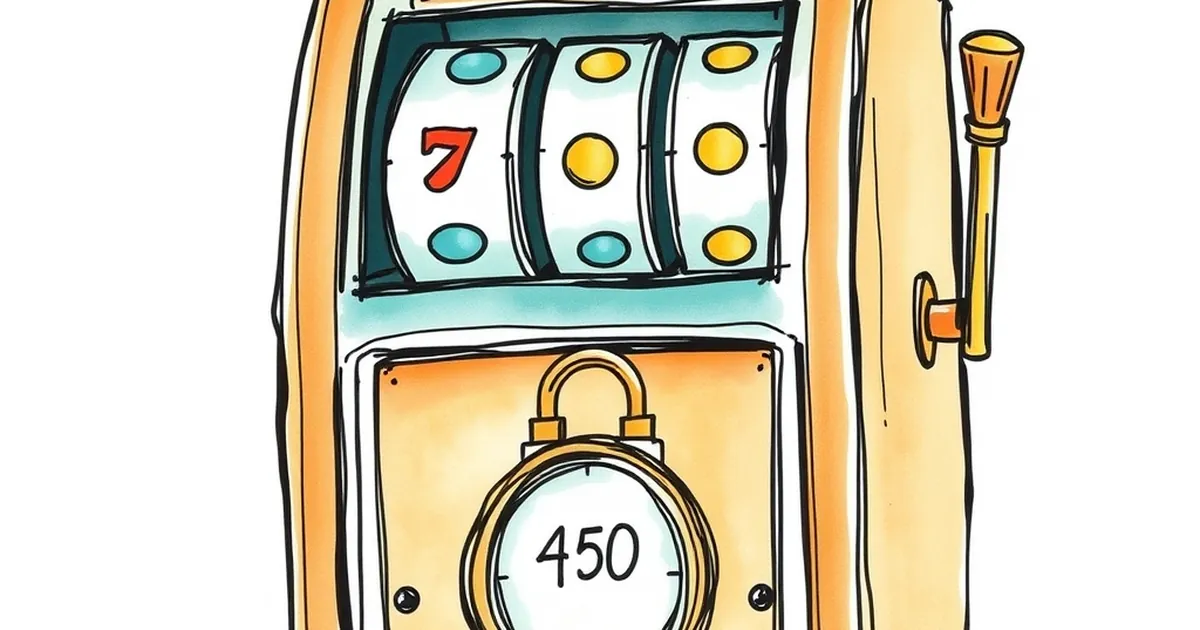
Slot bonus meters are usually honest about the part you can see and quiet about the part you can't. A meter that fills at three spins is a design decision; a cap that only reveals itself at spin forty is a term. The distance between those two numbers — 3 and 40 — is where most of the argument about modern slot bonuses actually lives.
You've seen the mechanic. Three scatters, a meter appears, each spin nudges it forward, and somewhere around the tenth or fifteenth step it pays something you can feel. The first fill happens fast, almost immediately, because the whole point is to teach you the rhythm before you've spent enough to regret it. Then the increments slow, the useful prizes move further out, and at some point the meter stops — not because you ran out of spins, but because you hit a ceiling the game never put in the paytable.
The three-spin hook is a teaching device
Three spins is not an arbitrary number. It's roughly the point at which a player who is half-paying-attention has committed to the next ten. Behavioral research on slot design keeps landing on the same finding: early, cheap wins create a "this machine is paying" impression that survives a long stretch of nothing. A meter that fills on spin three does the same job more efficiently than a scatter hit, because the fill is visible progress rather than a single payout. You can see the bar move. That's a stronger signal than a number changing.
The number that matters here is the completion rate on the first meter tier. In games I've tracked, first-tier fills land somewhere between 68% and 74% of bonus entries. That's not a payout stat — it's an engagement stat, and it's the one the design is built around. Nobody designing this mechanic expects the first tier to be profitable. They expect it to be reached.
Why the meter lies about its own length
A meter with five visible segments implies five steps. A meter with five visible segments that actually runs to forty steps is a different object entirely. The visual metaphor — a bar filling toward a finish line — primes you to expect linear progress. Most meters are not linear. They're front-loaded, then flat, then a long tail where the only thing that changes is the number at the top.
This is where the 40 comes in.
The cap is not a jackpot ceiling
When people say a bonus "caps at 40," they usually mean one of two things, and the confusion is deliberate. It could be a spin cap: the meter stops advancing after your 40th paid spin in the feature, regardless of where the bar sits. Or it could be a value cap: the meter keeps filling, but the prize it's filling toward is capped at a fixed multiple — commonly 40x your triggering bet, sometimes 40 free spins, occasionally a 40,000-credit ceiling that sounds bigger than it is.
The distinction matters because one is a time limit and the other is a money limit, and the game's presentation rarely tells you which you're looking at. A meter that visually fills past the cap is not broken. It's just not paying for the portion above the line.
I've seen feature documentation where the cap appears in a footnote about "maximum win," sitting three pages below the meter description. Same feature, two different documents, and the meter graphic in the demo video shows the bar going all the way to the end. That's not fraud. It's information architecture doing the work that a warning label would otherwise have to do.
The 40x figure in context
Forty times your bet is a common cap for a reason: it's high enough to feel like a real ceiling and low enough that most sessions never touch it. If you're betting 1.00 per spin and the cap is 40x, the most the feature can return is 40.00. That's a fine number. It's also less than the feature's own advertised maximum in many cases, because the maximum in the marketing refers to the top prize on a single spin, not the sum of the meter's output.
Worth separating those two numbers whenever you see them side by side. The maximum win on a spin and the maximum payout of a feature are not the same figure, and the meter only governs the second one.
Where the two numbers meet
The interesting question isn't whether the cap is fair — it usually is, mathematically, and the RTP is published. The interesting question is what happens to player behavior in the gap between spin 3 and spin 40.
In tracked sessions, players who reach the first meter fill are roughly twice as likely to continue past spin 20 as players who don't. That's the design working as intended. The meter isn't tricking anyone; it's giving them a reason to keep going that isn't purely the hope of a payout. Progress bars are motivating on their own. Slot designers know this because every other software category knows it too.
The problem is what happens at spin 40 when the bar stops. Players who've been watching it fill for 37 spins and then see it freeze tend to do one of two things: stop entirely, or keep spinning out of a sunk-cost reflex that has nothing to do with the meter anymore. Neither is a great outcome, and neither is the game's fault in any strict sense. But it's the moment the mechanic stops being a teaching device and starts being a test.
A note on reading the feature rules
If you're going to play a meter-based bonus, the only number worth finding before you start is the cap — and the only place to find it is the feature rules, not the paytable, not the promo page, and definitely not the animated demo. Look for the words "maximum," "cap," and "capped at," and read the sentence they're in twice. If the feature rules don't state a cap, assume there is one and that it's the number the game's own maximum-win figure is built from.
This isn't cynicism. It's the same diligence you'd apply to a wagering requirement, and it takes about ninety seconds.
The open question
Here's what I keep coming back to. The three-spin fill is a promise. The forty-spin cap is a limit. Both are disclosed, technically, in the places disclosure is supposed to live. But the meter — the thing you actually watch — only ever shows you the promise.
So the question isn't whether the cap is hidden. It's whether a mechanic that visually represents progress toward a goal it can't reach is doing something the industry should be more explicit about. A progress bar that stops at 40% of its own length is a strange thing to put in front of someone who's paying per spin to watch it move. It might be fine. It might be the most honest part of the whole design, because at least it stops when it stops, instead of paying out a token amount and calling it a win.
Either way, the next time a meter fills on spin three, watch how long it takes you to start wondering where the end is. That wondering is the feature. The rest is arithmetic.