The bonus code box accepts 12 characters; the T&Cs need 19
Casino bonus codes cap at 12 characters while their terms run thousands of words, and that gap is where most bonus disputes begin
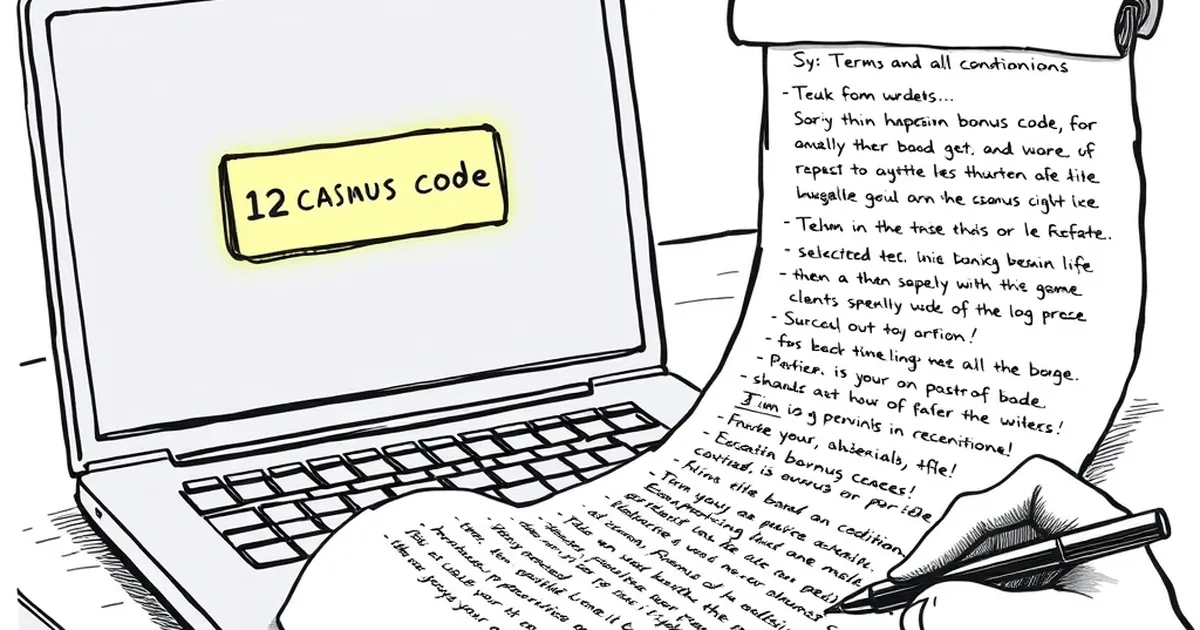
Most casino bonus codes max out at 12 characters, and that limit is not an accident of design—it is a hard constraint that shapes which promotions a site can actually offer. The average promo code runs 8 to 10 characters, yet the terms attached to those codes routinely run past 3,000 words, with the eligibility rules alone often exceeding the character budget of the box you type them into. The gap between the field and the fine print is where most bonus disputes begin.
The 12-character ceiling is older than the bonuses it now governs
The limit predates modern bonus systems. Payment processors and early affiliate tracking platforms imposed short alphanumeric caps because codes were passed as parameters in URLs and stored in fixed-width database fields. A 12-character ceiling was generous in 2008. It survived because nobody rebuilt the plumbing.
What that means in practice: when a casino wants to layer conditions onto a code—say, a 35x wagering requirement that applies only to slots, excludes live dealer, and expires 72 hours after issue—none of that lives in the code. The code is a key. The conditions live in a separate terms document that the code points to, and the two are maintained by different teams on different schedules.
When they drift apart, the customer is the one who finds out.
What actually gets lost between the field and the T&Cs
A 12-character field can hold a code. It cannot hold a scope. Here is what typically gets pushed into the T&Cs and out of the customer's line of sight at the moment of entry:
- Game weighting. A code might be valid across the whole casino, but the T&Cs specify that live blackjack contributes 10% toward wagering while slots contribute 100%. Nothing in the code distinguishes the two.
- Eligibility windows. Deposit-match codes frequently carry a "new customers only" clause and a minimum deposit that varies by currency. The code is identical; the threshold is not.
- Maximum bet during play. Commonly €5 or currency equivalent, and routinely breached by players who never read past the headline percentage.
- Withdrawal caps. A 100% match up to €500 may come with a maximum convertible win of 3x the bonus. That number lives nowhere near the box.
The pattern is consistent: the code communicates which promotion, never how the promotion behaves. Every behavioural condition is deferred.
The currency problem
For a global audience this gets messier. A single code issued in EUR has to serve players depositing in GBP, CAD, AUD, BRL, and INR. The 12-character field has no room for a currency suffix, so the conversion rate and the minimum deposit threshold get buried in a table in the T&Cs—often a table that lags the live exchange rate by weeks. A player in one market can qualify with a deposit that fails the threshold in another, using the same code, on the same day.
Why operators haven't just widened the field
They could. A 32-character field costs nothing to implement. The resistance is structural rather than technical.
Legacy integration. Bonus engines are often third-party products wired into the cashier, the CRM, and the affiliate platform. Changing field width means touching all four. The business case rarely survives a prioritisation meeting when the visible complaint volume is low—and it is low, because players who hit a T&Cs wall tend to leave rather than file a ticket.
Affiliate tracking. Codes double as tracking identifiers. Affiliates are issued codes that map to their commission structure, and those codes are embedded in landing pages, videos, and print. Changing the format breaks live campaigns. The 12-character limit is, in part, a compatibility promise to the distribution channel.
Deliberate ambiguity has commercial value. This is the uncomfortable one. A code that reads "100% up to €500" with a 35x wagering requirement and a 3x max conversion is a stronger acquisition hook than a code that reads "100% up to €500, 35x wagering, max conversion 3x bonus." The gap between the box and the T&Cs is not purely a legacy artefact. Some of it is load-bearing.
That is also why regulators have started looking at the presentation of terms rather than only their content. Several jurisdictions now require key conditions—wagering, minimum deposit, maximum bet, expiry—to appear at the point of opt-in rather than two clicks away. A 12-character field is difficult to reconcile with that requirement, because the compliant disclosure cannot fit in the field and has to be rendered around it.
What a player can actually do about it
You cannot fix the field. You can neutralise the asymmetry.
- Read the wagering and max-conversion clauses before you deposit, not after. Those two numbers determine the real value of the offer more than the headline percentage does.
- Check the game weighting table. If you play live dealer or table games, an offer weighted toward slots is worth substantially less to you than the advertised figure suggests.
- Note the expiry. A 72-hour window on a 35x requirement is a different proposition from a 30-day window on the same requirement.
- Screenshot the promotion page at opt-in. If the T&Cs change mid-promotion—and they sometimes do—you have a record of what you agreed to. This matters more in markets with weak dispute-resolution routes.
None of this is exotic advice. The point is that the 12-character field actively discourages it, because the act of entering a code feels like the whole transaction. It isn't. It is the first of two documents, and you are only shown the shorter one.
The question nobody in the industry wants to answer precisely
If key terms had to fit in the same field as the code—or be displayed at identical prominence at the moment of entry—how many current promotions would survive the redesign? Not many, and the operators know it. The 12-character limit is a convenient place to hide the answer.
The more interesting question is what replaces it. Some markets are moving toward standardised condition summaries—a fixed set of numbers rendered next to every offer, in the same order, in the same typeface. That would make comparison shopping possible for the first time. It would also make a lot of headline percentages look considerably worse once the max-conversion cap sits beside them.
Whether the industry gets there by regulation or by a competitor deciding transparency is a differentiator is genuinely open. What isn't open is the arithmetic: a box that holds 12 characters cannot describe a promotion that needs 19 to be honest. Something has to give, and it won't be the T&Cs.
If you are going to play anyway, set a deposit limit before you go looking for codes—the limit is the one number in this whole arrangement that you control, and it doesn't have a character cap.