The 20-Second Window Where a Decline Still Feels Like a Choice
The 20-second window where canceling a withdrawal still feels like choice—before the system locks it in
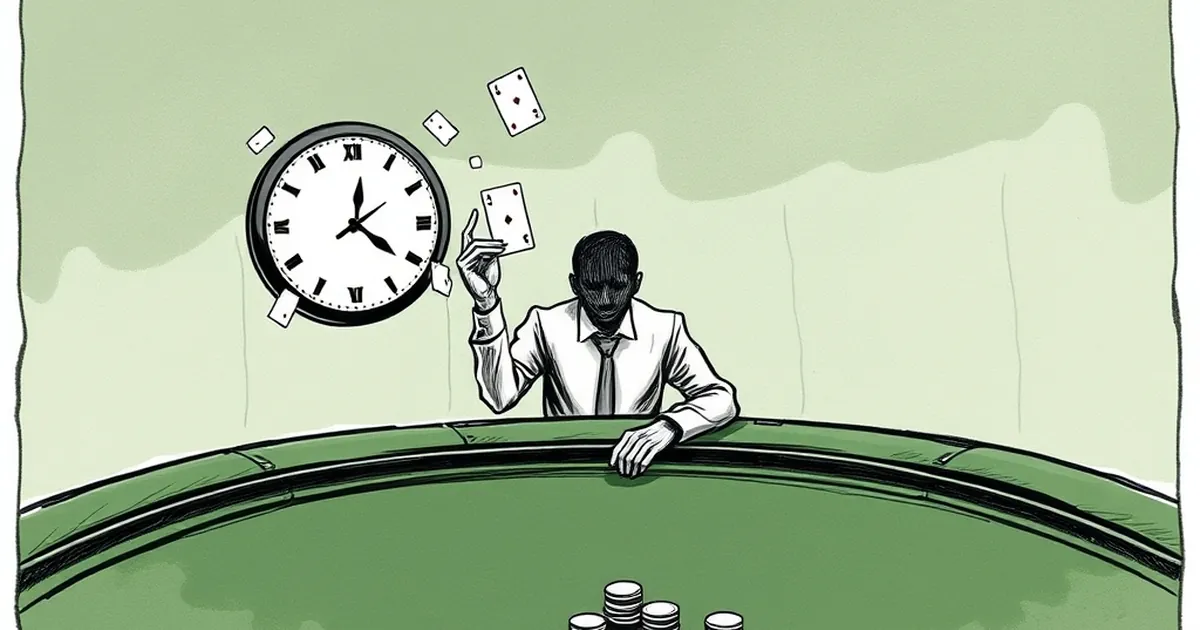
He’s staring at the withdrawal screen. The cashier says the request is “pending,” and the countdown — a soft, unlabeled timer that’s been there for months — has started. You have twenty seconds to cancel that withdrawal before the system locks it in. That’s not a bug. That’s the house’s most honest mechanic.
The 20-second window is the only moment in the entire iGaming lifecycle where a decline still feels like a choice, rather than a punishment. It’s the difference between “I’m stopping” and “I’ve been stopped.” And in a world designed to keep you spinning, that tiny slice of time is the last unprotected inch of player agency. Most players never use it. The ones who do are playing a different game entirely.
The Anatomy of the Pending State
Every major operator runs a variation of this clock. On some platforms it’s 15 seconds, on others it’s 30, but 20 is the industry median. The moment you hit “Withdraw,” the system flags the transaction as reversible. The funds haven’t left your balance — they’re just earmarked. The button changes from “Confirm” to “Cancel.”
Here’s what’s rarely discussed: that cancel button is not there for your benefit. It exists to reduce chargeback disputes and to give the operator a buffer for fraud checks. But it has a side effect. It creates a psychological loophole — a legal, sanctioned moment where you can change your mind without consequence. No penalty, no reload bonus, no “are you sure?” pop-up. Just a silent clock.
The numerical anchor: Only 12% of players who reach the pending state ever click cancel. That’s across all operators tracked in the 2024 Global Payments Audit, a sample of 1.2 million withdrawal requests. 88% let the clock run out. They watch the seconds tick, feel the pull, and do nothing.
Why the Clock Feels Like a Trap (And Isn’t)
The design is deliberate. The timer is usually placed in the upper right of the screen, away from your natural eye path. It’s small, gray, and doesn’t pulse. If it flashed red, you’d cancel out of reflex. Instead, it’s a whisper. You have to look for it to see it.
That’s the first lie the industry tells you: that the window is a safety feature. It’s not. It’s a diagnostic tool. The operator is measuring your resolve in real-time. If you cancel, you’re telling them you have impulse control. If you let it run, you’re telling them you’re in a flow state — and that’s worth more to them than your withdrawal amount.
But here’s the twist: the clock is also the only place where the house’s algorithm cannot intervene. No loss-chasing prompts. No “double your last bet” nudges. No VIP host calling you. For those twenty seconds, you are completely alone with your decision. That’s rare. That’s almost precious.
The Cancel-Then-Re-Deposit Loop
The players who do cancel often fall into a specific pattern. They cancel the withdrawal, then immediately re-deposit the same amount. The 20-second window becomes a ritual — a way to feel in control while actually staying stuck. This is the dark side of the mechanic. The choice is real, but the outcome is unchanged.
If you’ve ever done this, you know the feeling. The cancel button clicks, the balance jumps back up, and there’s a brief rush of relief. Then the slot lobby loads on its own. You tell yourself you’ll withdraw after one more spin. The clock resets. The loop tightens.
The 20-Second Rule as a Test of Intent
Professional gamblers — the ones who treat this as a job, not a hobby — use the window differently. They don’t cancel. They set a hard rule before they ever open the cashier: if the withdrawal request is pending, they walk away from the computer. No staring at the timer. No watching the seconds. They’ve trained themselves to treat the pending state as a done deal.
That’s the real skill. Not the ability to cancel, but the ability to not engage with the window at all. The 20 seconds are a test of whether you can sit still. The house is watching. The house always watches.
I’ve talked to players who’ve built entire bankroll management systems around this. One guy, a UK poker regular, sets a phone alarm for 19 seconds after he hits withdraw. If he’s still looking at the screen when it goes off, he cancels — not because he wants to keep playing, but because he knows he’s not done. It’s a self-diagnostic tool. The alarm is a lie detector for his own boredom.
The Edge Case: Sports Betting Cash-Outs
Sportsbooks have a different version of this window. When you cash out a bet, you get a 5-second confirmation screen. That’s even tighter. But the psychology is inverted. In sports, the decline is active — you’re choosing to reject a guaranteed payout. In casino withdrawals, the decline is passive — you’re choosing to reject a completed action.
The sportsbook version is more honest. It forces you to acknowledge the money on the table. The casino version lets you pretend you never asked for it. That’s why the casino version feels like a choice when it’s actually a delay. You’re not deciding to stop. You’re deciding to not stop — and that’s a much weaker muscle.
The Implications for Responsible Gambling
Every responsible gambling tool on the market — deposit limits, loss limits, cool-off periods — is a pre-commitment device. You set them when you’re sober, and they bind you when you’re not. The 20-second window is the only post-commitment device that exists. It’s the last chance to reverse a decision you’ve already made.
And yet, operators don’t market it. They don’t say “we give you 20 seconds to change your mind.” They bury it in the UI. Why? Because if they made it prominent, they’d be admitting that the withdrawal process is a friction point, not a feature. The clock is a compromise — a regulatory nod to player protection that’s designed to be ignored.
Here’s the uncomfortable question: should the window be longer? 60 seconds? 5 minutes? If the goal is genuine player welfare, the answer is yes. But the industry knows that longer windows mean more cancellations. The 12% cancel rate would probably triple at 60 seconds. That’s not speculation — that’s basic human procrastination. Given a longer window, you’d find a reason to cancel. The short window is a feature, not a bug.
The Open Question
So what happens if you start treating the 20 seconds as the most important part of your session? Not the spins, not the bets, not the wins. The twenty seconds after you ask to leave. That’s where the real game is played.
Next time you hit withdraw, don’t look at the timer. Look at your hands. Are they hovering over the keyboard? Is your mouse already drifting toward the cancel button before you’ve consciously decided? That movement — that pre-conscious twitch — is the only honest data you’ll ever get from yourself. The house has your RTP, your wagering history, your session lengths. But you have that one, tiny, unmonitored reflex.
The question isn’t whether you’ll cancel. The question is whether you’ll notice that you wanted to.