Streaks survive 4 days; the reward calendar resets on day 5
Why a four-day streak feels worth protecting but day five invites users to walk away, and what that asymmetry means for loyalty rewards
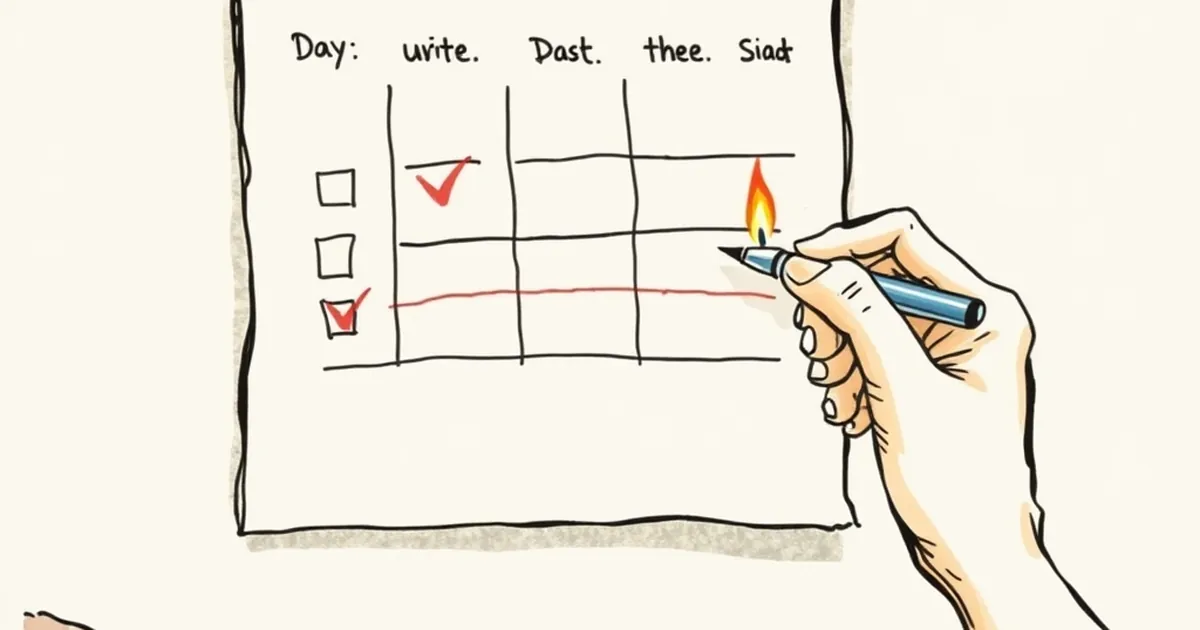
Most loyalty programs assume that habit is a straight line: show up, get rewarded, repeat. But anyone who has watched a daily streak counter reset on a Tuesday knows the truth is messier. The interesting question for banks and card networks isn't whether streaks work — it's why a four-day streak feels worth protecting while day five quietly invites people to walk away, and what that asymmetry means for how you design rewards.
The streak is a contract with a cliff edge
A streak works because it converts a series of small, individually unremarkable actions — opening an app, tapping a card, checking a balance — into a single accumulating asset. That asset has no cash value, but it has psychological value, and the two don't need to match for the mechanism to work.
Behavioral economists have a name for the underlying discomfort: loss aversion. Kahneman and Tversky's work in the late 1970s and early 1980s established that losses loom larger than equivalent gains — roughly twice as large in many experimental settings. A streak in progress is framed as something you already own. Breaking it is a loss. Extending it is merely a gain. That asymmetry is why a four-day streak generates real protective behavior while the reward itself might be trivially small.
But here's the part loyalty designers often miss: the streak's power depends on where the cliff sits. If the reward calendar resets on day five — meaning the accumulated progress evaporates rather than converting into something — you've built a mechanism that produces loss aversion for four days and then, abruptly, produces something closer to relief. The user who breaks on day five doesn't feel they've lost an asset. They feel they've been let off a hook.
Variable rewards work until the calendar becomes legible
Card issuers have leaned on variable reinforcement for decades, and the behavioral literature behind it is well established — variable-ratio schedules, the intermittent reinforcement that Skinner's work documented, produce persistent behavior precisely because the next reward is unpredictable. Points multipliers, surprise cashback offers, "you've unlocked a bonus category" notifications: all of it borrows from the same shelf.
The problem is that streaks and variable rewards are in tension when they're combined carelessly. A streak is a fixed schedule with a visible counter. The moment you put a calendar behind it — day one, day two, day three, day four, reset — you've made the schedule legible, and legible schedules invite calculation rather than compulsion.
A concrete example: several European neobanks have run "savings streak" features where a user who moves a small amount into a savings pot each day builds a visible chain. Internally, the pattern that shows up in engagement data is a spike in activity through day three or four, then a sharp drop among users who miss a day — not because they stopped caring, but because the reset made the decision easy. Once the chain is broken, the cost of re-entry is a full restart, and a full restart feels like starting from zero with nothing to show for the previous effort. The sunk cost that should have pulled them forward instead pushes them out.
This is a design failure disguised as a motivational feature. The streak created commitment, then the calendar destroyed it.
Day five is where the psychology flips
Think about what a streak is doing at each stage. Days one and two are cheap — low commitment, low investment. Day three is where the endowment effect starts to bite: the user now has something to lose. Day four is peak protection; the asset is large enough to matter and the cost of defending it is still small.
Day five is where the arithmetic changes. The user has now invested enough that they begin to evaluate rather than simply continue. Is this worth it? What am I actually getting? That's the moment the reward schedule becomes visible as a schedule, and visible schedules get judged on value rather than momentum.
There's a useful parallel in decision-making under uncertainty. Prospect theory's value function is concave for gains and convex for losses — meaning that as the accumulated streak grows, each additional day adds less marginal satisfaction, while the perceived cost of maintaining it stays roughly constant. At some point the curves cross. The streak stops being an asset worth protecting and becomes a chore worth abandoning. The reset on day five doesn't create that crossing; it just makes it visible and gives the user permission to act on it.
The fix isn't to make streaks longer. It's to make the reset convert rather than erase. A streak that banks into a tier, a badge, a permanent status, or a small one-time credit when it breaks preserves the loss-aversion engine while removing the cliff. The user who misses day five keeps something. The next streak starts from a position of strength, not from zero.
What this means for payments and card products
Payments is an unusual category for streak mechanics because the underlying behavior — spending — is already frequent and largely habitual. That makes streaks cheap to run and easy to over-engineer. The risk isn't that users won't engage; it's that engagement becomes brittle.
Three practical implications for anyone designing around a reward calendar:
Anchor the streak to a behavior the user already wants to do. A streak tied to spending more is a streak tied to a behavior users may resent. A streak tied to checking a balance, rounding up a purchase, or reviewing a statement is tied to behavior that produces genuine value, which makes the streak a scaffold rather than a nudge toward overspending.
Make the break graceful. The reset should convert progress into something durable — a tier, a record, a small reward — so that missing a day costs the user momentum but not their accumulated standing. This is the single highest-leverage change available, and it costs almost nothing to implement.
Watch the day-four-to-day-five drop-off as a diagnostic, not a failure. If users consistently disengage at the same point in the calendar, that's not a motivation problem. It's a signal that your reward structure has become legible enough to be judged, and found wanting. The right response is to change what's being offered at that point, not to add more pressure earlier.
Where this goes next
The next generation of card and banking rewards is likely to move away from visible calendars and toward what might be called opaque accumulation — progress that the user can feel but can't precisely count. That's harder to build and harder to explain, but it sidesteps the day-five problem entirely, because there's no day five to reach.
In the meantime, the practical move is simpler: audit your streak mechanics for the cliff. Find the day where the reset erases rather than converts, and ask whether the loss aversion you've built for four days is worth the relief you're handing out on the fifth. In most programs, it isn't — and the fix is a conversion rule, not a longer streak.