Sportsbook cash-out quotes 3s; the settled bet settles in 2 days
A three-second cash-out quote versus a two-day wait for settled bets reveals why sportsbook speed feels like payment but rarely is
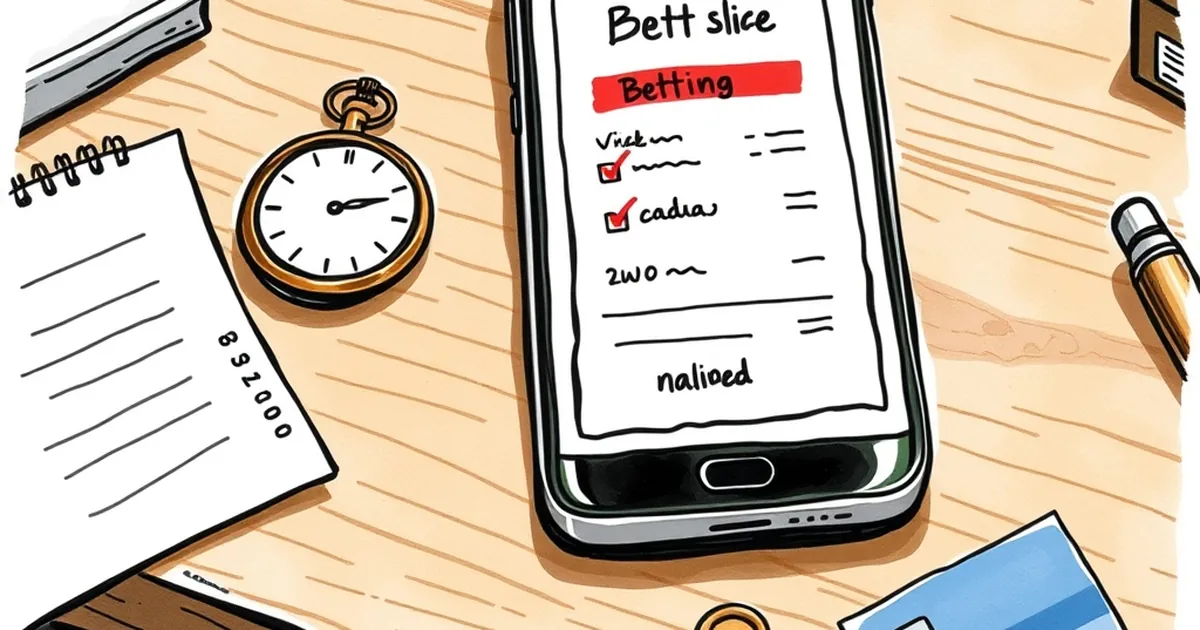
A cash-out quote can land in your app in about three seconds. The money from a bet you simply let run to settlement usually takes closer to two days to become withdrawable. That gap — seconds to quote, roughly 48 hours to pay — is the single most misleading thing about how modern sportsbooks feel versus how they actually work.
It matters because the two experiences are engineered to look like the same product. You tap a button, you see a number, you feel like you've been paid. One of those is a real transaction. The other is a live offer that can vanish, reprice, or get declined before it ever touches your balance.
What actually happens in those three seconds
A cash-out quote is a pricing event, not a payment event. When you hit the button, the book's trading engine recalculates the fair value of your open position against the current market, subtracts its margin, and throws a number back at you. On a liquid market — an English Premier League match, an NBA game, a Grand Slam tennis match — that round trip genuinely takes two to four seconds. On thinner markets it can stall, and most books will grey the button out rather than hold a stale price.
The number you see is not your stake back. It's the current market value of the bet, minus the book's cash-out margin, which typically runs somewhere between 2% and 8% depending on the sport and how much time is left. On a bet placed at 2.50 that has drifted to 3.20, the quote will reflect the worse side of that move. On a bet that has shortened, you'll see a profit — but a smaller one than the raw odds movement implies.
And the quote is perishable. Most operators give you a window of around 8 to 15 seconds to accept, sometimes less during in-play. Miss it and the price refreshes. That's not a trick, it's just how a live market behaves — but it does mean the "three seconds" is the start of a negotiation, not the end of a payout.
Why the quote feels instant and final
Because the interface treats it that way. The confirmation animation, the balance ticker, the little green check — all of it is designed to close the loop emotionally in the same moment the price is agreed. The actual settlement still has to clear. Which brings us to the other number.
The two-day settlement, explained without the hand-waving
A bet that runs to full settlement — you backed a team, the match finished, you won — goes through a chain that has nothing to do with how fast your phone is. The result has to be confirmed against the official source, the bet has to be graded, the winnings have to post to your account balance, and then, if you want them in your bank, a withdrawal has to clear.
The grading part is usually fast for major markets. For a Saturday 3pm Premier League kickoff, most books grade within minutes of the final whistle. But "usually" is doing a lot of work there. Bets involving player stats, corners, cards, or anything settled against a third-party data feed can sit in a pending state for hours while the operator reconciles the feed against the official record. A disputed goal or a stat correction can push that to the next day.
Then there's the withdrawal. Even with instant bank transfers and e-wallets, the operator-side processing window is typically 24 hours, and many books advertise "up to 48 hours" or "1–3 business days" for card withdrawals. So the two-day figure in the headline isn't pessimism — it's roughly the median experience for a settled bet withdrawn to a card, counting from the final whistle.
The part nobody puts in the marketing
A cash-out is settled against your balance immediately. A winning bet is settled against your balance after grading, and then against your bank after processing. Those are two different clocks, and the cash-out clock is the one the app shows you.
Why the gap exists, and who it's for
The short answer is that cash-out is a product feature and settlement is plumbing. One is built to feel good and keep you engaged during a live match. The other is a compliance and reconciliation process that operators have no commercial incentive to speed up beyond what regulators and payment providers require.
There's a regulatory angle too. Cash-out quotes are treated as a new bet in most jurisdictions — you're effectively backing the opposite side of your own position — which means the operator has to price it, log it, and honour it within the window. Settlement of an original bet is a different regulatory track entirely, tied to result verification and, in some markets, to anti-money-laundering checks on withdrawal.
The practical effect is that cash-out encourages activity during the event, when attention is highest and the margin is fattest. Settlement is quiet, back-office work. If you've ever wondered why a book will offer you a live cash-out on a 4th-round tennis match at 11pm but take two days to send you £200 from a bet that finished on Tuesday, that's the answer: one is a revenue line, the other is a cost centre.
What this means for how you use cash-out
If you're using cash-out to lock in a profit, the quote you accept is the price you get — there's no later reprice. That's genuinely useful. But the 2–8% margin means frequent cash-outs on marginal positions quietly bleed value, and the instant-feeling confirmation can mask that. A cash-out at 3 seconds and a withdrawal at 48 hours are both "your money" in the app, but only one of them is already gone from the book's risk book.
It's also worth remembering that cash-out availability isn't guaranteed. Books withdraw the option during volatile markets, on bets below a minimum stake (often around £1 or the local equivalent), and when the underlying data feed is unreliable. If your plan depends on cashing out at a specific moment, you're depending on a feature the operator can switch off. That's not a reason to avoid it — it's a reason not to build a strategy around it.
And the usual caveat applies with unusual force here: the speed of the interface is designed to make betting feel frictionless, which is exactly when it's worth slowing down. Set a limit before the match, not during it.
The open question
Here's what I'd genuinely like to know: as real-time payment rails get faster — and in some markets they already settle in seconds — will sportsbooks let the settlement clock catch up to the cash-out clock, or will they keep the two-speed system because the slow one costs them nothing and the fast one keeps you tapping?
The technology to pay a winning bet in under a minute exists. The incentive to do it doesn't, yet. Until that changes, the three-second quote and the two-day settlement will keep sitting next to each other in the same app, looking like the same thing, and quietly not being.