Sportsbook bet builder: 4 legs, 1 void kills all 4
A single void leg can collapse a four-leg bet builder, with payouts varying wildly between books based on buried terms
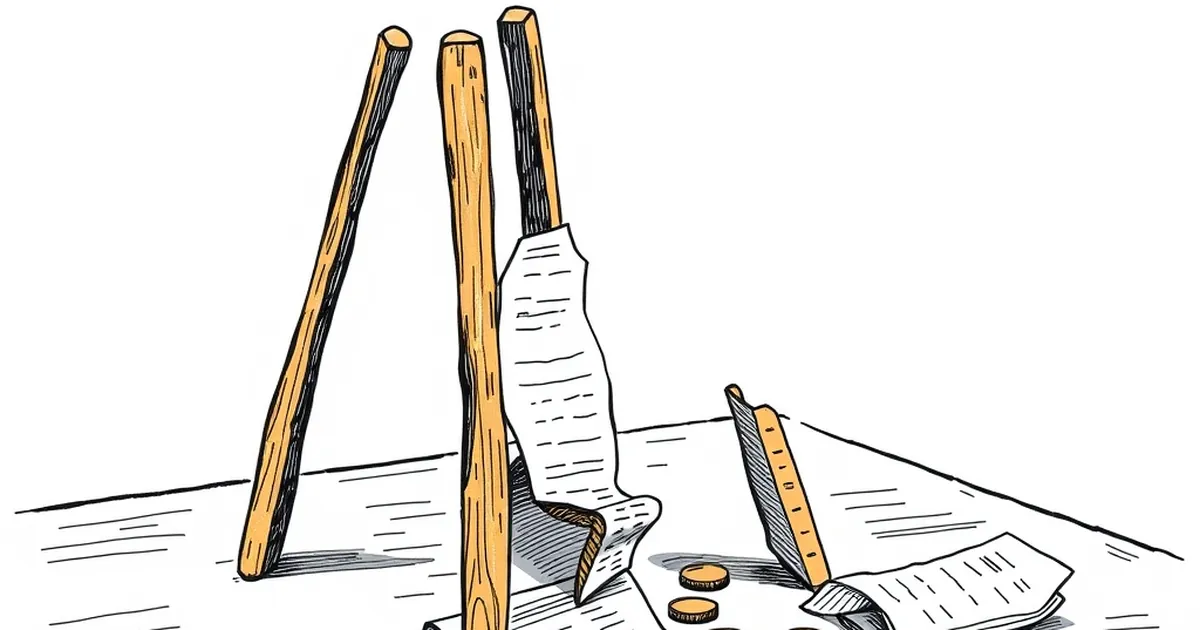
A four-leg bet builder pays as an all-or-nothing parlay, and "all" includes the void leg. Void one selection and the sportsbook doesn't quietly drop it and reprice the other three. It either pays the remaining legs at their original combined odds or, far more often, falls back to a single on the shortest-priced leg. Same void, two wildly different payouts from two books on the same bet. The catch is buried in the terms, not the betslip.
That's the part bet builders don't advertise. A standard parlay with a void leg has an obvious, if annoying, outcome: the void comes out, the rest of the slip is recalculated. A bet builder is priced as one combined market, so the book has to decide what a void does to a price it sold as a single number. Most have decided it means "we recalculate at our discretion," and the discretion usually runs one way.
Why a void leg isn't a normal leg
A void is not a loss. It's the book saying the selection never had a result — a match abandoned before it counted, a player pulled from the squad before kickoff, a market settled on a technicality. On a single, void means stake back. On a standard accumulator, it means the leg drops out and the odds shorten.
A bet builder is a different animal because the legs aren't independent. You're pricing, say, City to win, both teams to score, over 2.5 goals, and Haaland to score. Those outcomes are correlated: if City win 3-1 with a Haaland goal, several legs move together. That correlation is why a bet builder pays less than the same four picks as a plain parlay — the book is charging you for the fact that your legs aren't independent events. It's also why the void rule can't be "just drop the leg." Dropping one correlated selection out of a combined price isn't arithmetic anyone can do cleanly, so the book applies a rule instead.
And the rule is rarely the one you'd want.
The two ways books handle it, and why one is much worse
In practice you'll see two settlements.
Recalculate at original odds. The book strips the void leg and pays the remaining three at the combined price they'd have carried on their own. This is the fair reading, and it's what a standard acca does.
Fall back to the shortest leg. The book voids the builder and pays the remaining legs at the odds of the single shortest-priced selection — often something like 1.25 — applied to your stake. Your four-leg ticket at, say, 6.5 suddenly pays out at a fraction of what the other three legs were worth.
The second is common enough that you should assume it until you've read otherwise. Here's the size of the gap. Take a four-leg builder priced at 8.00 (roughly +700) with a £10 stake. Void one leg and settle under the recalculate rule, and the remaining three might reprice to 5.20 — a £52 return. Settle under the shortest-leg rule where the shortest pick was 1.30, and you get £13 back. Same bet, same void, £39 apart. On a 10-leg builder the spread gets ugly fast.
Some books split the difference: they void the whole builder and return the stake. That's cleaner than the shortest-leg rule but still not what you thought you bought. You spent the correlation premium on a bet that got cancelled by something outside your control.
The correlation premium you don't get back
That's the quiet sting. When you build a bet builder, you accept shorter odds than the same legs as a parlay because the book is pricing the correlation. You're paying for the package. When a void leg collapses the package to a single, you've paid the package price and received a single. The premium doesn't come back.
Run the numbers on a typical four-leg football builder. Four legs at 1.80, 1.90, 2.10, and 1.70 multiply to roughly 12.2 as a parlay. The same four as a correlated builder might price at 9.5 — the book shaving the price because those outcomes tend to co-occur. Void one leg and settle at the shortest single (1.70), and you've turned a 9.5 ticket into a 1.70 ticket. The 22% correlation discount you paid on the way in is now irrelevant, because there's nothing left to correlate.
Where it actually bites: the void-prone markets
Not every leg carries the same void risk, and the risk clusters in exactly the markets bet builders are built for.
- Player props. Anytime scorer, shots on target, assists. A player ruled out in the warm-up voids the leg, and these are the legs people stack. Bookmaker void rates on player props run higher than on match markets precisely because team news lands late.
- Cards and corners. Referee-dependent, and settlement disputes are common. A card shown after the final whistle, a corner awarded then disallowed — these generate voids and re-settlements.
- Asian handicap and total lines on a whole number. A push on a whole-goal line can be treated as a void leg inside a builder depending on the book.
- Postponed or abandoned matches. The whole leg goes, and if it's a single-match builder, the entire ticket can void.
The pattern: the more legs you add from the void-prone categories, the higher the chance one of them kills the payout structure. A four-leg builder with two player props has materially more void exposure than four match-result legs, and the settlement rule matters more for exactly the bets people like building.
What to check before you build
Four things, in order, and none of them take long.
Find the void clause for bet builders specifically. Not the general void rule — the builder rule. Search the terms for "bet builder" and "void" together. If the clause says settlement is "at the operator's discretion" or "recalculated in line with our rules," assume the worst case until you've seen a settled example.
Check whether the book reprices or voids the whole ticket. Stake-return is the least bad of the bad outcomes. Shortest-leg fallback is the worst.
Check the minimum leg requirement after a void. Some books void the entire builder if it drops below a minimum number of legs — often two or three. A four-leg builder that loses one leg to a void can fall below that threshold and void entirely.
Keep void-prone legs on separate slips. If you want a player prop and a match result, two singles cost more in stake but settle independently. You lose the correlation discount, but you also stop one late team-news announcement from repricing three other legs you were right about.
The question the terms don't answer
Here's what's genuinely unresolved: as bet builders get more complex and more correlated, the void rule stops being a footnote and becomes part of the price. A book that settles voids generously is effectively offering better odds on the same visible number than one that doesn't — but you can only see that difference after a void, which is exactly when you're least inclined to shop around.
So the practical move is to treat the void clause as part of the odds comparison, the same way you'd compare RTP on a slot or the wagering on a bonus. Two books quoting 9.5 on the same four legs aren't offering the same bet if one recalculates and the other falls back to the shortest leg. The visible price is identical. The expected value isn't.
The open question is whether regulators will force that clause into the headline price the way they've pushed on bonus terms — or whether bet builders stay the one product where the number on the slip and the number you actually get paid are separated by a paragraph nobody reads until it's too late. Either way, the responsible play is the same: if you can't find the void rule in under a minute, that's your answer about how clearly it's been written.