Small losses sting twice as long as equal gains feel good
Loss aversion explains why a €4 fee hurts more than €4 cashback pleases, shaping everything from interchange pricing to fraud alert design
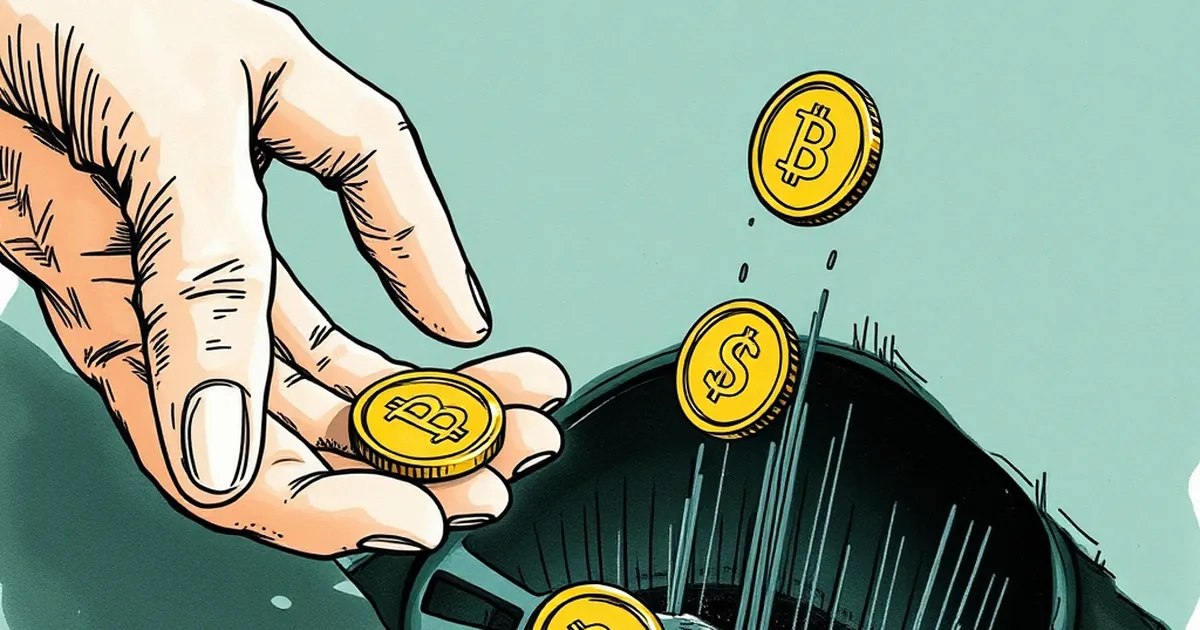
Why does a €4 fee on a card payment feel more irritating than a €4 cashback reward feels satisfying? The amounts are identical, the math is trivial, and yet the emotional ledger refuses to balance. That asymmetry sits at the heart of how people actually use money — and it shows up everywhere from interchange pricing to how banks design fraud alerts.
The asymmetry is real, and it has a name
Loss aversion is one of the most replicated findings in behavioral economics. In their foundational 1979 work on prospect theory, Daniel Kahneman and Amos Tversky found that losses loom larger than equivalent gains — roughly twice as large, in many experimental settings. People will reject a coin flip with even odds of winning or losing €100, because the pain of the loss outweighs the pleasure of the gain.
Kahneman later called this the central insight of his research career: "losses loom larger than gains." It is not a quirk of a few anxious test subjects. It holds across cultures, income levels, and — importantly for anyone in payments — across transaction sizes and channels.
There's a second half to the story that gets less attention. Loss aversion isn't a constant. It's context-sensitive. The same person who shrugs off a €200 loss on a stock portfolio will spend an hour disputing a €3 charge on a statement. The intensity of the reaction depends on how the loss is framed, how it's attributed, and whether it feels chosen or inflicted.
What a €3 fee tells us that a €300 purchase doesn't
Here's a concrete illustration worth sitting with. In 2019, researchers at a European payments provider ran a simple internal test: two groups of customers were shown the same card offer. Group A saw "no annual fee, 1% cashback on all spend." Group B saw "€24 annual fee, 2% cashback on all spend." For a customer spending €2,400 a year, both offers are worth exactly the same — €24. Group B's economics were identical to Group A's.
Group A converted at nearly twice the rate.
The result wasn't a failure of arithmetic. It was loss aversion doing its work. The €24 fee registered as a loss — concrete, immediate, and painful. The extra 1% cashback registered as a gain — abstract, distributed, and less vivid. The customer's mental accounting didn't net them out. It recorded the fee in one column and the cashback in another, and the fee column carried more emotional weight.
This pattern repeats across the industry. Free-tier accounts outperform paid accounts even when the paid account is economically superior for the median user. No-fee foreign transactions beat marginally better exchange rates. "Zero interest for 12 months" beats "low rate forever." None of these are irrational choices in the narrow sense — they're rational responses to the way losses and gains are experienced, not just calculated.
The framing lever
The flip side is that framing can move the needle without changing a single number. A late payment fee presented as "€15" lands differently than the same fee presented as "€15, waived if you pay within 3 days." Same amount, same policy, different emotional weight. The second framing converts a certain loss into a conditional one, and conditional losses are easier to accept because the customer retains a sense of agency.
Payment providers have learned this. So have subscription businesses, insurers, and anyone who has ever designed a checkout flow. The lesson isn't "hide the fee" — regulators have opinions about that — it's "understand that the customer is not running a spreadsheet."
Decision-making under uncertainty: why we overpay to avoid small risks
Loss aversion interacts with uncertainty in ways that are particularly relevant to financial products. When outcomes are uncertain, people don't just weigh expected value; they weigh the worst case more heavily than the math justifies.
Consider payment fraud. A customer who has never experienced card fraud typically overestimates its likelihood and underestimates the bank's ability to resolve it. The result is a willingness to pay for protection — insurance, premium accounts with fraud guarantees, virtual card features — that exceeds the expected loss by a wide margin. That's not stupidity. It's a rational response to a vivid, aversive scenario that the customer can't easily price.
The same mechanism explains why consumers accept interchange-funded rewards programs even when the economics slightly favor a lower-cost alternative. The reward is certain; the cost is diffuse and buried in merchant pricing. Loss aversion doesn't just make losses hurt — it makes visible losses hurt more than invisible ones, which reshapes the entire competitive landscape of the payments industry.
Where the asymmetry gets exploited — and where it backfires
There's a temptation, when you understand loss aversion, to design products that lean on it. Introductory rates that expire. "Free" trials that convert automatically. Fees that are easy to incur and hard to notice. These tactics work in the short term, and they are widely used.
They also generate the kind of customer resentment that shows up in churn data years later. Loss aversion cuts both ways: a customer who feels they were tricked into a loss experiences it more intensely than one who simply incurred a fee they understood. The pain of a loss attributed to bad faith is a different order of magnitude from the pain of a loss attributed to bad luck. Banks that rely on the former tend to discover, eventually, that trust is a balance-sheet item.
Reward loops and the limits of "make it up on the upside"
The instinctive response to loss aversion is to compensate: if losses hurt twice as much, offer gains twice as large. This is roughly how many loyalty programs are designed. Spend €100, earn €2 in points. The points are meant to offset the psychological cost of spending.
It works, up to a point. But reward loops have diminishing returns, and the research on variable-ratio reinforcement — the intermittent, unpredictable reward schedule that B.F. Skinner documented in the 1950s — explains why. Predictable rewards lose their motivational pull quickly. Unpredictable ones sustain engagement longer, but they also generate frustration when the reward doesn't arrive. The sweet spot is narrow, and it shifts as customers learn the pattern.
More fundamentally, rewards can't simply cancel out losses in the customer's mind. The mental accounting is separate. A €2 reward doesn't offset a €2 fee; it sits in a different ledger. What actually reduces the sting of a fee is not a larger reward but a different framing — or, better, eliminating the fee entirely and pricing the product transparently.
What this means for product design
The practical takeaway for anyone building financial products is not "avoid losses" — that's impossible — but "be deliberate about which losses you impose and how you frame them." Three principles tend to hold:
- Make unavoidable costs explicit and predictable. A known, stable fee is less aversive than an unpredictable one, even if the total is higher. Customers can plan around certainty.
- Separate the loss from the gain in time and channel. A fee charged today and a reward credited next month land in different mental accounts, which is sometimes what you want and sometimes exactly what you don't.
- Respect the asymmetry in dispute resolution. A customer fighting a €5 charge isn't being irrational. They're responding to a loss that feels larger than it is. Fast, generous resolution of small disputes buys disproportionate goodwill — because the customer remembers the relief with the same asymmetry that made the loss painful.
The forward-looking question
The interesting frontier isn't whether loss aversion is real — it's how it behaves when money becomes less visible. Cash transactions had a physical cost that made losses tangible. Card taps, mobile wallets, and instant transfers have stripped away much of that friction, and the early evidence suggests the asymmetry doesn't disappear when money goes digital; it just changes shape. A fraudulent tap on a phone can feel more violating than a missing €20 note, because it implicates the device, the account, and the sense of control all at once.
For payment networks and banks, that's the design challenge of the next decade: not how to make transactions faster, but how to make the experience of loss — when it's unavoidable — feel fair, attributable, and recoverable. The institutions that get this right won't just have lower churn. They'll have customers who trust them with the next transaction, and the one after that.