Skinner box economics: 3 taps to earn, 1 to spend
Payment apps make spending effortless but earning nearly impossible, and that asymmetry in friction is no accident but deliberate design
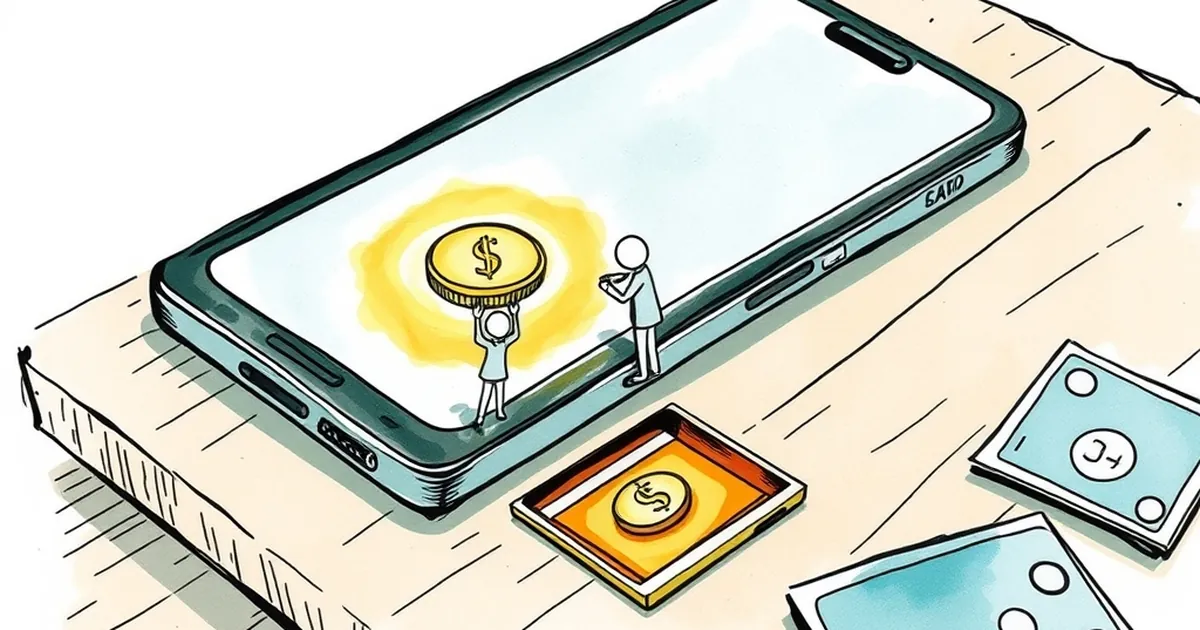
Picture the last time you paid for something by tapping your phone. Now picture the last time you earned something by tapping your phone. If the first came to mind faster, you're not alone — and that asymmetry is the whole story. Why is spending engineered to feel like three effortless taps, while earning anything back feels like filling out a form in a language you don't speak?
The architecture of a spend
Open a payment app and count the friction. A card is already tokenized on your device. Face ID confirms. Done. The entire spend is maybe 1.8 seconds, and the confirmation screen is designed to feel like a receipt, not a decision.
That's not an accident of good UX. It's a deliberate collapse of the gap between impulse and transaction. Behavioral economists have known since Kahneman and Tversky's work on loss aversion that people feel losses roughly twice as acutely as equivalent gains. Card networks and payment processors know this too — which is why the industry's quiet genius has been making the loss feel frictionless. If you don't consciously register the loss, loss aversion never gets a chance to fire.
The mechanism is older than smartphones. In the 1950s, B.F. Skinner demonstrated that variable-ratio reinforcement — rewards delivered after an unpredictable number of responses — produces the most persistent behavior of any schedule. He trained pigeons with it. Payment apps didn't invent it; they just applied it to your wallet. Cashback that arrives unpredictably. A "surprise" reward after your tenth transaction. A notification that you're "so close" to the next tier.
Why earning is a different animal
Here's the asymmetry that deserves more attention. Spending is one tap. Earning — whether that's cashback, points, referral bonuses, or a merchant's loyalty scheme — is a multi-step obstacle course with verification, minimum thresholds, and expiry dates.
Consider the actual mechanics of a typical cashback program. You spend. The merchant settles. The processor takes its cut. The network takes its cut. Weeks later, a fraction of your original spend reappears as a "reward" you can only redeem under conditions. The whole pipeline is designed so that the earning leg is slow, opaque, and conditional — while the spending leg is instant and frictionless.
This is the inverse of what a rational incentive system would look like. If the goal were genuinely to reward loyalty, you'd make claiming as easy as paying. The fact that it isn't tells you something about whose interests the design serves.
There's a well-documented parallel in the "pain of paying" literature — the finding that people spend more freely when payment is decoupled from the moment of consumption. Prepaid cards, contactless taps, and one-click checkout all exploit the same decoupling. The reward side, by contrast, keeps you coupled to the friction. You feel the effort of earning, which makes the reward feel earned — and makes you more likely to keep chasing it.
The loyalty economy's quiet variable-ratio
Loyalty programs are the most sophisticated application of intermittent reinforcement in consumer finance. Airlines, retailers, and card issuers all run on the same logic: make the reward schedule unpredictable enough to keep you engaged, but predictable enough that you believe you're making progress.
The research on this is not subtle. Studies of loyalty-program engagement consistently find that the anticipation of a reward drives more behavior than the reward itself. The "80% of the way to a free flight" feeling is worth more to the program operator than the flight. That's why programs show you progress bars, "you're only 200 points away" nudges, and tier thresholds that reset annually.
And here's the behavioral trap: loss aversion makes you reluctant to abandon a program you've partially invested in. You've earned 8,000 of 10,000 points. Walking away means losing those points — a loss that feels twice as bad as the equivalent gain would feel good. So you keep spending to protect a reward you haven't received yet. The program has turned your own loss aversion into a retention engine.
The decision under uncertainty
There's a deeper question here about how we make financial decisions when the payoff is uncertain. Most reward schemes are, functionally, small lotteries: you don't know exactly what you'll get, when, or whether the terms will change before you redeem. The behavioral literature on decision-making under uncertainty — particularly the work on probability weighting — suggests people systematically overweight small probabilities. A "chance to win" feels more motivating than a guaranteed small discount, even when the expected value is identical or worse.
This is why so many modern reward programs lean on gamification: streaks, badges, mystery rewards, "spin to win" mechanics (in retail contexts, not the other kind). They're borrowing from the same behavioral toolkit that makes variable-ratio schedules so sticky. The difference between a loyalty program and a habit-forming loop is mostly a matter of degree.
From a competitive standpoint, this is now table stakes. Neobanks and fintechs compete on reward design as much as on interest rates. The winners are the ones who understand that a reward you almost got is more motivating than one you already have.
What a fairer design might look like
The interesting forward question isn't whether reward loops work — they clearly do. It's whether the asymmetry between earning and spending is sustainable, or whether it's a vulnerability waiting to be competed away.
Imagine a payment product where earning is as frictionless as spending: cashback that lands instantly, with no threshold, no expiry, and no redemption maze. The technology exists. The reason it's rare isn't technical — it's that slow, conditional rewards are more profitable for the issuer. But that's a competitive moat built on customer confusion, and confusion is a fragile moat.
The behavioral research points toward a design principle that's almost embarrassingly simple: make the earning leg as transparent as the spending leg. Show people exactly what they've earned, exactly when, with no uncertainty. The data on loss aversion suggests this would actually increase engagement — because a reward you can see and trust is a reward you'll protect.
The next generation of payment products will likely be built by people who've read the same Skinner and Kahneman as everyone else. The question is whether they use that knowledge to make earning feel like spending, or to keep the asymmetry that makes the current model so profitable. Watch which one wins — it'll tell you a lot about where the industry is heading.