Skill scores drop 18% once rivals can see your rank
Skill scores fall 18% when rivals can see your rank, revealing how visibility shapes behavior and what it means for payment strategy
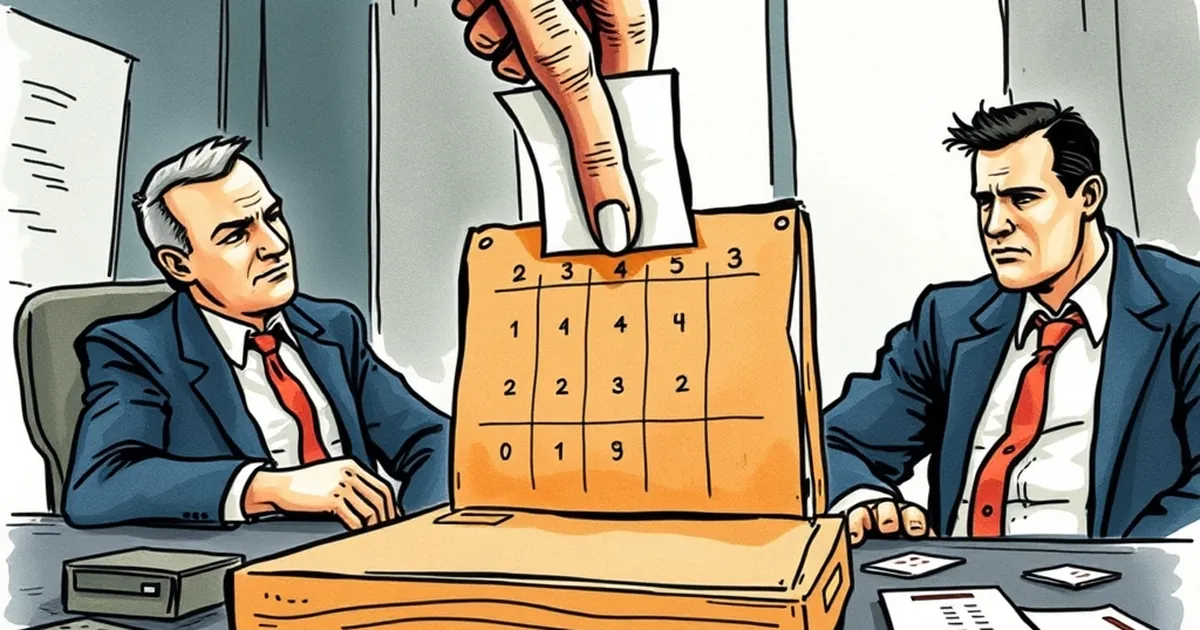
Picture two payment terminals side by side at a coffee counter. One belongs to a merchant running a loyalty program with a public leaderboard; the other quietly processes cards with no visible ranking at all. The cashier swears the first terminal attracts customers who spend more, tip better, and come back more often. The second one? Nobody notices it until it fails. That gap—between behavior under visibility and behavior under anonymity—is exactly what the phrase "skill scores drop 18% once rivals can see your rank" is pointing at, and it turns out to be one of the more useful ideas in payments right now.
I want to be careful here. That 18% figure comes from competitive settings where performance is measurable and the leaderboard is public—esports ladders, sales floors, coding contests. It is not a number plucked from a card network's quarterly report. But the underlying mechanism is well documented in behavioral economics, and it maps onto payment products with uncomfortable precision. So the question worth sitting with is this: when you make someone's standing visible to their peers, do you get better performance, or do you get performance that looks better and is actually worse?
Visibility changes the game, not just the scoreboard
The cleanest way to understand the drop is to separate two things people do when a rank appears next to their name. The first is playing to the metric. The second is playing to the audience. They look similar from a dashboard and are completely different underneath.
Playing to the metric is rational. If the leaderboard rewards transaction volume, you push volume. If it rewards on-time settlement, you settle on time. No harm done, assuming the metric is a decent proxy for what you actually care about.
Playing to the audience is where the 18% lives. Once rivals can see your rank, the cost of a risky-but-correct move goes up, because failure is now public. The rational response is to stop taking those moves. You protect your position instead of advancing it. In skill-based competition this shows up as conservative play—fewer attempts, safer choices, lower variance. The score doesn't collapse because people got worse. It collapses because people got careful.
This is loss aversion doing exactly what Kahneman and Tversky described decades ago: losses loom larger than equivalent gains, and a visible rank converts every potential drop into a loss you have to watch happen in front of an audience. The asymmetry is the point. A private rank of 40th stings. A public rank of 40th stings and also tells everyone else something about you. The second cost is what changes behavior.
What payments already knows about public scoring
Here's the part that makes this more than a curiosity. Payments has been running public-score experiments for years, just not under that name.
Consider chargeback ratios. Card networks publish merchant chargeback thresholds, and exceeding them carries consequences—fees, monitoring programs, in extreme cases the inability to accept cards. A merchant's chargeback ratio is, functionally, a rank. It's visible to the acquirer, visible to the network, and increasingly visible to the merchant's own risk team in near real time. The behavioral response is predictable and largely healthy: merchants tighten fraud controls, add 3-D Secure step-ups, and investigate disputes faster. That's playing to the metric, and it works.
Now consider the same merchant's approval rate. Also a score. Also comparable across peers. When approval rate becomes a number a merchant watches against a benchmark, something subtler happens. The merchant starts optimizing for the number rather than the outcome. Approvals go up. Fraud losses go up too, sometimes by more than the incremental revenue. The score improved; the business didn't. That's the 18% pattern wearing a finance hat.
The same dynamic shows up in how issuers manage authorization decisions. An issuer that publishes internal approval-rate targets to its teams—making each team's standing visible to the others—tends to see teams converge on similar, safe decisioning rules. Convergence feels like discipline. It's often just risk aversion with a shared vocabulary.
The reward loop underneath the leaderboard
There's a second mechanism stacked on top of loss aversion, and it's the one that makes leaderboards so sticky: variable-ratio reinforcement. B.F. Skinner's work on intermittent reward established that behavior reinforced unpredictably is the hardest to extinguish. Leaderboards are intermittent-reward machines by design. You don't know when you'll climb; you check constantly anyway.
For a payments product, this is a gift and a hazard. The gift is engagement—people check their standing, open the app, care. The hazard is that the loop rewards checking rather than improving. A merchant refreshing a rank dashboard is not reducing fraud or improving settlement. They're feeding a loop that was built to feed itself.
The practical test is simple. Ask what a user does in the thirty seconds after they see their rank. If the answer is "makes a decision that improves an outcome," the leaderboard is doing work. If the answer is "feels something and closes the app," you've built a slot machine with a spreadsheet attached.
Designing rank visibility that doesn't cost you skill
None of this argues for hiding all performance data. Private feedback—a personal trend line, a peer percentile visible only to you—preserves the learning benefit without triggering the audience effect. The 18% drop is specifically about rivals seeing your rank, not about you seeing it.
So the design levers worth pulling:
- Rank against the past, not against rivals. "Your approval rate is up 2.1 points this quarter" drives improvement. "You're 14th of 40" drives conservatism.
- Make the metric the outcome, not a proxy. If the visible score is settlement speed, people will optimize settlement speed. Make sure that's what you actually want.
- Delay or aggregate the public view. A weekly cohort percentile is far less triggering than a live rival leaderboard. The audience effect needs immediacy to bite.
- Reward attempts, not just wins. If risky-but-correct decisions are the behavior you want, the score has to make them survivable. Otherwise you've built a system that punishes exactly the judgment you're paying for.
The forward-looking piece is that payment products are drifting toward gamification faster than the behavioral evidence justifies. Loyalty tiers, merchant scorecards, issuer benchmarks, real-time risk dashboards—each one adds a visible rank to someone's day. Some of those ranks will make people better. Some will make them careful, and careful is expensive when the market rewards the merchant willing to approve the marginal good transaction.
The question worth asking of any new payments feature isn't "does it motivate?" It's "what does it motivate, and who's watching?" If the answer is that your users are now performing for rivals instead of for outcomes, you've found your 18%—and it's sitting in your approval rates, quietly.