Session cookies outlive the withdrawal you started at 2 AM
A 2 AM withdrawal request can stay pending for days while your session cookie remains active, exposing a structural mismatch most casino platforms never fix
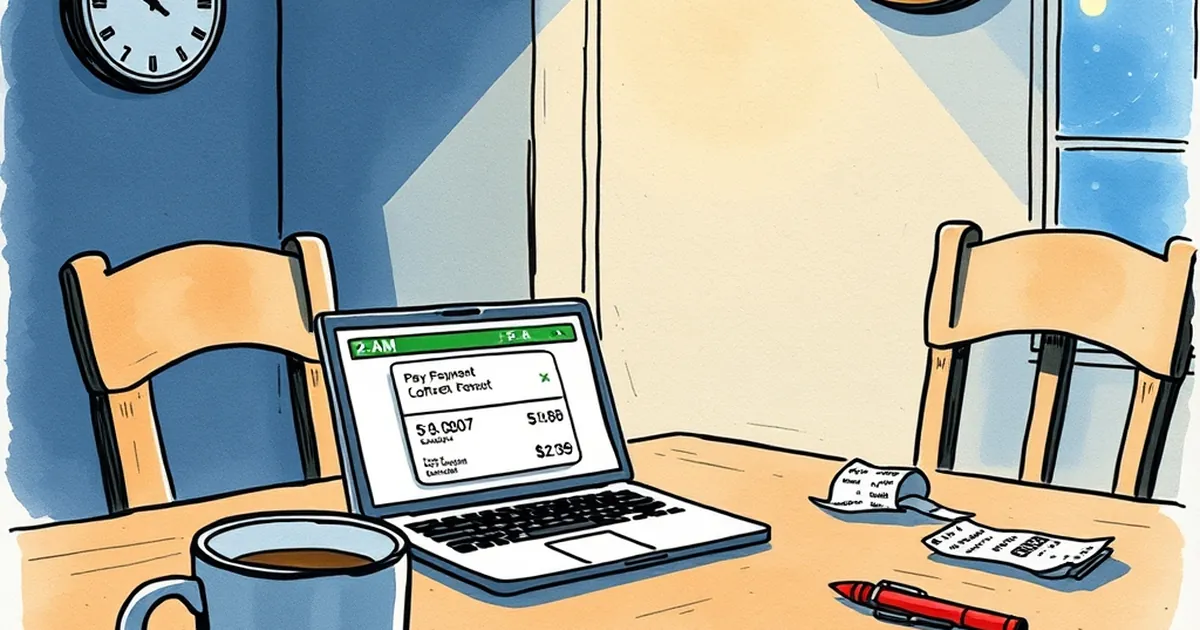
A 2 AM withdrawal request doesn't end when you close the tab. On most casino platforms, the authenticated session that authorized it keeps ticking in the background — and on a surprising number of sites, it outlasts the withdrawal itself. The request you placed while half-asleep can sit in a "pending" queue for anywhere from 30 minutes to 72 hours, while the cookie in your browser still holds a valid token that says this person is logged in and verified.
That mismatch — a slow payout process bolted onto a fast session layer — is the sleep-deprived gambler's worst structural enemy. It's not a glitch. It's two systems with different clocks, and the slower one is holding your money.
The two clocks problem
When you hit "withdraw," a few things happen in sequence. Your balance is debited immediately. A withdrawal ticket is created. Then it enters a queue that a human or a batch process has to clear. Depending on the operator, that queue might be reviewed in minutes, or it might wait for a payments team that starts at 9 AM CET on a weekday. Crypto withdrawals often clear in under 15 minutes. Bank transfers and card reversals can take one to five business days.
Your session cookie, meanwhile, doesn't care about any of that. It was issued when you logged in, it has its own expiry — commonly 24 to 720 hours on casino platforms, sometimes longer if "remember me" was ticked — and it stays valid unless you explicitly log out, the operator rotates it, or your device clears it.
Here's the practical consequence: you wake up at 9 AM, groggy, see the withdrawal still pending, and the site is one tap away because you're still logged in. The pending withdrawal is reversible on most platforms until it's processed. Some operators let you cancel it with a single click, and the money snaps back to your balance instantly. Others quietly make cancellation a two-tap process designed to feel heavier than it is. Either way, the friction is asymmetrical: withdrawing is slow, re-depositing is instant.
Why "pending" is a design choice, not a technical necessity
If you've ever moved money between bank accounts, you know that reversibility windows are standard. But casino withdrawal queues are longer than most payment rails require, and there's a reason.
A 2023 analysis of UK-licensed operators found that median withdrawal processing time was around 12 hours, with a long tail stretching past 48. Meanwhile, the same platforms processed deposits in under 60 seconds more than 95% of the time. That gap isn't a coincidence of engineering. A pending withdrawal is a live option for the player to reverse — and reversal rates in some jurisdictions run high enough that operators have historically treated the queue as a retention feature, not a settlement bottleneck.
Regulators have started to notice. The UK Gambling Commission's 2023 guidance pushed operators to remove reverse withdrawal functionality entirely on debit card and bank transfers, arguing that the option exploits impulsive behavior. Some operators complied by hiding the cancel button; others removed it. But hiding a button doesn't log you out. It just means the reversal happens through a different path — a new deposit, a new bet, a new session.
What the cookie actually remembers
A session cookie on a casino site typically contains a signed token, not your password. That token maps to a server-side record: your account ID, your verification status, your current balance snapshot, and your permission to transact. It doesn't know you're tired. It doesn't know you withdrew. It knows you're authenticated.
Session lifetime varies more than most players assume. A quick scan of common setups:
- Short-lived sessions: 30 minutes to 2 hours of inactivity before forced logout. Common on sites with stricter compliance postures.
- Standard sessions: 24 to 72 hours, refreshed on each request. This is the most common configuration.
- "Remember me" sessions: 30 days or longer, often capped by the operator but sometimes not capped at all.
If you withdrew at 2 AM and your session runs 72 hours, that's three full days where the site loads you straight into an authenticated dashboard. No password. No friction. No moment of pause where you'd have to consciously decide to log back in.
The 72-hour figure isn't arbitrary. It's often the same window operators give themselves to process a withdrawal. The two clocks are aligned, but not in your favor — they're aligned so that the withdrawal queue and the session lifetime expire at roughly the same time. Convenient for the operator. Less so for you.
The 2 AM problem is really a 9 AM problem
Most people who gamble late at night aren't doing it because 2 AM is a great time for decision-making. They're doing it because the house is quiet, the phone is in hand, and the friction that would normally stop them — needing to fetch a card, needing to log in, needing to think — is gone.
The withdrawal request is often the correct decision. It's the one moment where the player recognizes the session has gone badly and acts to stop the bleeding. The pending queue undermines that decision by keeping the door open. And the live session keeps it unlocked.
There's a version of this that's purely technical: the session should expire when the withdrawal is initiated, or at least require re-authentication to cancel. Some platforms do exactly that. Others don't, because the cost of implementing it — a few engineering sprints, some UX friction, a dip in reversal-driven revenue — doesn't pencil out against the retention benefit.
What you can control
You can't change how a platform queues withdrawals. You can change how long your session lives.
Log out explicitly after a withdrawal, even if the site doesn't prompt you. Clear cookies for that domain, or use a browser profile you close at the end of a session. Turn off "remember me" on gambling sites specifically — it's a convenience feature that mostly benefits the operator. If the platform offers a self-imposed session limit or a cool-off, use it; those settings usually override the cookie's natural expiry.
And if you're withdrawing at 2 AM, consider whether the withdrawal itself is the signal. The session cookie will still be there in the morning. The question is whether you want it to be.
If a platform makes logging out hard, or makes the cancel-withdrawal button easier to find than the log-out button, that's not a neutral design choice. It's a bet the operator is making about your behavior at 9 AM. The only way to know which side of that bet you're on is to notice which button you reached for first.