Self-Exclusion Takes 24 Hours to Activate, 30 Seconds to Reverse
Self-exclusion's 24-hour activation delay and 30-second reversal reveal who the tool truly protects and who it leaves exposed
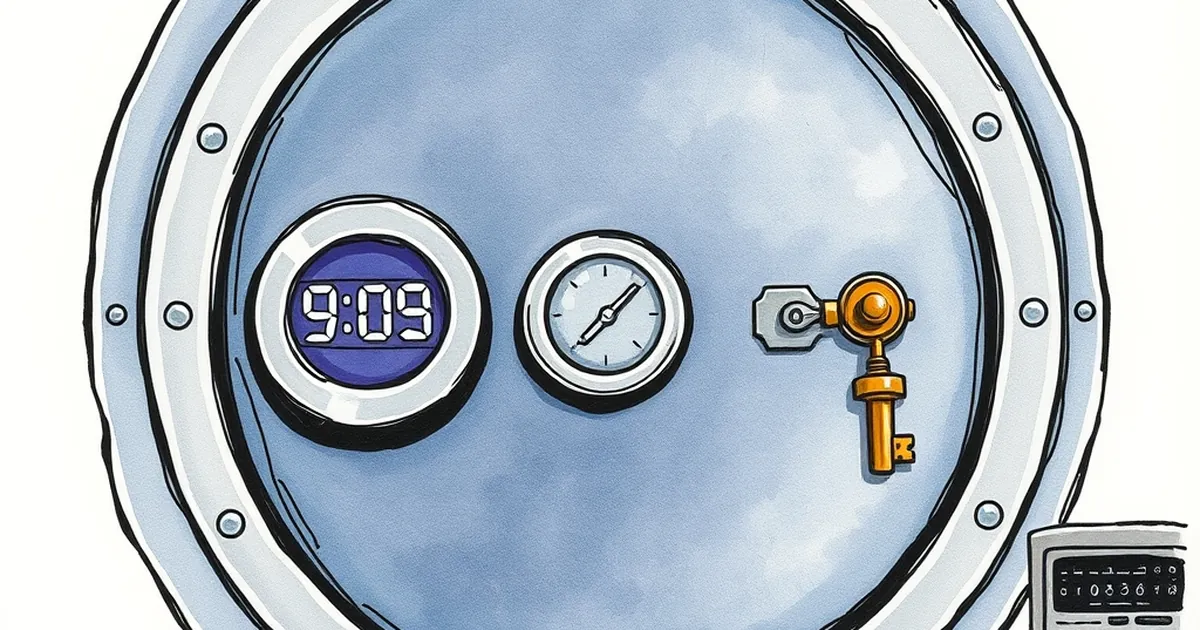
Self-exclusion is built on an asymmetry that most players only notice once they're inside it: signing up can take a regulator-mandated cooling-off period of up to 24 hours before it bites, while reversing it can be done in about 30 seconds with a click and a password. That gap isn't an accident of bad design. It's the deliberate shape of the tool, and it tells you exactly who self-exclusion is meant to protect — and who it isn't.
The 24-hour gap is a feature, not a bug
When you request self-exclusion at a licensed operator, the request usually doesn't take effect instantly. In many regulated markets, the operator is permitted — sometimes required — to apply a cooling-off window before the exclusion goes live. Twenty-four hours is the common figure. During that window, your account may still be accessible, your deposits may still clear, and the "excluded" status hasn't hardened yet.
The stated rationale is consumer protection in reverse: regulators worry about impulsive decisions. A player who self-excludes in a moment of panic or anger might regret it, so the cooling-off period gives them a chance to reconsider before a long lockout — often six months, a year, or five years — kicks in.
This sounds reasonable until you map it onto how problem gambling actually works. The people most likely to need self-exclusion are not making calm, considered requests. They're often making them at 2 a.m. after a loss, or in the middle of a session they can't stop. A 24-hour delay assumes a level of executive function that the request itself suggests is compromised.
What "up to 24 hours" actually means in practice
The phrase "up to" is doing real work here. Some operators apply exclusion within minutes. Others use the full window. There's no universal standard across jurisdictions — the UK Gambling Commission, Malta Gaming Authority, and various US state regulators each set their own expectations, and operators interpret them differently. A player in one market might find their exclusion active in 15 minutes; a player in another might still be able to deposit the next morning.
That inconsistency matters because self-exclusion is often the last tool in the box. If it fails — even for a day — there may not be a next step short of blocking software or a bank-level restriction.
Reversal is fast because it's designed to be
Now the other side. Where activation is slow, reversal is quick. In most systems, ending a self-exclusion early is a matter of logging in (or contacting support), confirming your identity, and clicking through a confirmation screen. Thirty seconds is not an exaggeration for the technical act.
The length of the lockout varies. A six-month exclusion might be reversible after 24 hours in some jurisdictions, or not reversible at all until it expires in others. Rules differ sharply:
- UK: Self-exclusion via GAMSTOP lasts a minimum of six months and cannot be lifted early.
- Some EU markets: Operators may allow early reversal after a cooling-off period, sometimes as short as 24 hours.
- US state-regulated markets: Policies vary by state; some allow reversal, some don't.
Where reversal is permitted, the asymmetry is stark. You can't get in to the exclusion in under a day, but you can get out of it in half a minute. The system is slow to protect you and fast to release you.
Why the asymmetry exists
The logic, such as it is, runs like this: self-exclusion is a restriction on the player's own freedom, so the default should favor the player's ability to undo it. Regulators don't want to trap people in a state they didn't fully understand. Reversal is therefore made easy — sometimes too easy — to avoid accusations of overreach.
But this reasoning treats self-exclusion as a minor inconvenience rather than what it often is: a crisis intervention. If you've reached the point of excluding yourself, the version of you that wants back in 24 hours later is frequently the version you were trying to escape.
The practical problem: who this actually protects
Consider two players.
Player A has a mild discipline issue. They want to stop depositing on weekends. Self-exclusion is overkill, but they use it anyway. The 24-hour activation delay is mildly annoying; the easy reversal is convenient. No harm done.
Player B has a serious gambling problem. They've lost rent money. They self-exclude at 3 a.m. The exclusion activates the next evening. In the intervening hours, they deposit again — because the tool hasn't engaged yet. Later, during the exclusion, they feel the urge, discover reversal takes 30 seconds, and undo it.
The system works acceptably for Player A and poorly for Player B. And Player B is the one self-exclusion was ostensibly built for.
This isn't a hidden flaw. It's visible in the design. The 24-hour activation window exists to protect the operator from complaints about over-eager exclusions. The fast reversal exists to protect the operator from complaints about trapping players. Both choices protect the operator. Neither is optimized for the player in crisis.
The numbers that make the point
A 2023 analysis of UK self-exclusion data found that a meaningful share of GAMSTOP registrations were followed by a return to gambling within the exclusion period via unlicensed sites — a reminder that self-exclusion at licensed operators doesn't touch the black market. Meanwhile, the 24-hour activation gap is a window that a determined player can use. Thirty seconds to reverse, 24 hours to activate: the math favors the wrong outcome.
What would a better-designed system look like
If the goal were genuinely to protect the player in crisis, the asymmetry would run the other way. Activation would be instant — or near-instant — and reversal would be slow, deliberate, and hard. That's roughly how GAMSTOP works in the UK: no early reversal, full six-month minimum. It's also why some jurisdictions are moving toward mandatory instant activation.
The trade-off is real. Instant, irreversible exclusion is a heavy tool, and applying it to everyone who clicks the button would trap some people who made a hasty decision. But the current design errs in the opposite direction, and it errs hardest against the players who need the tool most.
A middle path exists: instant activation, with reversal possible only after a cooling-off period of days, and only through a process that requires more than a click — a phone call, a written request, or a waiting period after the request. That would flip the 24-hour/30-second ratio without eliminating the player's ability to change their mind.
The question regulators haven't answered
The real issue isn't whether self-exclusion should be reversible. It's whether the tool is meant to be a genuine barrier or a symbolic gesture. A 24-hour activation window and a 30-second reversal are the design choices of a symbolic tool — one that lets operators and regulators point to a protective measure without it being strong enough to inconvenience a determined player.
So the open question is this: if self-exclusion is meant to work, why is it built to fail at exactly the moment it matters? And if it isn't meant to work, what is it actually for?
If you or someone you know is struggling with gambling, self-exclusion is one tool among several. It works best alongside blocking software, financial restrictions, and support from a service like GamCare or your local equivalent — not as a standalone fix.