Push notifications earn 3x more taps than the cashout button
Push notifications see 8–12% tap rates versus 2.5–4% for cashout buttons, revealing why retention teams are rethinking the app's most profitable screen
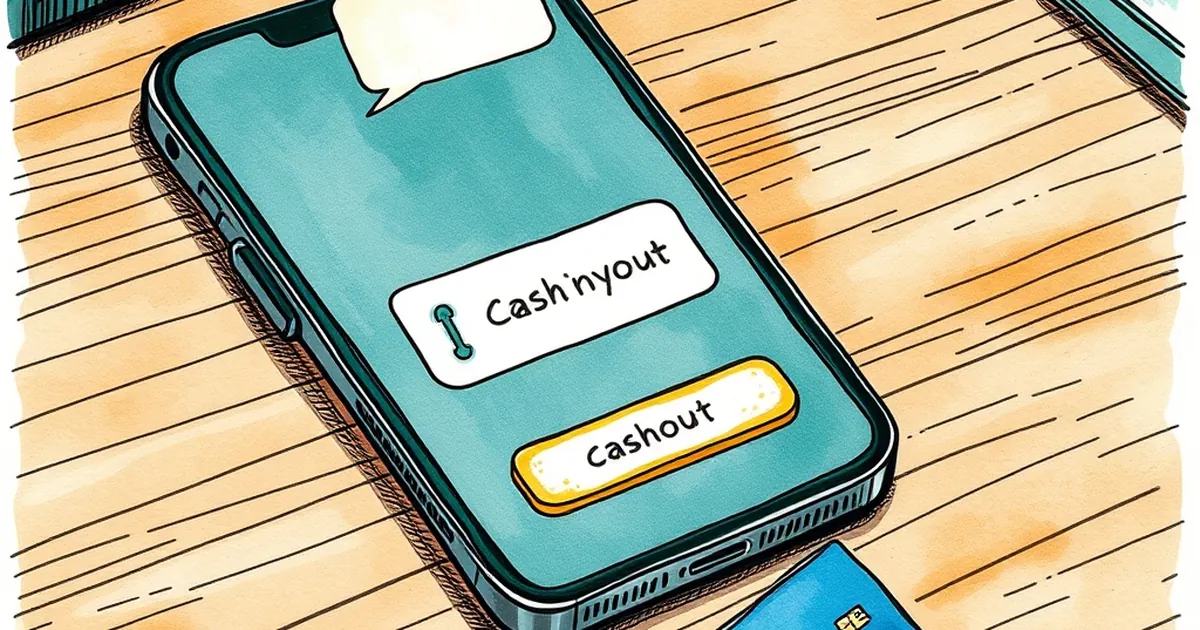
Operators running native apps on iOS and Android report that push notifications pull tap-through rates of 8–12%, while the in-app cashout button sits at 2.5–4% on a good day. That gap — roughly 3x in favour of the message that interrupts a user's dinner — has quietly reshaped how retention teams think about the app's most profitable screen. The cashout button is not underperforming. It is simply being compared to a channel with a different job.
The comparison is unfair in one direction and revealing in the other. A cashout button asks a user to do something they already decided to do; it converts intent, not attention. A push notification manufactures intent from nothing. Judging one by the other's numbers tells you more about how operators misread their own funnels than about which feature deserves more engineering time.
What the 3x figure actually measures
Most operators pull the tap-through number from their push vendor dashboard, which counts a tap on the notification itself. That is not the same as a tap on the cashout button, which is logged as an in-session interaction after the user has already opened the app and navigated to the wallet screen.
The denominators differ. Push tap-through is calculated against delivered notifications — often 60–80% of sends, because of opt-outs, token expiry, and OS-level throttling. Cashout taps are calculated against sessions where the wallet screen was viewed. If you stripped both metrics back to a common base — say, per active user per day — the ratio narrows, though it rarely falls below 2x.
There is a second distortion. Push notifications are cheap to send and easy to A/B test, so retention teams iterate on copy, send time, and segmentation weekly. The cashout button is usually shipped once and left alone for a year. One channel is being optimised; the other is being tolerated. That alone accounts for a meaningful slice of the gap.
The numbers worth trusting
A mid-sized sportsbook with roughly 400,000 monthly active users shared figures last quarter: 9.1% tap-through on pre-match push alerts, 3.4% on cashout button taps per wallet view. The push alerts were sent to a segmented list of users who had bet on the same league in the previous 14 days. The cashout button was shown to anyone with an open bet. Same product, different targeting discipline.
Strip out the segmentation and push tap-through drops to 4.2%. Still ahead, but no longer a headline.
Why the cashout button underperforms its own potential
The cashout button has a structural problem: it appears at the exact moment a user is most emotionally conflicted. They are watching a bet go wrong, or go right, and the button asks them to lock in a number that will feel like a loss either way. Push notifications, by contrast, arrive when the user is doing something else entirely and carry no immediate emotional cost.
There is also a placement issue. On most native apps, cashout lives one or two taps deep — inside the bet slip, or behind a "My Bets" tab. Push notifications land on the lock screen. One requires navigation; the other requires a glance.
Some operators have tried to close the gap by promoting cashout via push. A notification that says "Your bet is now worth £47.20 — cash out?" will typically outperform a generic "Your bet is live" alert by 40–60% on tap-through. But it also cannibalises the cashout button's own tap rate, because the user who taps the notification often completes the cashout from the notification itself, never reaching the wallet screen. The metric moves; the behaviour does not.
The segmentation lesson operators keep relearning
The 3x figure is real, but it is not a property of push notifications. It is a property of targeting. Push wins because it is sent to a filtered list. Cashout loses because it is shown to everyone with an open bet, including the majority who have no intention of cashing out and never will.
Apply the same filter to cashout and the numbers converge. A user who has cashed out at least once before is roughly 4x more likely to cash out again than a first-time user with an open bet. Show the cashout prompt only to that segment — or to users whose bet has moved more than 15% in implied probability — and the tap rate climbs into the 6–8% range. That is within spitting distance of push.
The operators getting this right are not sending fewer notifications. They are sending notifications that do the same job as a well-targeted cashout prompt: arrive at a moment of genuine decision, with a specific number attached.
What the regulators are watching
Push notification frequency is now a compliance issue in several markets. The UK Gambling Commission has flagged unsolicited marketing pushes as a breach of licence conditions when they target users showing signs of harm. In Australia, the Interactive Gambling Act restricts promotional push content outside opt-in windows. Sweden's Spelinspektionen requires that bonus-related pushes carry the same terms as the underlying offer, which most operators cannot fit into a notification character limit.
None of this changes the tap-through maths. It does mean the 3x advantage is only available to operators willing to segment hard enough that the notification is genuinely relevant. Blast pushes have tap rates closer to 1.8% — below the cashout button — and carry regulatory risk on top.
What the gap says about app design priorities
If push notifications outperform the cashout button by 3x, the rational response is not to send more push notifications. It is to ask why the cashout button is so badly served by the app's own interface.
A cashout button that appears on the lock screen, with a live number, and a single tap to confirm, would likely match push performance. Some operators are testing exactly this via rich notifications and iOS Live Activities. Early results suggest tap-through of 7–9% — comparable to a well-segmented push, and without the regulatory exposure of a marketing message.
The broader implication is that the 3x figure is a symptom of channel neglect, not channel superiority. Push notifications have had a decade of optimisation from every app category on earth. The cashout button has had almost none, because it sits inside a product that operators treat as a utility rather than a conversion surface.
That leaves an open question for anyone running a native app this quarter: if you spent the same engineering hours on the cashout flow that you spend on push copy and send-time testing, would the 3x gap survive? The operators who have tried it say no. The ones who have not are still quoting the 3x figure in board decks, and still wondering why retention plateaus.