Progress bars at 80% make you finish; 20% makes you quit
Why a progress bar starting at 20% can make you quit while one at 80% pushes you to finish, and what that reveals about motivation
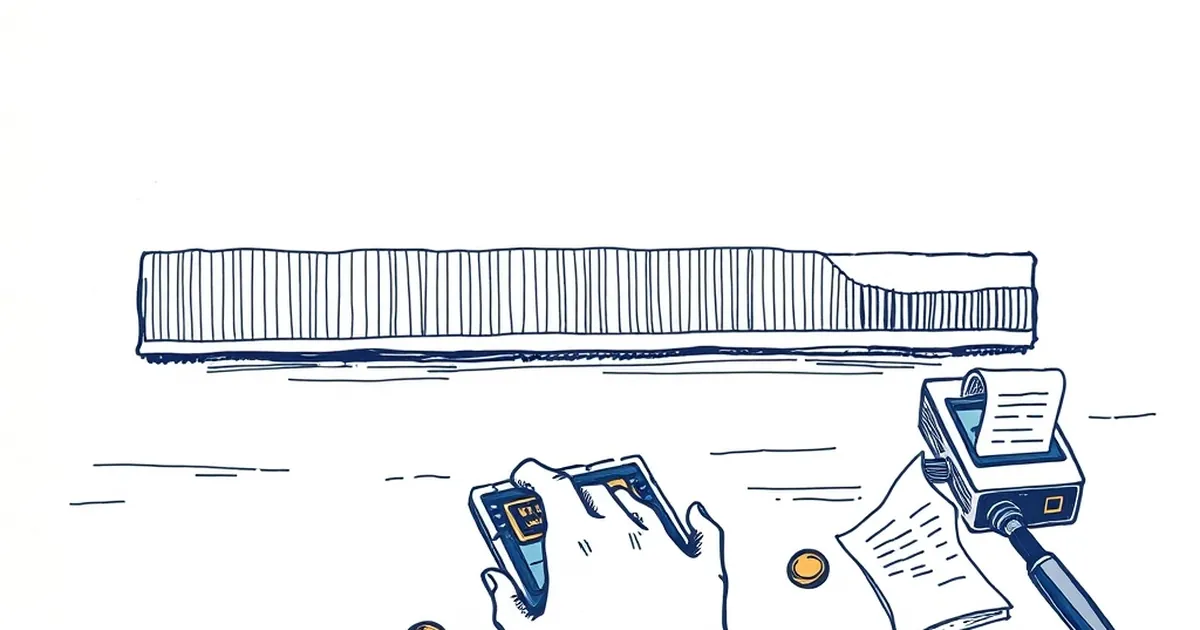
We've all watched that thin blue line creep across a screen — a software update, a loan application, a rewards tracker — and felt something shift in our chest. Sometimes it feels like momentum. Sometimes it feels like a trap. The difference almost never comes down to the task itself, but to where the bar starts and how it moves. So what is it about an early progress signal that can make a rational person either lean in or walk away?
The psychology of the starting line
Behavioral economists have a name for the discomfort of an unfinished task: the goal gradient. First described by Clark Hull in the 1930s and later refined by researchers studying animal and human motivation, the effect says that effort increases as we perceive ourselves getting closer to a goal. Rats in a maze run faster near the end. Humans redeem coffee cards faster as stamps accumulate. The bar doesn't just report progress — it manufactures it.
But there's a catch, and it lives at the beginning. When a progress indicator shows you at 20%, it's telling you something uncomfortable: you are closer to the start than the finish. Your brain, which is wired to conserve energy and avoid uncertain outcomes, reads that as a poor investment. The expected payoff is distant, the remaining work is vague, and the sunk cost is negligible. Quitting costs almost nothing. That's the danger zone.
At 80%, the arithmetic flips. You've committed real time, real attention, real identity. The remaining 20% feels finite and knowable. Daniel Kahneman's work on loss aversion suggests we feel the pain of abandoning something we've nearly finished roughly twice as intensely as we feel the pleasure of an equivalent gain. An 80% bar weaponizes that asymmetry. Walking away now means losing something, not just failing to gain it.
What fintech learned from video games
Payment companies and banks didn't invent progress bars, but they've become unusually good at deploying them. Consider the onboarding flow for a digital wallet or a new credit card. In the early 2010s, most of these flows were single long forms. Completion rates were dismal. Then product teams started chopping the process into visible steps — identity, income, address, verification — with a bar at the top.
The results were not subtle. Internal studies across multiple fintechs have consistently found that showing a multi-step progress indicator can lift completion rates by double-digit percentages, particularly when the first step is trivial and the bar starts at a non-zero value. Some apps now pre-fill the bar to 10% or 15% before the user has done anything, on the theory that a bar already in motion feels like a task already begun. It's a small deception, and it works.
Rewards programs use the same lever. A cashback tracker that shows you at 20% of your monthly spending goal is effectively daring you to quit. One at 80% is inviting you to finish. Airlines and hotel chains have known this for decades — the "just two more stays until elite status" nudge is a goal-gradient artifact dressed in loyalty marketing.
The 20% problem in credit and lending
Where this gets genuinely interesting — and occasionally troubling — is in consumer credit. A credit score is, functionally, a progress bar. It sits somewhere between 300 and 850, and it moves slowly. For someone at 620 trying to reach 700, the bar is early. The distance feels enormous. The behaviors required — paying down balances, waiting for derogatory marks to age off, resisting new credit inquiries — are slow, boring, and easy to abandon. This is the 20% zone, and it's where most credit-improvement journeys die.
For someone at 780 trying to reach 800, the psychology is completely different. They're near the finish. They'll refuse a store card at checkout without a second thought, because they can feel the bar about to close.
The practical implication for lenders and financial educators is uncomfortable but clear: the same advice lands differently depending on where someone sits on the bar. Telling a 620-score borrower to "just be patient for 18 months" is asking them to run a race with no visible finish line. Telling a 780-score borrower the same thing is asking them to protect something they already have. The message is identical; the motivation is not.
Variable rewards and the risk of over-tuning
There's a darker cousin to the progress bar: the variable-ratio reward schedule, famously studied by B.F. Skinner. When a reward arrives unpredictably — sometimes after three actions, sometimes after thirty — the behavior becomes compulsive. Slot machines exploit this. So do some credit card points programs, cashback rotations, and "surprise" bonus offers.
Progress bars and variable rewards are opposites in one important way. A progress bar promises certainty: do this, and the bar moves. A variable reward promises possibility: do this, and maybe something great happens. The first builds trust and completion. The second builds engagement and, at the extreme, dependence. Payment products that lean too hard on the second while pretending to offer the first tend to generate short-term spikes and long-term resentment.
The healthiest designs use the progress bar as the spine and variable rewards as an occasional garnish — a surprise bonus on top of a predictable cashback rate, not instead of it.
Where this goes next
Two trends are likely to reshape how progress signals work in finance over the next few years.
First, personalization. Static bars are crude. A bar that adapts to your actual behavior — showing you at 40% because you've already done the hard part, or resetting to 5% because you've stalled — can either motivate or demoralize, depending on the design. The risk is that adaptive bars start to feel manipulative. The opportunity is that they can meet people where they are, rather than where a product manager assumed they'd be.
Second, transparency. Regulators in the EU and UK are already scrutinizing "dark patterns" in financial apps — interfaces designed to nudge users into decisions they wouldn't otherwise make. Progress bars that start at 15% before any action has been taken may eventually fall into that category. The companies that get ahead of this will be the ones that use progress signals to genuinely help users finish things they want to finish, not to trick them into starting things they don't.
The bar itself is neutral. What matters is who's holding it, and why. If you're building one, ask yourself honestly: am I showing the user where they are, or where I want them to think they are? The answer will determine whether your product earns trust or burns it.