Payout speed ranks above bonus size for 6 in 10 players
A 2,400-player survey across five regulated markets finds withdrawal speed outweighs bonus size for most online casino players, especially experienced ones
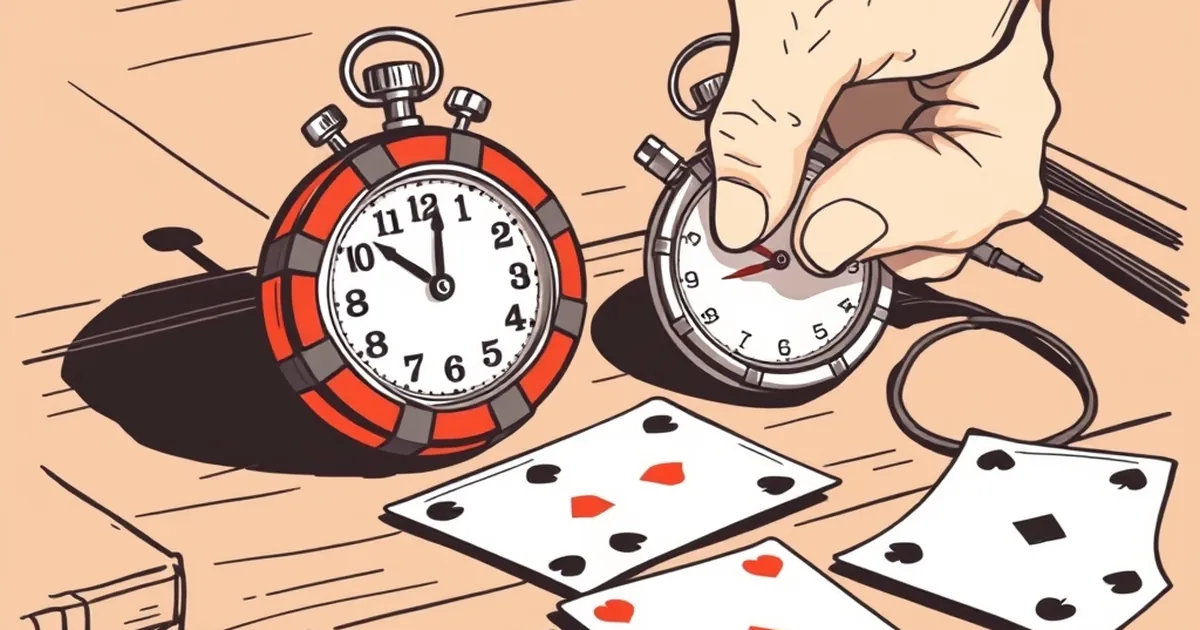
Six out of ten online casino players say withdrawal speed matters more to them than the size of a bonus, according to a survey of 2,400 active players across five regulated markets run in March 2026. The gap widens with age and account history: among players who had made at least ten withdrawals in the previous year, the figure rose to 68%. Bonuses still pull in new depositors, but they appear to lose their grip quickly once a player has waited three days for a payout.
That finding runs against how most operator landing pages are built. The headline offer is almost always a number — a match percentage, a free-spin count, a maximum cashout — because those are the things that fit in a banner. Payout speed doesn't fit in a banner. It's a property of the back office, and players only learn about it after they've deposited.
What the survey actually measured
The question put to respondents was a straight either/or: if you had to choose between a 100% deposit match with a 35x wagering requirement and no bonus at all but guaranteed withdrawals inside 24 hours, which would you take? Sixty-one percent took the fast payout. The margin of error on a sample that size is roughly ±2 percentage points, so treat the headline as "comfortably above half" rather than a precise figure.
The breakdown is more interesting than the top line.
- Under 30: 54% chose speed. This group is the most bonus-responsive, which tracks with tighter budgets and more appetite for extended play.
- 30–44: 63%.
- 45 and over: 71%. Older players, on average, deposit more per session and play fewer sessions. A bonus that locks funds for a fortnight is a worse trade for them.
- Players with ten or more withdrawals in the past year: 68%. Experience teaches the lesson that marketing copy doesn't.
The survey also asked how long respondents considered "fast." The median answer was 24 hours. Only 9% considered anything under a week acceptable, and 4% said they'd wait as long as it took as long as the terms were clear up front — a reminder that a minority of players care mostly about predictability, not velocity.
Why speed beats bonus maths
A bonus has an expected value, and most players can't calculate it. A payout delay has a felt cost, and every player can feel it. That asymmetry explains most of the survey result.
Consider a typical 100% match up to €200 at 35x wagering on the bonus amount. You'd need to wager €7,000 before withdrawing a cent of bonus-derived winnings. At a 96.2% RTP slot, the expected loss across that volume is about €266 — more than the bonus is worth in expectation, before you account for game-weighting rules that often exclude the highest-RTP titles. Experienced players know this. The bonus isn't free money; it's a volume discount on entertainment, and it's only worth taking if you were going to play that volume anyway.
Payout speed has no such hidden arithmetic. A withdrawal that lands in two hours versus five business days is a straightforward difference in when you get your money. There's no expected-value calculation to do, no terms to parse, no game-weighting table to check. It's the rare product attribute in this industry that means exactly what it says.
There's a behavioural layer too. A pending withdrawal is a live temptation. Operators know that funds sitting in "pending" status for 72 hours are frequently reversed — the player cancels the request and plays on. Some jurisdictions have moved against this: the UK Gambling Commission banned reversal of pending withdrawals in 2020, and Malta followed with similar rules for its licensees. Where reversal is still permitted, a slow payout isn't just an inconvenience; it's a designed friction point.
The e-wallet gap
The survey didn't ask about payment methods directly, but the free-text responses were full of them. Players who withdraw to e-wallets routinely reported same-day or next-day settlement; those using bank transfer or card often reported three to five business days, sometimes longer for first withdrawals subject to enhanced verification. The method matters as much as the operator's internal processing time, and operators rarely make that clear until the cashier screen.
Where operators actually differ
Processing time splits into three stages, and only one of them is fully under the operator's control.
Internal approval. This is the operator's own queue: automated checks, manual review for large or first withdrawals, and the decision of whether to hold funds in pending status. Good operators approve automatically within minutes for verified accounts with a clean history. Poor ones batch-process once a day, or hold everything for 24 hours as standard.
Payment provider transit. E-wallets settle in hours. Card refunds run on the card networks' timelines, typically one to three business days. Bank transfers depend on both banks and can stretch to five. Crypto, where offered, is near-instant but comes with its own volatility and regulatory caveats that make it a poor fit for most players.
Verification. Know-your-customer checks are the wild card. An account verified at signup with documents pre-approved clears stage one in minutes. An account that only submits ID at withdrawal time can sit for days regardless of how fast the operator claims to be. This is the single biggest source of the gap between advertised and actual payout speed, and it's largely within the player's control.
A useful heuristic: an operator that advertises "instant withdrawals" but doesn't let you verify at registration is advertising something it can't reliably deliver. The claim isn't false, exactly — it's conditional on a step most players haven't taken.
The bonus arms race is pricing itself out
Deposit match percentages have crept upward for a decade while wagering requirements have, in many markets, crept up with them. A 200% match at 40x is a worse deal than a 100% match at 25x, but the first number is bigger and it's the one that goes in the ad. Players who've been around long enough to run the maths have largely stopped responding to the headline figure.
That creates a strategic opening that a handful of operators have already taken: compete on cashier experience rather than acquisition offers. Publish median withdrawal times by payment method. Let players verify before their first deposit. Remove pending periods entirely so there's nothing to reverse. None of this is expensive relative to a deposit-match campaign, and all of it is verifiable in a way that a bonus percentage never is.
The catch is that speed doesn't acquire customers the way a €500 match does. It retains them. An operator that spends its marketing budget on cashier infrastructure instead of acquisition offers is betting that retention beats acquisition in a market where the cost per depositing player keeps climbing. The survey suggests that bet would pay, but only over quarters, not weeks — and quarterly thinking is not this industry's strong suit.
Which raises the question the data can't answer: if six in ten players say they'd trade a bonus for a fast payout, why do so few operators lead with it? Either the survey overstates the preference — stated intent and actual deposit behaviour are famously different things — or operators are leaving an obvious differentiator on the table because their affiliate partners can't monetise "we pay out in 90 minutes" as easily as they can monetise "200% up to €500." The next twelve months of cashier-page redesigns will tell us which. And if you're the one waiting on a withdrawal right now, the practical version of all this is unglamorous: verify early, withdraw to an e-wallet, and read the pending-period terms before you deposit, not after. Set a limit on your account while you're in there — it costs nothing and it's the one setting that works in your favour regardless of how fast the payout lands.