Payout proofs post at noon; the dispute inbox opens at 6pm
The six-hour gap between noon payout proofs and the 6pm dispute inbox lets unverified receipts spread before anyone checks if the money cleared
4 min read
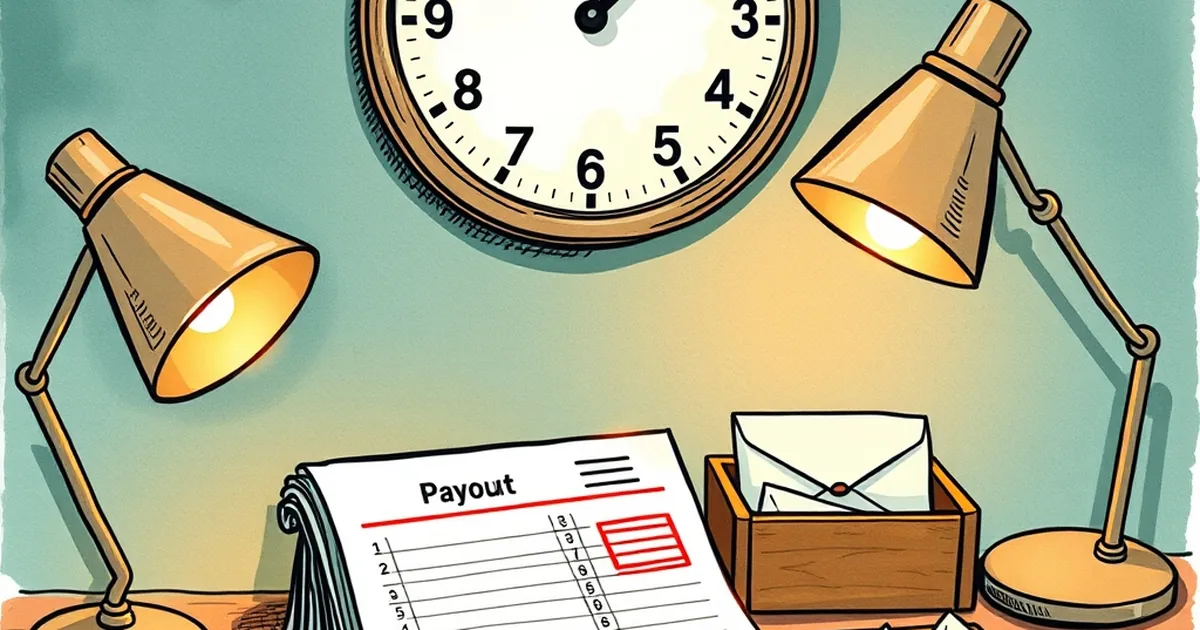
Payout proofs go up at noon, and the dispute inbox opens six hours later. That gap is the whole story: for half a day, an operator can publish a withdrawal receipt with no channel for a player to contest it. Six hours is also plenty of time for a screenshot to travel through a forum thread, a Telegram group and a couple of aggregator accounts before anyone checks whether the payout behind it actually cleared.
The noon-then-6pm schedule isn't hypothetical. It's the routine several player-advocacy channels have settled into: a midday proof drop, an evening window for complaints, and a queue that resets every 24 hours. The reasoning is administrative — batch the public posts while staff are awake in one timezone, open the inbox once the day's volume is visible. The effect is something else. Proofs land first, disputes second, and by the time a complaint is admissible, the proof has already been screenshotted, reposted and treated as settled fact.
What a payout proof actually shows
A withdrawal receipt is evidence of one transaction at one moment. It is not evidence of a payout policy, and it is definitely not evidence of an RTP.
Most proofs circulating on a given afternoon are screenshots of a cashier page: amount, timestamp, a partially masked account number, sometimes a transaction ID. That tells you a player requested and received a sum. It doesn't tell you the wagering requirement attached to the bonus that funded the session, whether the withdrawal was capped, or how many other players hit the same game in the same window and got nothing.
The numbers behind a single receipt
Take a €2,000 withdrawal on a slot with 96.2% RTP and a 35x wagering requirement on a €100 bonus. To clear that requirement, the player has to run €3,500 through the game. Expected loss on that volume is roughly €133, before variance. The €2,000 payout is real. It's also one outcome from a distribution wide enough that the next ten players running the same volume could all end up down.
That's why a proof post without context is closer to advertising than to evidence. The receipt is genuine; the inference people draw from it — that this is what a session looks like — usually isn't.
Why the six-hour gap matters
Timing is the part of the proof economy that gets the least scrutiny. Noon posts, 6pm inbox. In between, three things happen.
The proof gets amplified. Aggregators and tip accounts repost within minutes. By 2pm the screenshot has a caption, often with a number that wasn't in the original.
The player who has a complaint can't file it yet. If your withdrawal was stalled at 11am, you watch a proof post go up at noon and have nowhere to put your own case until the evening window opens.
The operator controls the narrative for the day. A published proof is a data point in the operator's favour. A complaint filed at 6pm is a data point against. The order they appear in is not neutral.
None of this requires bad faith. Batching is a reasonable operational choice for a small team. But a schedule that publishes good news before it accepts bad news is a schedule with a bias built in, whether or not anyone intended it.
The queue problem
An inbox that opens at 6pm and closes at midnight handles maybe 40 to 60 cases a night for a mid-sized operator. If a proof post drives 3,000 views and 1% of those viewers have a live issue, that's 30 complaints from one post — before counting the backlog. Cases filed at 11:58pm get triaged the next morning, which means the dispute window is effectively shorter than the six hours suggest.
What to check before you trust a proof
You don't need to distrust every receipt. You need to read them the way you'd read any other claim from an interested party.
- Is the timestamp inside the dispute window? A proof posted at noon with a complaint filed at 6pm and resolved at 9pm is a clean case. A proof posted at noon with no complaint channel until the next day is a gap.
- Is the game and stake visible? Amount-only proofs tell you almost nothing. A €5,000 win on a €50 spin at high variance is a different claim from the same win on a €1 spin.
- Is the withdrawal capped? Many bonuses carry a max cashout — 5x the bonus, or a flat €500 — and a proof that ignores the cap is showing you a number the player may not have received in full.
- Does the operator publish the dispute outcome? The useful metric isn't how many proofs go up at noon. It's how many 6pm complaints get resolved, and how many of those resolutions are visible.
That last point is where most proof programmes fall down. They're good at the noon half and quiet about the 6pm half.
The asymmetry nobody measures
Here's the number worth watching: the ratio of proofs published to disputes resolved, published monthly. An operator posting 200 proofs a month and closing 12 disputes has a ratio of roughly 17 to 1. That ratio, not the payout screenshots, is the honest signal about how a brand handles money.
Very few operators publish it. The ones that do tend to publish it late — after the noon drop, after the amplification, when the day's narrative is already set. Which brings the schedule back into focus. Noon for good news, 6pm for bad, and no requirement that the two ever appear side by side.
If you're using proof posts to pick where to play, the question isn't whether the receipts are real. It's whether the operator will still be answering the inbox at 9pm on a Friday, and whether the answer will ever be published alongside the proof that prompted it. Until that changes, the noon drop is a marketing channel with a timestamp, and the 6pm inbox is where the parts that don't fit get filed.