Odds shorten 4 points while your stake sits unconfirmed
Live betting prices are quotes, not contracts. Discover why your stake can shift four points or more before confirmation
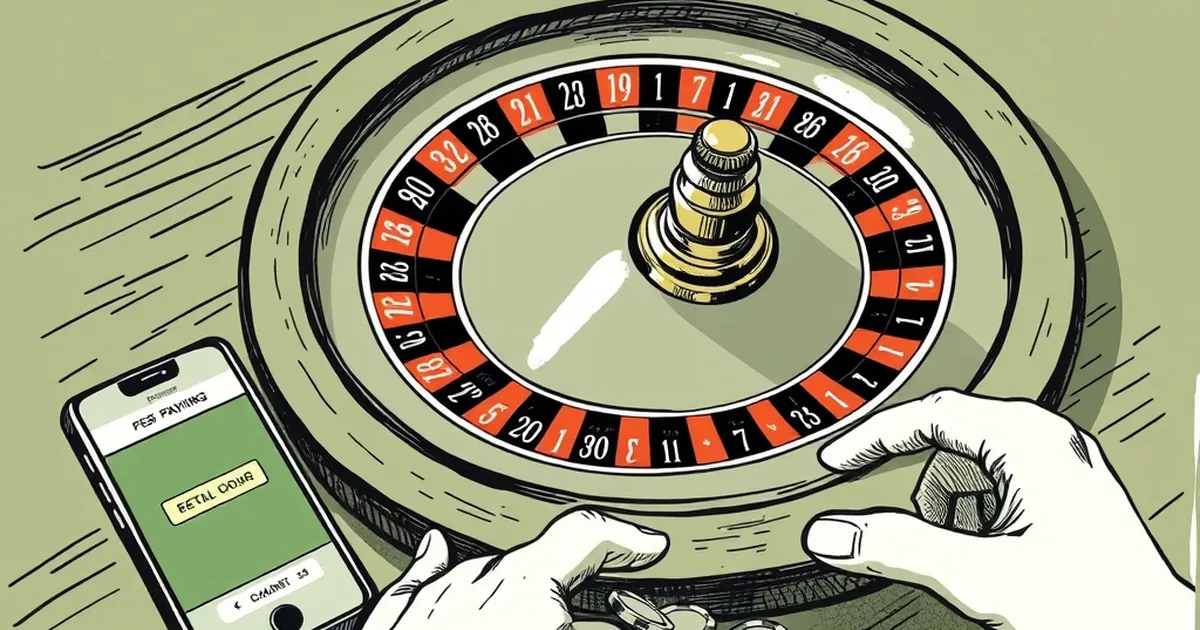
A price you can see is not a price you have. In live betting, the gap between tapping a selection and having that selection confirmed can run from a fraction of a second to several seconds — and in that window, the number on your screen is a quote, not a contract. Operators are not obliged to honour it, and when a goal, a break point, or a red card lands inside that window, the price you thought you took can move four points or more before your stake is accepted, rejected, or partially filled.
That four-point figure is not rhetorical. It is roughly the spread you see on a liquid football market when a single event reprices the whole board — a goal moves a match-odds line by 0.30 to 0.60 in decimal terms, which on a 1X2 market is often quoted as a four-tick shift on the exchange-style ladder. On in-play tennis, a break of serve can move a favourite from 1.45 to 1.85 in under three seconds. If your bet is sitting in a queue during that repricing, you are exposed to a number that no longer exists.
What actually happens between tap and confirmation
Most bettors assume the sequence is: you see a price, you tap, you get that price. The real sequence has at least four steps, and the price can change at any of them.
- Client-side display. Your app or browser renders a price from the last data push it received. Depending on the operator and your connection, that push could be 200ms or 2 seconds old.
- Transmission. Your stake request travels to the operator's servers. Mobile latency on a 4G connection in a stadium can spike past 800ms.
- Risk check and repricing. The trading desk or automated model evaluates the bet against current exposure, liability limits, and the live feed. If the underlying price has moved beyond a tolerance threshold — commonly 2 to 5 ticks — the bet is either rejected outright or offered a "price change" prompt.
- Acceptance or partial fill. On exchanges and some sportsbooks, your stake may be matched only partially at your requested price, with the remainder filled at a worse number or left unmatched.
The tolerance threshold is the key variable. A book with a tight tolerance will reject or requote almost any in-play bet placed during a volatile moment. A book with a loose tolerance will accept at the old price and absorb the loss — which is why some operators are noticeably slower to confirm in-play bets than others.
Why the window exists at all
It would be technically possible to lock a price the instant a user taps. Some operators do exactly that, for a defined period — usually 5 to 15 seconds — and then either accept the bet or void it. This is the "price lock" or "bet delay" model, and it is common on exchanges, where the counterparty is another user rather than the house.
For a fixed-odds sportsbook, locking a price creates a different problem. If the book guarantees your 1.80 on a team that scores thirty seconds later, it has sold you a free option. Sharp bettors would exploit that systematically: place a bet on the pre-goal price, wait for the goal, and either let it stand or hedge. The book's exposure becomes unmanageable. So the window is not a bug — it is the mechanism that stops the book from being arbitraged by its own customers.
The trade-off lands on recreational bettors, who are the ones most likely to be placing a bet in the middle of a fast-moving market without realising the price is provisional.
The mobile factor
Latency is not evenly distributed. A desktop connection on fibre might see 30 to 60ms round-trip to a European sportsbook's servers. A phone on a congested network inside a stadium — 60,000 people on the same cell tower — can see round-trip times above 1,500ms. In that second and a half, a football market can reprice twice.
This is why in-play bet rejection rates are measurably higher on mobile than desktop during major events, and why operators with the largest live betting volumes invest heavily in edge infrastructure and localised data centres. It is also why some books apply a longer mandatory bet delay on mobile in-play markets than on desktop.
What the four-point move costs you in practice
Take a concrete example. You want to back Over 2.5 goals at 1.95 in the 63rd minute. The score is 1-1. You tap, and the bet enters the queue. Three seconds later, a goal is scored. The market reprices: Over 2.5 is now settled as a winner, but the book has not yet confirmed your bet. Two things can happen.
If the book applies a price-change tolerance and the new price is outside it, your bet is rejected. You get your stake back and no winnings. If the book accepts at the old price, you win — but this is increasingly rare in-play, and many operators explicitly void bets placed within a window around a "significant event."
Now reverse it. You want to back Under 2.5 at 1.95, and the same goal goes in. Your bet is now a loser at a price that no longer reflects reality. If the book confirms at the old price, you have taken a bad bet through no decision of your own — you were simply slow to be confirmed. If it rejects, you are protected.
The asymmetry matters. In practice, operators tend to reject bets that would have won and accept bets that would have lost, which is not necessarily cynical — it is the natural result of a repricing model that compares your requested price to the current one. But from the bettor's side, it feels like the house only honours the price when it suits them.
The regulatory picture
This is not purely a commercial matter. Several jurisdictions have rules about when a bet is considered "placed." In the UK, the Gambling Commission's licence conditions require operators to be clear about when a bet is accepted, and the Advertising Standards Authority has ruled against operators whose in-play terms were buried. In Malta and Gibraltar, the MGA and GRA have similar transparency expectations, though enforcement has been inconsistent.
The practical upshot: if your bet is rejected after a price move, you generally have no contractual claim to the original price. The terms almost always state that a bet is not confirmed until the operator accepts it, and that prices are indicative until then. That wording is legal, but it is also the reason the four-point gap exists in the first place — the operator has written itself out of the obligation.
What you can actually do about it
There is no way to eliminate the window, but you can reduce your exposure to it.
- Use the bet delay, not against it. If a book offers a 5-second price lock, that is a genuine advantage — take it and accept the small chance of void.
- Avoid betting into known volatility. The 60 seconds around a set point, a penalty, or a power play are the worst times to place an in-play bet on a slow connection.
- Check the tolerance terms. Some books publish their in-play price-change policy. Most do not. The ones that do are usually the ones with tighter tolerances, which is at least honest.
- Prefer desktop for in-play. The latency difference is real, and it is largest exactly when markets are moving fastest.
- Treat unconfirmed stakes as unplaced. Until you see a confirmation with a price, you do not have a bet. That is the whole point.
The open question is whether regulators will eventually require a short, mandatory price lock on in-play bets — a few seconds during which the price cannot move — or whether the current model, where the operator holds all the optionality, survives the next round of consumer-protection scrutiny. Given that in-play now accounts for well over half of sportsbook turnover in mature markets, and that mobile is the dominant channel, the answer will affect a lot of stakes.