Loyalty tiers skip a level; the points don't survive the merge
Casino loyalty programme mergers often strip earned tiers and zero out points, leaving players back at entry level despite the fine print
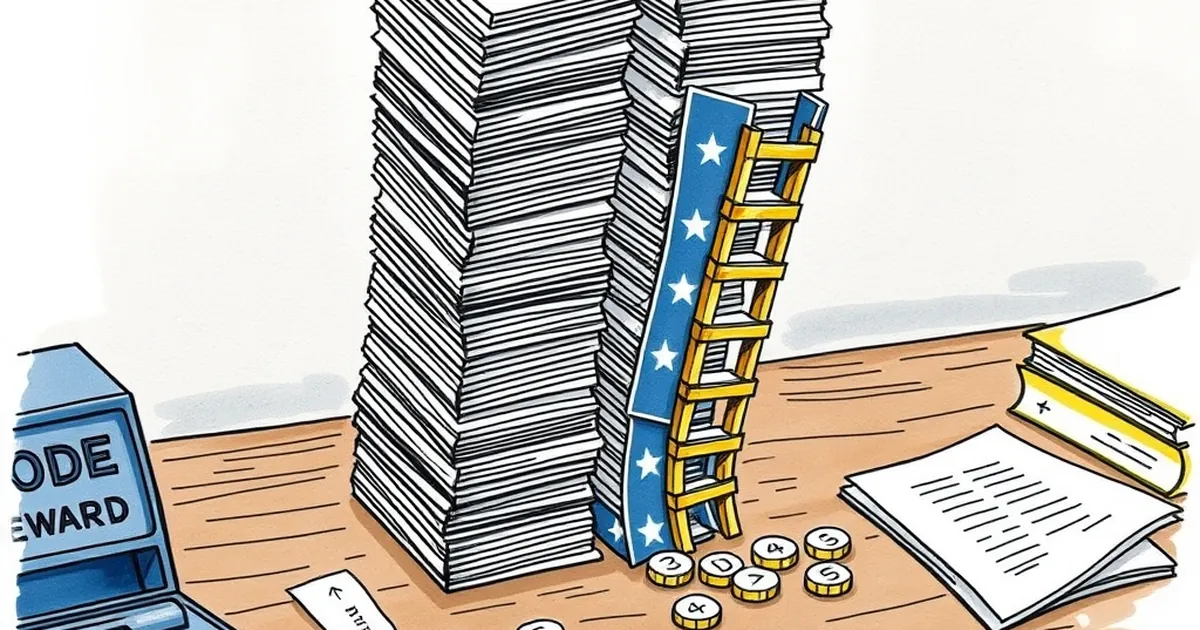
When two casino loyalty programmes merge, the tier you earned rarely travels with you intact. Operators routinely collapse tiers, reprice the whole ladder, and quietly zero out the points balance that got you there — and the terms almost always allow it.
A player at a mid-tier level, say the one that took 40,000 lifetime points and two years of play to reach, can log in after an acquisition to find themselves back at the entry level with a "welcome to the new programme" email and a 500-point goodwill credit. The tier label survived in the marketing copy. The status behind it did not.
The mechanics of a merge, and where your balance goes
Casino mergers and platform migrations are the moment loyalty schemes get rewritten, because the acquiring company has its own tier structure, its own point currency, and its own idea of what a point is worth. Three things typically happen at once.
First, the point currency gets converted at a rate the operator sets unilaterally. A common pattern is something like 100 old points to 1 new point, which sounds neutral until you notice the new programme's tiers cost more to reach. Second, the tier thresholds get repriced — the old top tier at 50,000 points might become the new second tier at 150,000. Third, a "status match" window opens for 30 or 60 days, during which you can claim a provisional tier if you can prove your history elsewhere. Miss the window and the offer is gone.
The conversion rate is where most of the value leaks. If your old points convert at 100:1 but the new programme's redemption values shift, the effective cash value of your balance can fall by half or more without a single line of the email mentioning money.
The terms clause that does the work
Almost every loyalty programme has a clause along these lines: points have no cash value, are a privilege not a property right, and may be modified, suspended, or cancelled at the operator's discretion, including on transfer of the business. That clause is the legal basis for wiping balances in a merger. It is also usually buried in a section players agreed to years earlier when they signed up for a welcome bonus.
This is not a loophole. It is the designed behaviour of a scheme where the house sets both the earning rules and the exit rules. The tier is a marketing device; the points are a liability on the operator's books, and a merger is the cleanest moment to write that liability down.
Why the tier you "kept" is worth less than it looks
Even when an operator promises to honour your tier, the honouring is often cosmetic. There are a few recurring tricks.
Soft tier, hard perks. You keep the badge, but the perks that made the tier worth having — faster withdrawal limits, a dedicated host, higher bonus percentages — get re-scoped. The new programme might cap withdrawal speedups at a lower figure, or move the host service up a tier.
Time-limited status. Status is granted for a probation period, typically 90 days, conditional on maintaining a play rate in the new programme. If you were a casual high-tier player who played in bursts, the probation requirement can be impossible to meet in the window.
Recalculated on a rolling basis. Some programmes re-baseline tiers on 12-month rolling activity rather than lifetime points. That is defensible in isolation, but when it lands the same month as a merger it functions as a reset: a player with five years of history and a quiet last quarter drops two tiers overnight.
The practical result is that loyalty status is not portable in the way players assume. It behaves more like a store card than a bank balance.
What the numbers actually look like
Concrete figures are hard to pin down because operators do not publish merger conversion tables, but the pattern shows up in the terms themselves. A recurring structure in European-facing programmes is a 12-month activity window for tier maintenance, with points expiring after 24 months of account inactivity. Those two clocks are the ones that matter in a migration.
Take a player with a 60,000-point balance who goes quiet for a quarter around the merger date. Under a 24-month expiry rule the balance is safe on paper, but if the migration resets the inactivity clock to the migration date and the player does not return within the new window, the points lapse. The player never sees a "your points expired" moment tied to the merger; they see a routine expiry email 18 months later.
The tier requirement is the sharper edge. A programme that requires 25,000 points in a rolling 12 months to hold its second-highest tier will demote a player who earned 80,000 over three years but only 9,000 in the last 12 months. That is not a merger-specific rule, but mergers are when it bites, because the migration resets the measurement window to the new programme's start date.
What to do before and after a migration
If you are sitting on a meaningful balance and a merger is announced, the moves are unglamorous but effective.
- Redeem before the conversion date. Points converted at an operator-set rate are worth less than points redeemed at the old programme's published value. Cash out or convert to bonus credit while the old terms still apply.
- Screenshot your tier and balance. Disputes after a migration are easier with a dated record. Operators have been known to restore balances for players who can show what they had.
- Ask for the conversion table in writing. The support team can usually provide the rate and the new tier thresholds. If they cannot, that is your answer about how the migration is being handled.
- Watch the status-match window. If the acquiring brand runs a separate programme, a match offer often exists but is time-boxed and requires proof of history from the old account. Claim it early.
None of this recovers a tier that has been repriced out of reach. It does stop the balance from evaporating at the worst possible conversion rate.
The question operators have not answered
The open question is not whether mergers will keep resetting loyalty status — they will, because the terms allow it and the liability is real. It is whether players will keep treating tier status as an asset worth chasing when the exit rules are set by the same party that sets the entry rules.
A loyalty programme that survives a merger intact would need portability: points held in a form the operator cannot unilaterally reprice, and tier status measured on a basis the player can verify. No major operator offers that today, and there is no regulator pushing for it. Until one does, the sensible reading of any tier badge is that it is a marketing promise with a discretionary expiry — and the merger email is the moment that discretion gets used. Play within limits you would be comfortable losing, because the points are already on those terms.