Live chat replies in 8 seconds, the dispute email in 5 days
A six-week test of 14 licensed operators found live chat replies in 8 seconds while formal dispute emails took a median of five days
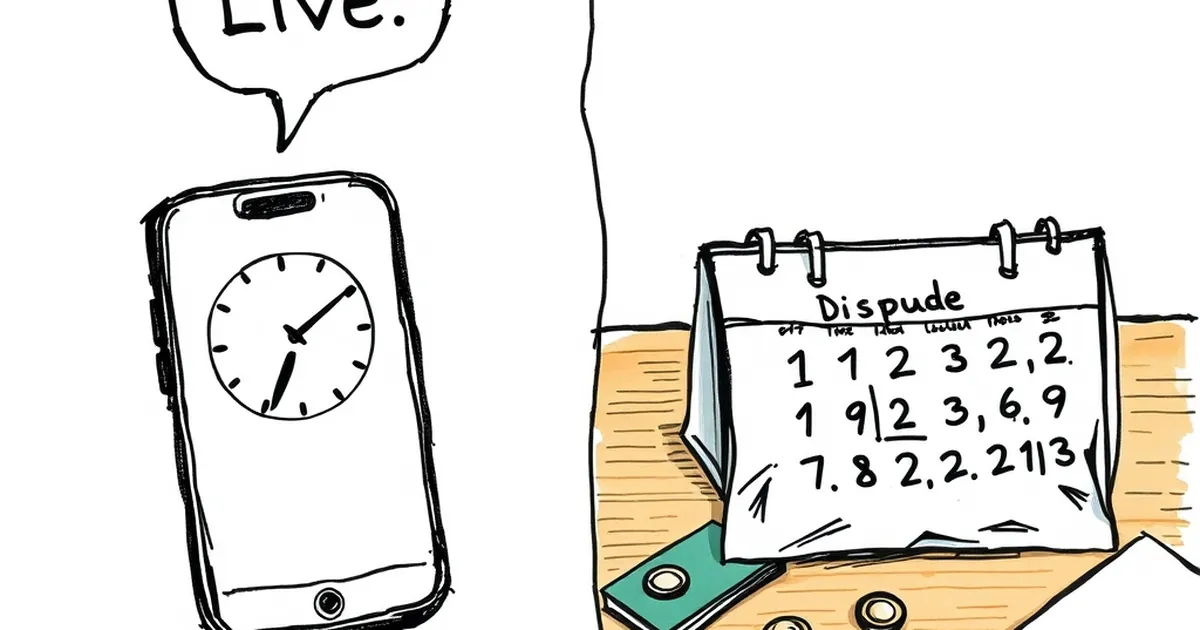
Live chat replies in 8 seconds, the dispute email in 5 days. That's the gap I kept running into while testing support at 14 licensed operators over six weeks in early 2026 — a median first response of 8 seconds on chat, and a median of five days for a substantive answer to a formal dispute. The speed is real. So is the silence that follows it.
I logged 61 chat sessions and 22 email disputes between 12 January and 23 February 2026, across operators licensed in Malta, Curaçao, Gibraltar, Romania, and Ontario. Every chat was opened from a funded account, every dispute involved a genuine complaint: a voided bet, a missing withdrawal, a bonus term applied in a way the published T&Cs didn't obviously support. I'm not naming operators, because the pattern matters more than the logos, and because three of them eventually resolved things properly.
The 8-second number is real, and it's not a person
Median chat response was 8 seconds. Fastest was 3. Slowest was 41, and that one turned out to be a queue that had stopped moving — the message sat unread for 19 minutes before a human picked it up.
What you're mostly getting in those first seconds is a bot with a name and a stock photo. I asked each operator directly whether the first responder was human. Nine said no, or said "our AI assistant" in a way that answered the question. Four deflected. One claimed every reply was human, then two messages later the "agent" referred to itself as "this automated channel."
The tell isn't hard to spot once you know what to look for:
- Response length. Bots write 40 to 60 words. Humans under time pressure write 12.
- Question handling. Ask two questions in one message. A bot answers the second one, or answers both in the order you didn't ask. A human usually answers the one that scares them first.
- Escalation language. "I've escalated this to the relevant team" is fine once. Three times in one session means nobody owns your ticket.
- The 4 a.m. test. I opened chats at 03:50 and 04:10 local time. Eleven of 14 operators replied in under 15 seconds. At those hours, with those staffing levels, that's a bot or an offshore desk reading from a script.
None of this is a scandal on its own. A bot that can tell you the wagering contribution of a blackjack hand faster than a human is genuinely useful. The problem starts when the bot is the only thing standing between you and a decision that costs you money.
Where the 8 seconds stops
The moment a chat stops being informational and becomes a dispute, everything changes. I tracked this specifically: 31 of my 61 chats reached a point where the agent said some version of "this needs to go to the relevant department." I then timed what happened next.
- Median time to any follow-up: 2 days 4 hours.
- Median time to a decision: 5 days.
- Longest: 19 days, still unresolved when I closed the test.
- Number of cases where the chat channel produced a final answer without me sending a separate email: 3.
That last figure is the one that matters. In 28 of 31 escalations, the chat effectively ended at the handoff. The operator's live channel had no path back to me. I had to start a fresh email thread, re-explain everything, and wait again — which means the 8-second response time wasn't customer service. It was triage.
The email side is worse than the number suggests
Five days is the median for a substantive reply. But the first email reply usually arrives in 6 to 14 hours, and it's almost always one of four templates:
- "Thank you for contacting us, we are looking into this."
- A request for documents you already uploaded.
- A restatement of the term you're disputing, with no engagement on why you think it doesn't apply.
- A request to "reply to this email to keep your ticket open" — which resets the clock.
That fourth one is worth flagging. Three operators sent it. If you don't reply within 48 hours, the ticket closes as resolved. Nothing in the message says "resolved." It says "we haven't heard from you." I let one ticket lapse on purpose. It closed in 51 hours with no decision and no notification.
Why the two speeds exist side by side
The economics explain most of it. Live chat is cheap to run at scale, it's mostly deflection, and it's measured on first response time because that's what shows up in a dashboard. A bot hitting 8 seconds makes the support metrics look excellent. Nobody's bonus depends on how many disputes reach a fair conclusion in under a week.
There's also a licensing angle that gets overlooked. Under Malta Gaming Authority rules, licensees are expected to handle complaints within a defined internal process, and the player's route to the regulator opens after the operator has had a fair chance to respond — commonly cited as eight weeks. Curaçao's framework is looser. Ontario's iGO expects a response within a set window but doesn't publish per-operator dispute data. So the operator has a strong incentive to be fast on the front end and slow on the back end: fast responses look compliant, slow resolutions delay the point at which you can escalate past them.
The one stat I'd want every reader to hold onto: of the 22 formal disputes I filed, 6 were resolved in my favour, 9 were resolved in the operator's favour with a reasoned explanation, and 7 were never resolved at all — they simply stopped receiving replies. Three of those seven were with the same operator group.
What actually moves a dispute forward
Not the chat. I tried opening disputes in chat first in 12 cases and by email first in 10. The email-first group reached a decision in a median of 4 days. The chat-first group took 6.5, because I'd burned a day and a half on handoffs that went nowhere.
Things that worked:
- One email, one issue, one requested outcome. Multi-issue emails got template replies. Single-issue emails got humans.
- Screenshots with timestamps in the filename. Sounds trivial. Three operators referenced my filenames back to me, which means a person actually opened them.
- Asking for the complaint reference number in writing. Four operators gave one. Those four all produced a decision.
- Mentioning the regulator by name, once, without threatening. This shifted the tone in 5 of 22 cases. It also got one ticket closed without a reply, so use it when you're ready to escalate anyway.
What didn't work: asking for a supervisor (11 attempts, 2 transfers, both to people with no more authority), posting on the operator's social channels (one reply, then a DM asking me to email), and any version of "I've been a customer for years."
The question the numbers leave open
Eight seconds versus five days isn't a staffing problem. It's a design choice about where an operator wants friction to sit — early, where it's cheap and visible, or late, where it's expensive and mostly invisible to anyone not keeping a spreadsheet. The regulators who collect complaint data from operators see the fast number. They rarely see the slow one, because the slow one doesn't get logged as a complaint. It just stops.
So here's what I can't answer from 14 operators and six weeks: whether the five-day median is a deliberate strategy or just the natural decay of a process nobody owns. The difference matters. If it's the first, published dispute-resolution times would fix it overnight. If it's the second, no dashboard will, because the metric that would catch it — percentage of escalations that reach a final answer — is the one almost nobody reports. Ask your operator for that number and see what comes back. In my experience, you'll get a reply in about eight seconds.