Jackpot win posts to the feed in 4 seconds, the tax hold in 3 weeks
A jackpot can post to a public feed in four seconds while tax paperwork takes three weeks, revealing where iGaming's real friction lives
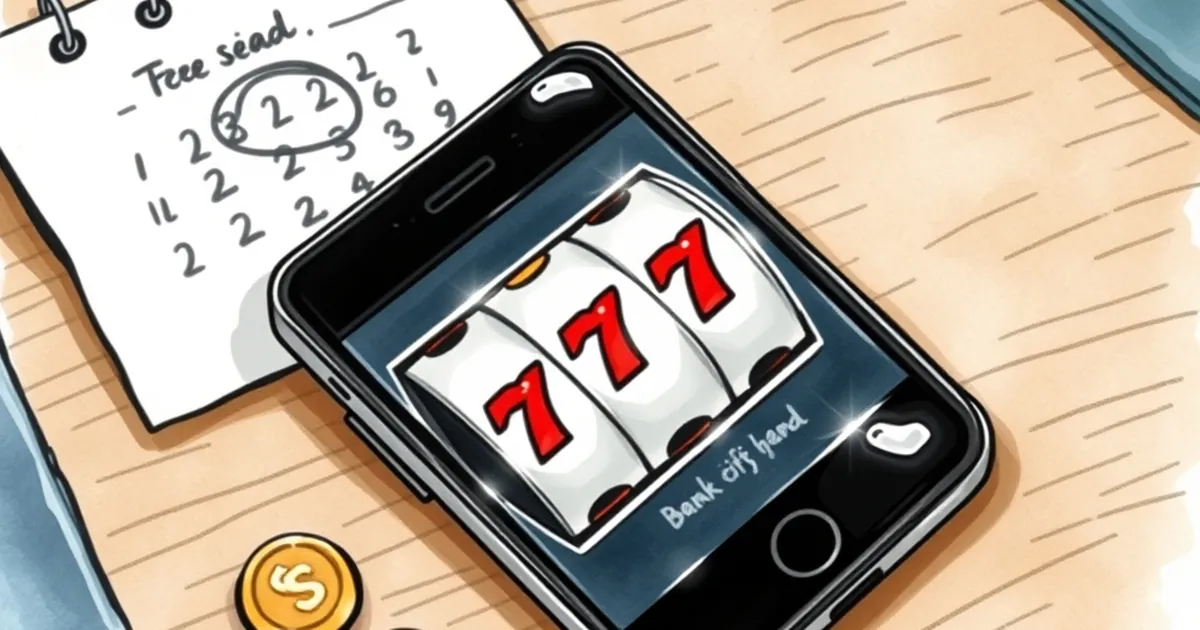
A jackpot screenshot can travel from a slot game to a public feed in about four seconds. The tax paperwork behind that same win often takes three weeks to clear, and sometimes longer. That gap — seconds on the front end, weeks on the back — is where most of the real friction in modern iGaming lives, and almost nobody talks about it because the celebration is more fun to post than the withholding form.
The four-second flex
When a player hits a progressive on a major network, the win doesn't stay private for long. Casinos have learned that a big number is free marketing, and the pipeline from "spin resolved" to "post published" has been compressed hard.
On a typical setup, the sequence looks like this: the game server confirms the outcome, the operator's backend flags it as above a publicity threshold (often somewhere between $10,000 and $50,000, depending on the brand), a social or CRM tool pulls the win data, and an auto-generated post goes live. The whole thing can run on a webhook. Four seconds is not an exaggeration — it's a modest estimate for a well-built integration.
This is deliberate. A jackpot post does three jobs at once. It proves the game pays. It timestamps the win, which matters for trust. And it creates a moment a player wants to share, which pulls their own network into the operator's feed.
What the post almost never includes: the tax situation, the payment schedule, or how long the money actually takes to arrive.
Why operators love the speed
Speed on the announcement side is cheap. You're publishing a number, not moving money. The infrastructure is a database trigger and an API call. There's no compliance burden in saying "someone won $2.1 million" as long as you're not naming the player without consent.
So the incentive is obvious. Announce fast, pay on the normal schedule, and let the two timelines run on completely separate tracks.
The three-week hold
The money side is a different animal. That's not because operators are slow, though some are. It's because a large win triggers a chain of checks that a $40 cashout never touches.
Here's the rough shape of it. A jackpot above a certain threshold goes into a manual review queue. Someone verifies the game round log. Someone else checks for bonus abuse, multi-accounting, or a terms violation that could void the win. If the jackpot is pooled across jurisdictions — common with networked progressives — the payout has to be reconciled against contributions from every market the game runs in.
Then there's the part players notice most: tax.
The tax layer
Tax handling on gambling winnings is not one system. It's dozens, and they don't agree with each other.
A few reference points, since round numbers hide the real mess:
- In the United States, a slot or bingo win over $1,200 is generally subject to 24% federal withholding, and the operator has to file a W-2G. That $1,200 figure hasn't moved since 1977. A win of $1,199 triggers nothing; $1,201 triggers paperwork.
- In the UK, winnings are not taxed at all, so the "hold" is really just operator verification time.
- In Germany, since a 2021 change, certain online poker and slot winnings face a 5.3% tax on stakes rather than winnings, which changes the math entirely.
- In several Asian and Latin American markets, withholding can run from 15% to 30%, and some require the operator to remit before the player sees a cent.
If a player wins on a game licensed in one jurisdiction but is resident in another, the operator may be legally required to withhold under the player's home rules — or may not be able to, depending on where the license sits. That ambiguity is where three weeks turns into six.
The payment rail adds its own delay
Even after compliance clears, the money has to move. Bank wires for large amounts often get flagged by the receiving institution as unusual activity, which adds days. Crypto payouts are faster but introduce their own reporting headaches in most regulated markets. Some operators split large jackpots into installments by default, which means the "win" is really an annuity the player didn't ask for.
None of this shows up in the four-second post.
Why the gap matters more than it used to
Ten years ago, this disconnect was mostly a private annoyance. Today it's a trust problem, because the announcement is public and the delay is not.
When a win is broadcast to thousands of people and the winner is still waiting on a bank transfer three weeks later, the contrast gets noticed. Players in forums and Discord servers compare notes. "I saw the post on day one and got the wire on day twenty-two" is a more damaging sentence than any competitor's ad.
There's also a legal dimension. In markets with advertising standards — the UK's ASA, Australia's ACMA, several EU regulators — a promotional claim about a win has to be accurate and not misleading. A post that implies a player received a sum they haven't yet been paid is arguably a stretch. So far, enforcement has focused on bonus terms and odds claims rather than payout timing, but the timeline gap is exactly the kind of thing a regulator notices once someone complains.
Some operators have started closing the gap from the other end. A handful now publish the win, the withholding amount, and the expected payment date in the same post. It's less glamorous. It's also harder to attack.
The question nobody wants to answer
The real issue isn't that four seconds and three weeks are different. It's that the industry has optimized the half of the process that costs nothing and left the half that involves money and law running on legacy rails.
You can build a webhook in an afternoon. You can't rebuild a tax withholding pipeline, a multi-jurisdiction reconciliation process, and a banking relationship in an afternoon — and most operators have no commercial reason to try, because the delay costs them almost nothing while the fast post earns them attention.
So the open question is whether that asymmetry survives contact with players who now expect everything else in their financial life to settle in seconds. If a sportsbook can pay a $5 parlay in ninety seconds, why does a $2 million jackpot take three weeks? The honest answer is that it doesn't have to — but nobody has been forced to prove it yet.