Jackpot win posts in 40 seconds, verification takes 6 weeks
A €2.4 million jackpot win was posted in 40 seconds, but the payout took six weeks, revealing why big jackpot payouts are rarely instant
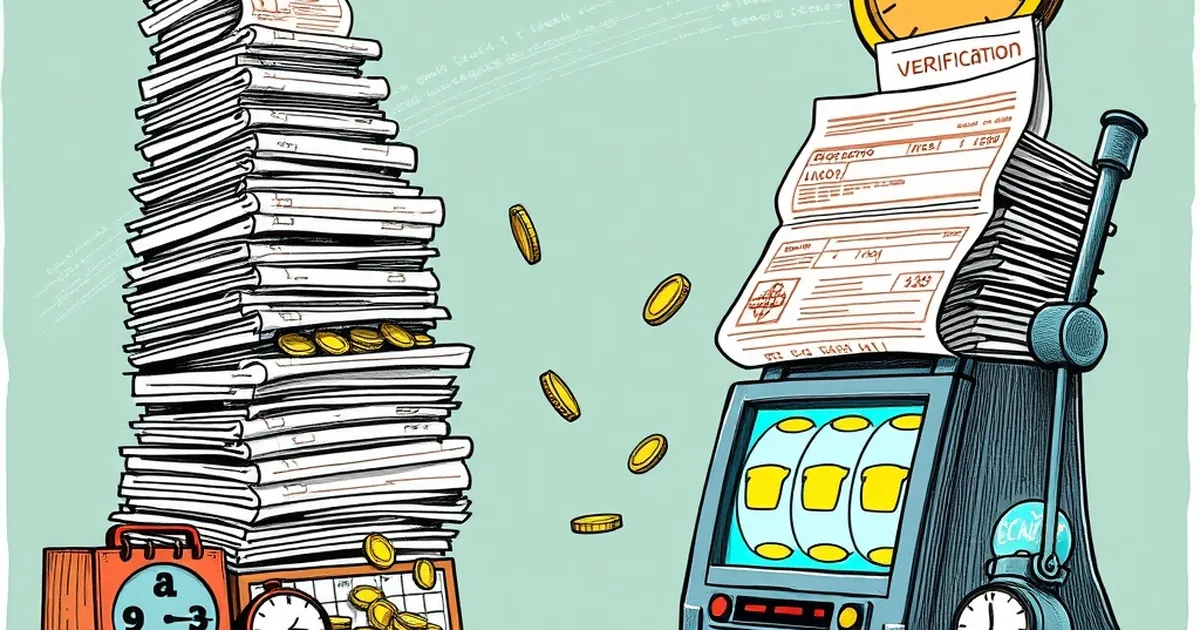
A player in Ontario hit a €2.4 million progressive jackpot on a Friday night, posted the win screenshot to X by 11:47pm, and had the money in their account on March 14 — 41 days later. That gap between the celebratory post and the actual payout is the whole story of modern jackpot wins: the announcement is instant, the money is not. And the six-week figure in the headline isn't an exaggeration pulled from a forum rant. It's roughly the industry norm for anything above a few hundred thousand euros.
The 40-second post is easy to understand. The six-week wait is where most players get blindsided, because nothing in the marketing copy prepares you for it.
Why the win gets announced before anyone has verified it
Casino operators have a commercial incentive to publicize a jackpot the moment it lands. A seven-figure win is free advertising — it signals that the games pay, that the platform is legitimate, that the money exists. So the social team posts within minutes, often before the compliance department has done anything beyond confirming the game logged a win event.
That creates a strange situation. The operator is publicly celebrating a payout it hasn't approved, hasn't funded, and in some cases hasn't even fully calculated. The screenshot goes viral. Comments fill with "congrats" and "which game?" The winner, for a few hours, is a minor celebrity.
Then the paperwork starts.
The gap between "you won" and "you're paid"
Most regulated operators run a two-track process. Track one is the game software, which declares a win the instant the reels or RNG land on the jackpot combination. Track two is the payments and compliance side, which has to independently confirm that win is real, that the account is clean, and that the money can legally move. Track one takes milliseconds. Track two takes weeks.
Nothing about this is secret, but it's rarely explained up front, and that asymmetry — instant celebration, slow payment — is what generates most of the anger you see in win-post comment threads.
What actually happens during those six weeks
The timeline varies by jurisdiction and by the size of the win, but the sequence is fairly consistent across major regulated markets.
Days 1–3: The operator freezes the account
The first thing that happens after a large win is usually a hold on the account, including any unrelated balance. This is standard anti-fraud procedure, not a punishment. A €2.4 million win is exactly the kind of event that triggers a full review, because the operator's own risk models flag it as either a genuine life-changing payout or a system exploit, a bonus abuse pattern, or a compromised account.
If you've ever wondered why a winner complains that they "can't even withdraw €50 of their own money" during this period, that's why. The freeze is account-wide.
Days 3–14: Identity and source-of-funds checks
Know Your Customer (KYC) is the obvious hurdle, but for jackpot-level wins it goes further. Operators in the EU and UK are legally required under anti-money-laundering rules to establish source of funds and, above certain thresholds, source of wealth. That means the winner may be asked to provide bank statements going back months, proof of employment or business ownership, tax records, and in some cases documentation for the deposits that funded the winning session.
For a casual player who deposited €200 over two years, this is straightforward. For someone who deposited €40,000 in a month, it is not, and the review can stretch well past two weeks.
Weeks 2–4: Game and RNG verification
This is the part players rarely think about. Before paying a progressive jackpot, the operator — and often the game provider — needs to verify that the win was generated correctly. That means pulling the game logs, confirming the RNG output, checking the jackpot contribution ledger, and in some cases involving a third-party testing lab.
On a networked progressive shared across dozens of operators, the verification has to happen across every party in the pool. Each one has to agree the win is valid before the money moves. That coordination alone can eat two weeks.
Weeks 4–6: Payment processing and the actual transfer
Once everything clears, the payment itself is the easy part — but it still isn't instant. Large sums usually move by bank transfer, because card networks and most e-wallets cap transactions far below jackpot levels. A single transfer of €2.4 million can take several business days to clear, and it may be split across multiple payments for regulatory reasons.
There's also the question of who pays. On a networked jackpot, the operator that hosted the winning spin often fronts the money and is later reimbursed by the other participants in the pool. That internal settlement can run in parallel with or after the player's payment, depending on the agreement.
Six weeks is normal, and sometimes it's longer
Forty-one days is a reasonable benchmark, not a worst case. The UK Gambling Commission's own guidance allows operators to complete verification within a "reasonable" timeframe, and most interpret that as up to 30 days from the request for documents — which doesn't start counting until the winner actually submits everything. If a player is traveling, slow to respond, or needs to gather source-of-wealth evidence, the clock resets.
Some jurisdictions are faster. Malta-licensed operators with mature compliance teams can clear a mid-six-figure win in 10 to 14 days. Some are slower, particularly where the win crosses a tax-reporting threshold and the operator has to coordinate with a local authority. In a handful of markets, the winner can't be paid until tax is withheld at source, which adds another layer of processing.
The record isn't six weeks, either. There are documented cases of jackpot payouts taking three months or more, usually because of a dispute over the validity of the win, a change of ownership at the operator, or a winner who lawyered up before accepting the operator's terms.
What winners can actually do
Not much, in the moment — but a few things help. Submit KYC documents before you win, not after, since most operators let you verify early. Keep deposits and withdrawals traceable through a single bank account. And read the terms on jackpot games specifically, because some cap payouts or allow the operator to pay in installments rather than a lump sum.
The uncomfortable truth is that the six-week wait is largely a function of regulation working as intended. The same AML rules that slow your payout are the ones that make the jackpot money real rather than theoretical. That's cold comfort if you're the one refreshing your banking app at 2am.
The part nobody posts about
The social media post and the payout are two different events run by two different teams with two different incentives. One is optimized for reach. The other is optimized for not accidentally paying out millions to a fraudster.
That leaves an open question worth sitting with: if operators can verify a win fast enough to announce it in 40 seconds, why does the same verification take six weeks when it's time to pay? Either the announcement is premature, or the payout process is slower than it needs to be. Both can't be fully true — and the industry has shown little interest in resolving which one it is.