Hot wallet pays in 90 seconds; the cold wallet takes 3 days
The 90-second versus 3-day payout gap reveals how casinos really treat withdrawals, and it comes down to a deliberate choice of wallet
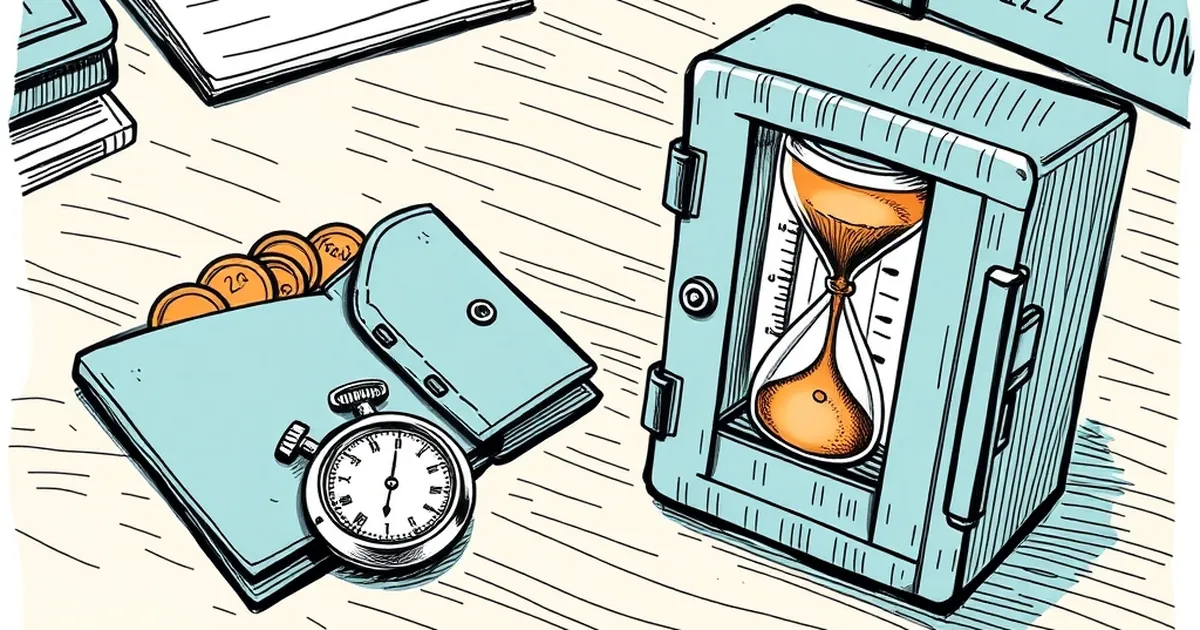
A payout that lands in 90 seconds and one that takes three days can come from the same account, on the same day, with the same request. The difference is which wallet the casino pays from. Hot wallets clear in about a minute and a half; cold wallets routinely take 72 hours, and sometimes a fourth day if the request hits a weekend. That gap is not a technical quirk. It is a policy choice, and it is the single clearest signal of how a casino actually treats withdrawals.
Why the 90-second number is real
A hot wallet is a private key stored on a machine that touches the internet. When you request a withdrawal, the casino's system signs the transaction, broadcasts it, and you are waiting on block confirmation, not on the operator. On a fast chain that is seconds. On Bitcoin it is ten minutes to a first confirmation, though most processors treat a single confirmation as settled for amounts under a few thousand dollars.
The 90-second figure comes from operators running automated payout queues on low-fee networks. The bottleneck is not the blockchain. It is the internal review: a fraud check, a check that you have not reversed a deposit, a check against bonus abuse flags. Casinos that have automated that review and capped manual intervention clear in under two minutes. The ones that have not will tell you "up to 24 hours" and mean it.
Here is the part players miss. A hot wallet is a security liability for the operator. The key sits on a server, and servers get breached. That is why most casinos keep only a working float hot, typically somewhere between 2% and 5% of total holdings, and sweep the rest cold. The float is sized to cover normal withdrawal volume, which means the 90-second experience is available to most players most of the time, and disappears exactly when it matters — during a run.
The three-day cold wallet, explained honestly
Cold storage means the key is offline. To pay you, someone has to move funds from cold to hot, and that is a manual process by design. A serious operator runs it as a ceremony: two or three key holders, a signing device that never touches a network, a documented transfer, a reconciliation. That is not a conspiracy to hold your money. It is what stops the whole bankroll from walking out the door after a phishing email.
The honest version of the three-day timeline looks like this:
- Day 1: request flagged, queued for the next scheduled cold-to-hot sweep.
- Day 2: sweep executed, funds land in the hot wallet, transaction signed and broadcast.
- Day 3: confirmations, plus whatever internal sign-off the compliance team requires above a threshold.
Where it goes wrong is when the sweep is not daily. Some operators run it twice a week. A Friday withdrawal then waits until Monday for the sweep, and Tuesday for the confirmation. That is how "three days" becomes five, and it has nothing to do with the blockchain.
The threshold question
Ask a casino what its hot wallet float is and you will get a vague answer. Ask what withdrawal amount triggers manual review and you will often get a real number — commonly $2,000 to $10,000, though some set it as low as $500. Below the threshold, you are on the automated rail. Above it, you are in the ceremony. If a casino will not tell you the threshold before you deposit, assume it is low.
What the payout speed actually tells you
Speed is a proxy for how the operator has structured its risk. A casino that pays in 90 seconds has decided that fast payouts are worth the hot wallet exposure, and has built the fraud controls to make that safe. A casino that takes three days has decided the opposite, or has not built the controls, or is using the delay as working capital.
That last one deserves a straight sentence. Holding withdrawals for 72 hours gives an operator three days of float on every payout. At scale that is real money, and a handful of operators have been caught relying on it. You will not prove it from the outside. But you can watch for the pattern: fast deposits, slow withdrawals, and a support team that cannot name a specific reason for the delay beyond "security review."
There is also a regulatory angle that cuts both ways. Under many licensing regimes, operators must complete source-of-funds checks before releasing large withdrawals. A three-day hold on a $50,000 payout is defensible. A three-day hold on a $200 payout is not, and if that is what you are seeing, the cold wallet is an excuse rather than a cause.
How to read a casino's payout page
Payout pages are written to obscure. A few things to check before you commit funds:
Look for the word "pending." If withdrawals sit in a pending state for 24 to 48 hours before processing begins, the clock starts after that, not at your request. A casino advertising "24-hour payouts" with a 48-hour pending period pays in three days.
Check whether the advertised time is business days. "1–3 days" almost always means business days, which means a Friday request lands Wednesday.
Find the fee schedule for the network. A casino paying in 90 seconds is eating the transaction fee or passing it to you. Neither is disqualifying, but a $15 fee on a $100 withdrawal is a 15% haircut and worth knowing about.
Test small first. Withdraw the minimum before you deposit seriously. The 90-second claim is either true or it is not, and one small test settles it faster than any review.
On the responsible gambling side, this matters more than it sounds. A player waiting three days for a payout is a player with a balance sitting in an account they can still reverse or spend. Fast payouts are a harm-reduction feature as much as a convenience. If a casino's slow payout window has ever tempted you to cancel a withdrawal and play it back, you already know why the 90-second number is worth caring about.
The question nobody is asking
The interesting thing about the hot-cold split is that it is invisible until it is not. Players rate casinos on payout speed, operators know it, and the market rewards the fast ones. So why do so many still run weekly cold sweeps? Because the cost of a breach is catastrophic and the cost of a slow payout is a bad review. That calculus is shifting as custody tooling improves and multi-signature setups get cheaper to run, but it has not shifted everywhere.
Which raises the question worth putting to any operator still quoting three days: if the sweep can be daily, and the signing ceremony can be scheduled, and the compliance review can run in parallel rather than in sequence — what exactly is the third day for? The answer will tell you more about the casino than any bonus term ever will.