Geo-block lifts in 1 tap; the licence lookup takes 6
Geo-blocking fires instantly while operator licence details hide clicks deep, exposing a quiet asymmetry in how regulated gambling sites treat players
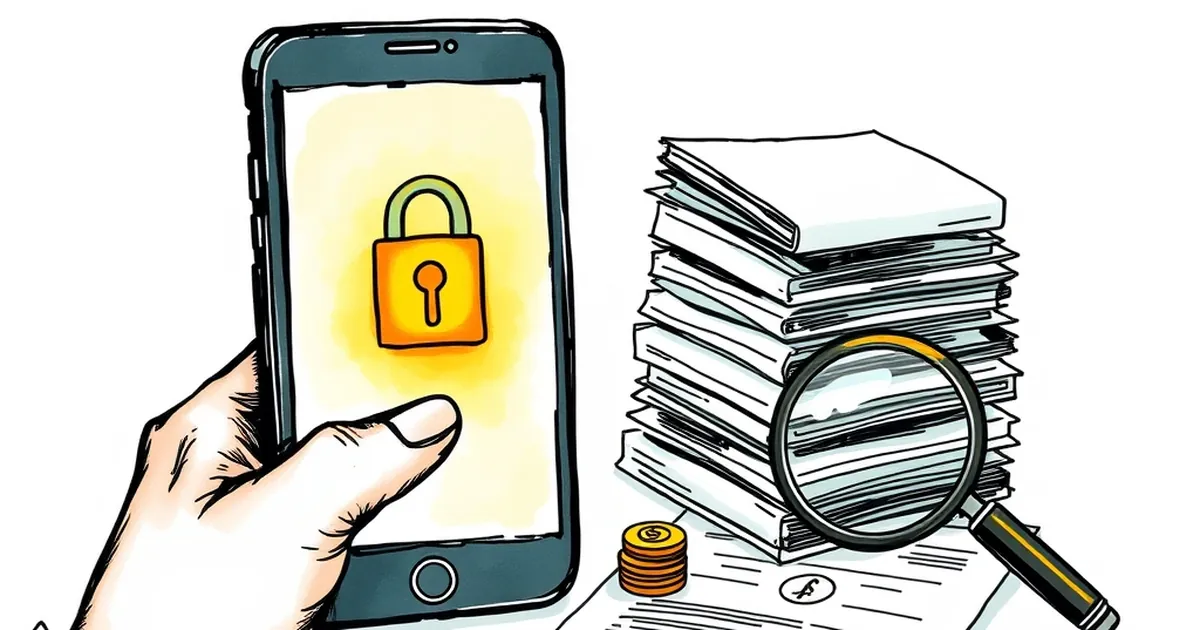
Walk into any regulated market in Europe and the first thing you'll hit is a wall. Not a paywall, not a login prompt — a geolocation check. It fires before the lobby loads, before your account balance renders, before anything you might recognise. The whole exchange takes a fraction of a second, and it fails silently if you're in the wrong place. Meanwhile, the same operator's licence details — the thing that tells you who actually stands behind the site when something goes wrong — sit three or four clicks deep, often on a page that hasn't been updated since the domain changed hands. The asymmetry is the story: blocking you out takes one tap, verifying who they are takes six.
That's not a complaint about geoblocking. Regulators require it, and the operators who do it badly get fined. The point is what the asymmetry reveals about where the industry has put its engineering effort. Kicking people out is a solved problem, automated, near-instant, and enforced with real money behind it. Letting people check credentials is still a manual hunt through footers and PDFs.
The one-tap exit
Geolocation enforcement has quietly become one of the most reliable pieces of infrastructure in iGaming. Most large operators run a blend of IP intelligence, GPS where the device allows it, and Wi-Fi network checks. The response is binary: allowed jurisdiction, or a redirect to a landing page that says the service isn't available in your region.
The speed is the impressive part. A properly configured stack resolves location and applies the block in under 300 milliseconds in most cases — faster than the time it takes the page to request its first font file. The user experience is a white page or a polite message, and that's it. No explanation of which rule triggered it, no jurisdiction list, no contact route if you think the block is wrong.
There's a reason the block is fast and the explanation is absent. The block protects the operator's licence. The explanation protects you. One of those has a compliance deadline attached and the other doesn't.
This matters more than it sounds, because geoblocking errors are not rare. VPN users get caught in false positives. People near borders get assigned to the wrong country. Travellers on hotel Wi-Fi get blocked from accounts they've held for a decade. When that happens, the one-tap exit has no reverse gear — you're out, and finding out why means emailing support and waiting.
Six clicks to find out who you're actually dealing with
Now try the other direction. You want to know which regulator issued the licence, what the licence number is, whether it's still active, and what recourse you have if a withdrawal goes sideways. On a typical operator site:
- Scroll to the footer.
- Find the licensing line — often a logo, sometimes just text.
- Click through to a "Licensing" or "About Us" page.
- Find the licence number, which may or may not be displayed.
- Navigate to the regulator's own public register.
- Search the register by trading name, which frequently differs from the brand you're on.
Six steps, and step six is where it falls apart. Trading names, holding companies, and brand names diverge constantly. A site trading as one name might be licensed under a parent entity registered in a different jurisdiction entirely, with the brand appearing nowhere in the public register. You need the licence number to search properly, and the licence number is the thing buried on step four.
Compare that to the geoblock, which needs nothing from you except a location signal your device transmits automatically.
The register problem
Regulators have improved here, but unevenly. Some publish searchable registers with brand names indexed. Others publish PDFs, updated periodically, sorted by licensee rather than brand. The Malta Gaming Authority and the UK Gambling Commission both maintain reasonably searchable public registers; smaller jurisdictions vary widely. For a player in a market with a dozen licensed operators, cross-referencing six of them against their regulators is an afternoon's work.
The practical consequence is that almost nobody does it. Players rely on recognisable branding instead, which is exactly backwards from a risk perspective — the brands with the biggest marketing budgets are not automatically the ones with the cleanest complaint records.
Why the asymmetry exists
Geoblocking is enforced by regulators with the threat of licence suspension and, in some markets, per-transaction penalties. Non-compliance is detectable: send a test transaction from a blocked jurisdiction and see if it goes through. Regulators do exactly this. The incentive to get it right is immediate and financial.
Licence transparency is also a regulatory requirement, but the enforcement is softer. Operators must display licence information; they're rarely fined for making it hard to find. The information is technically present, technically accurate, and practically inconvenient. That's enough to pass an audit and not enough to be useful.
There's also a design incentive pointing the same way. Every click between a player and a deposit is friction, and friction costs conversions. A prominent licence panel with a register link and a complaint route is a click that doesn't lead to the cashier. Operators optimise it away, and nothing stops them.
What a fair version looks like
The fix isn't complicated, and it doesn't require new regulation in most markets — just enforcement of the display rules that already exist.
A licence line in the footer that states the regulator, the licence number, and the legal entity name, with a direct link to the regulator's public register entry for that specific licence. Not the regulator's homepage. The entry. One click from the footer to a page that confirms the licence is active and names the entity.
That's roughly the same amount of screen real estate as the current logo-and-nothing approach. Some operators already do it. The ones that do tend to be the ones with less to hide, which tells you something.
The second piece is a complaint route that's as visible as the deposit button. Every licensed operator has a formal complaints process and an alternative dispute resolution body behind it. Almost none of them surface it anywhere a player would find it before they need it.
The question worth asking
Here's the uncomfortable part. The industry has proven it can build fast, reliable, automated compliance infrastructure when the penalties are sharp enough. Geoblocking works because getting it wrong is expensive. Licence transparency is slow and manual because getting it wrong costs almost nothing.
So the open question isn't whether operators can make licence verification a one-tap affair. They clearly can — the engineering is trivial next to what they already run. The question is whether regulators will ever attach the same consequence to a buried licence number that they attach to a failed geoblock. Until they do, the pattern holds: out in a fraction of a second, in with a six-step scavenger hunt, and the player left to decide how much that asymmetry is worth.
If you're checking a site before depositing, the licence number is the one thing worth the clicks. And if you're the sort of player who needs the block explained rather than just applied, treat that as a signal about how the operator handles the rest of its obligations — including the ones that don't come with a fine attached.