Free spins expire in 7 days; the slot you won them on rotates monthly
Two clocks govern your free spins: a 7-day expiry and a monthly slot rotation that quietly reshapes what your bonus is worth
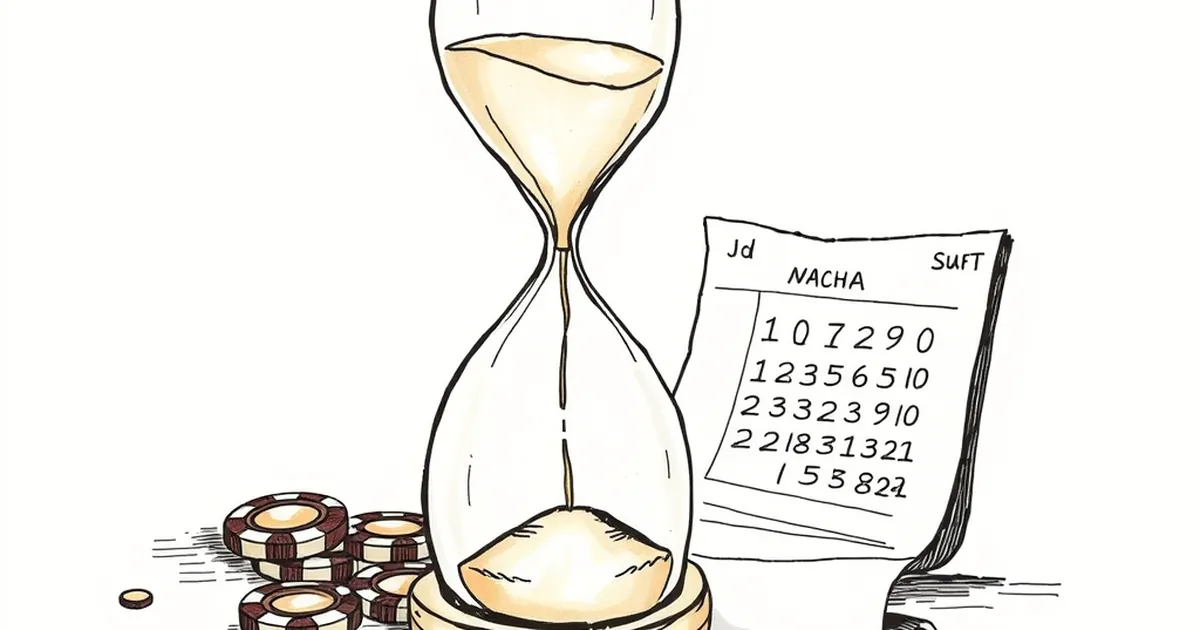
A free spin bonus that arrives with a 7-day expiry clock and a game library that shuffles every 30 days is now a standard structure at a handful of mid-tier operators, and it creates a specific problem most players don't notice until week three. The spins you're awarded on Tuesday may be gone by the following Tuesday, but the slot they were tied to might not exist in your account by the Tuesday after that. Two clocks are running at different speeds, and only one of them is advertised.
The 7-day window is the one players actually read. It's printed on the bonus terms page, sometimes in the promo email, occasionally as a countdown timer inside the cashier. The monthly rotation is quieter. It usually shows up as a single line in the general terms: "The featured slot for free spin promotions is subject to change." That sentence is doing more work than it looks like.
Why the two clocks don't line up
A 7-day expiry on free spins is short. Most operators run 30 days on deposit bonuses and 7 to 14 on no-deposit spins, so a week is on the aggressive end of normal. The justification operators give is straightforward: short windows reduce liability, push players to log in quickly, and cut the number of dormant bonuses sitting on the books. That's a business argument, not a fairness argument, but it's at least coherent.
The monthly rotation has a different logic. Slot providers pay for placement. A studio that wants its new release in front of traffic will subsidise free spin campaigns, and those deals typically run in 30-day blocks. So the operator's promotional calendar resets on a monthly cycle while the player's bonus clock resets every 7 days. Same promotion, two different rhythms.
The friction shows up when the rotation lands mid-window. If you claim spins on the 28th and the featured game changes on the 1st, you have four days left on the expiry and a slot that's no longer part of the campaign. What happens next depends entirely on the operator's terms, and the terms are rarely specific.
The three ways operators handle a mid-window swap
The most player-friendly version keeps your spins valid on the original game until they expire. Your 7 days run out, the spins vanish, and the rotation only affects new claims. This is clean and it's what most licensed operators in Malta and the UK actually do, even when the terms don't say so explicitly.
The second version migrates your remaining spins to the new featured slot. Sounds generous. Often isn't. Free spin values are set in currency, not in spins — 50 spins at €0.10 stake is €5 of value regardless of which game they land on — but the variance changes completely. A €0.10 spin on a high-volatility Megaways clone and a €0.10 spin on a 96.2% RTP classic are not the same product. You can be moved from a game with a 1-in-400 max win hit rate to one where the top prize is 5,000x but lands once in 2 million spins. Same nominal value, different experience.
The third version voids them. The rotation takes effect, the old game is removed from the promotion, and any unclaimed spins are cancelled with a line in the terms that says the operator reserves the right to modify or withdraw promotions. This is legal in most jurisdictions. It's also the version that generates the complaints.
The honest answer is that you usually can't tell which one applies until it happens, because the terms are written to cover all three without committing to any.
What the rotation actually costs you
Here's a number worth sitting with: if a campaign awards 50 spins at €0.10 and the game carries a 96.2% RTP, the expected return on those spins is €4.81. The headline value is €5. The house edge eats 19 cents before you've done anything.
Now rotate to a slot with 94.5% RTP. Same 50 spins, same €0.10 stake, expected return drops to €4.73. You've lost 8 cents in expected value without a single term changing. Over a campaign that's trivial. Over a year of weekly claims, it's a small but real tax on players who don't check which game they're being pointed at.
The bigger cost isn't the RTP drift, though. It's the wagering. Free spin winnings typically convert to bonus credit with a wagering requirement attached, and that requirement is usually expressed as a multiple of the winnings, not the spin value. Win €8 from your 50 spins, face a 40x requirement, and you need €320 in wagers before anything is withdrawable. That number doesn't change when the slot rotates. The game's volatility and max bet rules do.
The max bet trap
Most free spin terms cap your bet while wagering at €5 or €4 per spin. That cap is fine. The problem is that rotating to a new featured game often brings a new max bet rule that's lower — sometimes €2, occasionally €1 — and it's buried in the game-specific terms rather than the promotion terms. Breach it and the bonus and any winnings from it can be voided.
This is where the monthly rotation does real damage. You learn the rules for Game A in week one. Game B arrives in week three with a different cap you never read because you assumed the promotion terms covered it. They didn't.
How to play around the calendar
Check the expiry date against the rotation date before you claim. If the campaign resets on the 1st and you're claiming on the 26th, you have five days of overlap where things can go sideways. Claiming in the first week of a month gives you a clean run at the full 7 days on a game you can actually research.
Screenshot the terms when you claim. Not because you'll need to escalate, but because terms pages get edited and the version you agreed to is the version that matters. A timestamped screenshot has settled more support tickets than any argument about what the page "used to say."
Play the spins early. The 7-day clock is real and it doesn't pause. Spins sitting unclaimed on day six are spins you're probably going to lose, and the rotation is the least of your problems at that point.
And read the game-specific terms, not just the promotion terms. The max bet cap, the max win cap if there is one, and the contribution rate toward wagering all live in different documents. The promotion page tells you what you got. The game page tells you what you can do with it.
None of this is a reason to avoid free spins. A 50-spin drop at €0.10 is a €5 exposure with a 96%+ return, which is a better deal than most people realise. It's a reason to treat the calendar as part of the offer.
The open question is whether the 7-day window and the 30-day rotation are ever going to be reconciled. Some regulators have started asking operators to state expiry terms in the same place as the bonus value, which would at least put both clocks on the same page. Until that's standard, the player is the one doing the arithmetic — and the operator is the one who chose which two numbers to put next to each other.