Free spins expire at 7 days, the reel that won them in 40
A 40-cent spin won CAD 1.2 million, but the attached free spins expired in seven days, revealing how bonus terms quietly outpace players
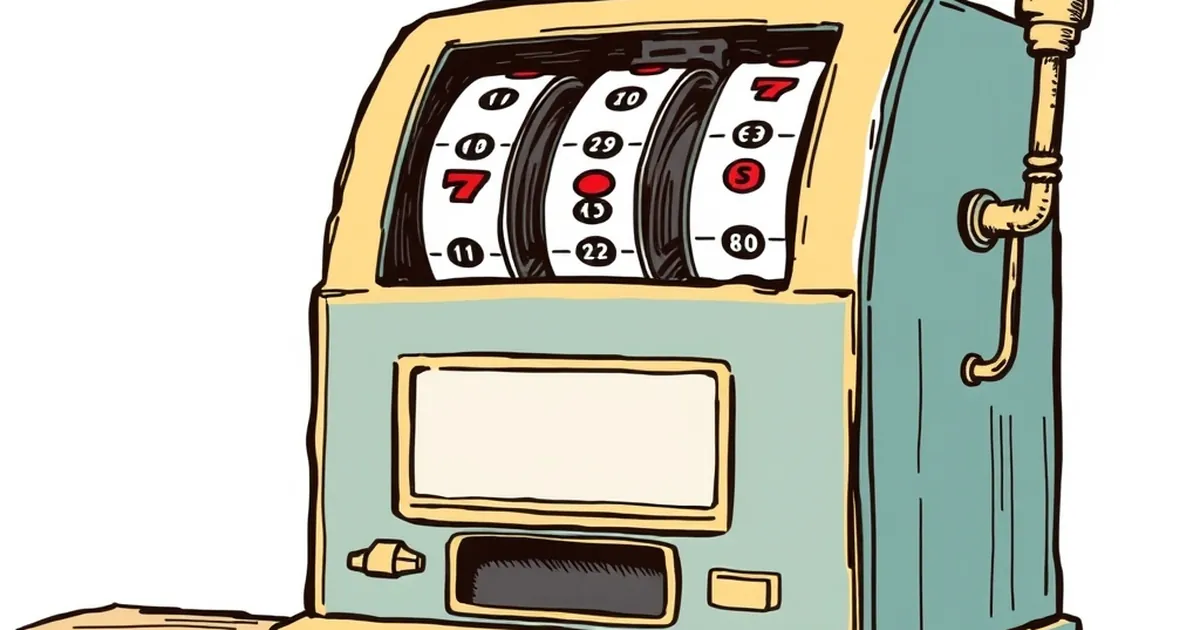
A player in Ontario won a CAD 1.2 million jackpot on a 40-cent spin last March. The free spins attached to that win expired seven days later. Both numbers are real, both are standard, and the gap between them is where most bonus complaints actually live.
The 40-cent spin is the hook. The seven-day clock is the punchline. And the fact that nobody at the operator saw a problem with either one tells you something about how bonus terms get written — not maliciously, usually, but at a speed that outpaces the player's ability to read them.
The asymmetry that nobody designed on purpose
Bonus terms are drafted by compliance teams, marketing teams, and legal teams, in roughly that order of influence and reverse order of empathy. The free spins get attached to a deposit because marketing needs a headline. The expiry gets set to seven days because legal wants a clean audit trail and finance wants the liability off the books by month-end. Somewhere in that process, the person who actually has to use the spins — a player who deposited CAD 20 on a Tuesday, got 50 spins on a slot they've never heard of, and works 60 hours a week — never enters the room.
Seven days is not a number pulled from player behaviour data. It's a number pulled from accounting cycles. Weekly reporting windows. A liability that clears before the next board deck. That's not a conspiracy; it's just how most operators are structured. The player experience is downstream of the spreadsheet.
Compare that to the 40-cent spin itself. That number was chosen deliberately, tested, and optimised. Spin values on jackpot slots are calibrated to the cent because a 40-cent spin sits in a psychological sweet spot: cheap enough to feel like a freebie, high enough to qualify for the jackpot pool. Somebody ran the numbers on that. Nobody ran the numbers on whether seven days is enough time to use 50 spins on a game you've never played.
What actually expires, and when
Here's the part that catches people out. Free spins rarely expire as a single block. They usually expire on a staggered schedule, and the schedule is often buried in a subsection of the bonus T&C that runs longer than this article.
The common patterns:
- All spins expire at once, typically 7, 14, or 30 days from crediting. Simplest to understand, easiest to miss.
- Spins release in daily batches, e.g. 10 per day for 5 days, each batch with its own 24-hour window. Miss a day, lose that batch. The headline said "50 free spins." The reality is 10 spins, five times, with five separate deadlines.
- Spins expire on first use, meaning the clock starts when you open the game, not when the bonus was credited. Rare, but it exists, and it's the one that generates the angriest support tickets.
The daily-batch model is the most common in markets with stricter bonus advertising rules, because it lets operators advertise a bigger total number while capping daily exposure. It's also the model most likely to leave value on the table. A player who logs in on Monday and Friday out of a five-day batch keeps 20% of what was advertised.
If you want to know which model you're dealing with, look for the phrase "credited in instalments" or a table with dates in the bonus terms. If there's no table, assume everything expires at once and treat day one as the only day that matters.
The 40-cent problem
Now the harder question: what happens when the spin that expires is the spin that won?
Most jurisdictions handle this with a rule that sounds reasonable until you apply it. Winnings from free spins are typically credited to a bonus balance, not a cash balance, and the bonus balance carries its own expiry — often shorter than the spins themselves. So the sequence is: spin wins CAD 1.2 million, winnings land in a bonus wallet, bonus wallet expires in 7 days, and the player needs to clear a wagering requirement on that amount before it converts.
On a CAD 1.2 million win at a 40x wagering requirement, that's CAD 48 million in playthrough. At a 96.2% RTP slot, the expected loss before conversion is roughly CAD 1.82 million. The number is larger than the win. This is not a hypothetical; it's arithmetic, and it's the reason most progressive jackpot terms carve out an exception — real-money jackpot contributions usually pay in cash, while free-spin-triggered wins often don't.
The 40-cent spin and the 7-day expiry are two ends of the same design. One is calibrated to the cent. The other is calibrated to a reporting deadline. The player sits between them, holding a screenshot and a countdown.
Where the seven days actually comes from
Trace the number across a few dozen operators and a pattern emerges. Seven days shows up most often in jurisdictions where bonus funds must be segregated and reported on a weekly cycle. Fourteen days shows up where the reporting cycle is fortnightly. Thirty days shows up where the operator is buying liability insurance and the underwriter wants a clean monthly close.
In other words, the expiry is a function of the operator's back office, not the player's calendar. That's why you'll see the same operator offer 30-day expiry on one bonus and 7-day expiry on another in the same month — different products, different liability buckets, different underwriters.
The practical takeaway: expiry length correlates with how the bonus is funded, not how generous the operator is. A 7-day expiry on a deposit bonus is often a sign the bonus is funded from a promotional budget with tight reporting. A 30-day expiry usually means it's funded from a retention budget with more slack. Neither tells you anything about whether the bonus is worth taking.
What a fair clock would look like
If you were designing bonus expiry from the player's side, you'd start with the spin, not the calendar. The clock would start on first login after crediting, not on credit date. Daily batches would roll over rather than expire. And winnings from a single spin above a threshold — say, 100x the spin value — would convert to cash immediately, because the wagering requirement on a life-changing number is a fiction that only exists to make the terms look consistent.
None of that is standard. Some of it exists in a handful of jurisdictions with aggressive consumer protection regimes, but it's the exception. The default is still seven days, still from credit date, still with a wagering requirement that scales linearly into absurdity.
The open question is whether that default survives the next round of regulatory attention. The UK, Sweden, and several Australian states have already moved on wagering requirements themselves — capping them, restricting them on certain products, or banning them outright on free spins. Expiry windows are the next obvious target, because they're easier to regulate than wagering: you either have a minimum window or you don't.
If a regulator sets a floor of 30 days, most operators will simply move to 30 days and call it player-friendly. The 40-cent spin will still be there. The jackpot will still be there. The question is whether the player who hits it gets a month instead of a week to find out what they actually won — and whether a month is enough time to clear CAD 48 million in playthrough. It isn't. But that's a different fight, and it's the one nobody has started yet.