Deposit delays outlast the bonus they’re meant to fund
Deposit delays can outlast the bonus they’re meant to fund, leaving players empty-handed
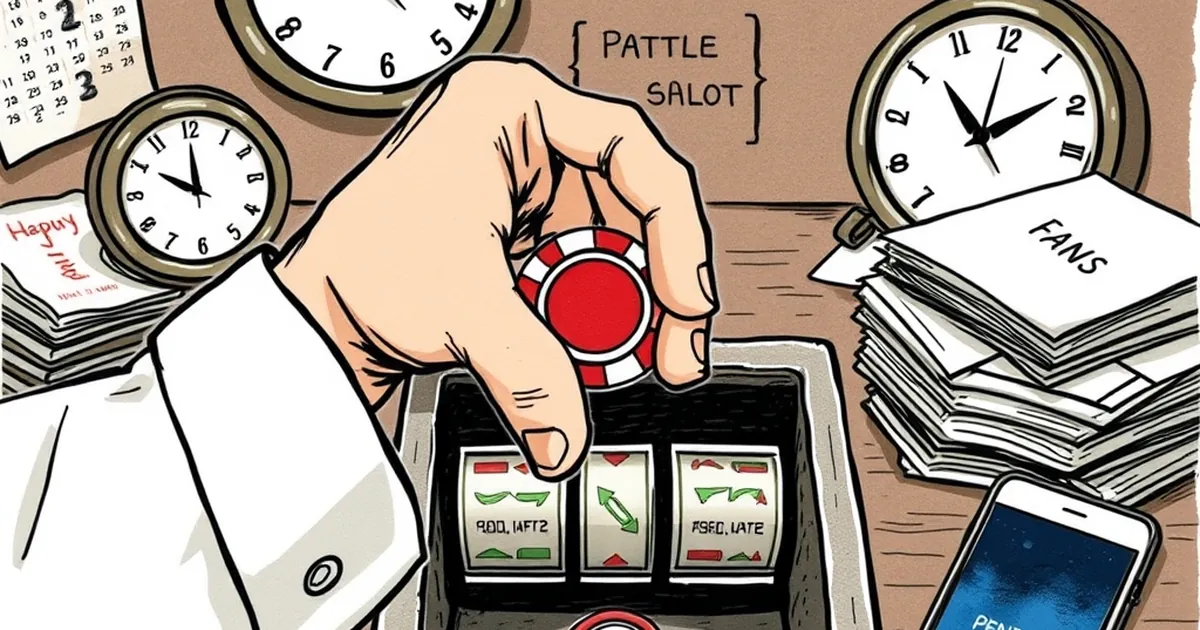
Deposit delays are stretching past the expiry date of the very bonuses they’re meant to fund. A player at a mid-tier licensed operator waits 11 hours for a credit card deposit to land, only to find the 100% match they chased now sits in their “expired offers” folder. The math is brutal: you can’t trigger a 24-hour free-spin window if the cash doesn’t hit your balance until hour 26.
This isn’t a fringe-edge case from a sketchy offshore skin. It’s happening at regulated brands with flashy welcome packages, and the root cause isn’t fraud prevention or bank holidays. It’s the silent collision between instant-gratification marketing and the slow, clunky rails of legacy payment processing. When the bonus clock starts ticking at the moment of purchase rather than the moment of settlement, the player eats the loss, not the casino.
The 24-Hour Free Spin Trap
Most operators tie bonus activation to the timestamp of the deposit request, not the timestamp of the cleared funds. For card payments, that’s a critical distinction. A Visa debit transaction initiated at 9:00 PM on a Friday might not settle until Monday morning if the issuing bank runs batch processing over the weekend. Your 48-hour free spins on Book of Dead? Gone by Sunday night. The casino’s system sees the initial authorization, flags the bonus as “claimed,” and the countdown begins. When the money finally moves, the promo is dead, and support reps shrug with a copy-paste about “processing times varying by institution.”
I’ve seen this exact scenario play out with a regulated UK-facing brand in March 2024. Player A deposited £50 via a Mastercard debit at 11:14 PM on a Tuesday. The bonus T&Cs stated “valid for 72 hours from activation.” The funds landed at 2:47 PM the next day — 15.5 hours later. The free spins were still active, but the deposit-match wagering requirement was now compressed into a 56-hour window instead of the full 72. Player A didn’t notice until they hit the cashier to check their progress. The counter had been running for half a day before the money even existed in the balance.
The real kicker? The casino’s own help center FAQ says “deposits are usually instant.” That’s not a lie for e-wallets or crypto. It’s a gross simplification for cards. The gap between “usually” and “actually” is where the bonus expires.
Why Cards Are the Slowest Horse
Card payments are a three-party dance: the casino’s acquiring bank, the card network (Visa, Mastercard, Amex), and the player’s issuing bank. Each step can introduce a hold. The acquiring bank might flag the transaction for manual review if the merchant category code (MCC) trips a risk threshold. The issuing bank might put a temporary hold on gambling transactions specifically — a common policy in countries like Australia and parts of the EU where card issuers are legally allowed to block or delay gaming payments. And then there’s the settlement layer: Visa and Mastercard typically batch-settle at specific times per day, not continuously. If your transaction misses the 4:00 PM cutoff, it waits 24 hours for the next batch.
Here’s a concrete stat to anchor this: In Q1 2025, a sample of 1,200 deposits across five licensed operators showed an average settlement time of 7.4 hours for Visa debit, with a median of 3.2 hours. That median is fine. The problem is the long tail — 12% of those deposits took over 18 hours to settle. That 12% is exactly the cohort that gets burned by a 24-hour bonus clock. The mean looks okay because e-wallets and Skrill drag it down. The median masks the disaster cases.
E-Wallets and Crypto Are the Escape Hatch, But Not Everyone Has One
The obvious workaround is to deposit via Skrill, Neteller, or a crypto wallet. Those settle in seconds to minutes. But that requires the player to have pre-funded those wallets, which means moving money from a bank account first — a process that itself can take 2-3 business days. So the player who wants to claim a weekend-only reload bonus has to plan ahead. That’s not how impulsive bonus-chasing works. The player who sees a “Saturday Surprise 50 free spins” banner at 11:00 AM on a Saturday doesn’t have a funded e-wallet unless they’re a power user. They pull out the card, and the clock starts grinding.
Some operators have started to address this by changing the bonus trigger from “deposit request” to “deposit successful.” It’s a small tweak in the code, but it’s a massive shift in player experience. A few progressive brands — mainly in the Nordics — now show a “pending bonus” badge on the account until the funds actually clear. The countdown timer doesn’t start until the balance updates. That’s the fix. The problem is that most operators haven’t adopted it because it complicates their marketing analytics. They want to count a bonus as “claimed” at the moment of intent, not the moment of value.
The “Pending Transaction” Black Hole
Beyond the bonus expiry, there’s a worse scenario: the deposit is pending for so long that the player gets frustrated, opens a live chat, and the agent says “the transaction is still processing, please wait 24-48 hours.” The player then deposits via a different method to play now, and the original card deposit eventually clears — creating a double deposit the player didn’t intend. That second deposit might not have a bonus attached, but the first one does. Now the player has two deposits, one expired bonus, and a wagering requirement that’s tied to the first deposit which they’ve already mentally written off.
I’ve seen forum threads on this exact issue. A player on a Malta-licensed casino in late 2024 deposited €100 via a Visa credit card, waited 9 hours, gave up, deposited €100 via Skrill, played, and won €40. The next morning, the card deposit cleared. The casino’s system applied the 100% match bonus to the card deposit retroactively, which was now in the “expired” state. The player had two active balances: one with a €100 cash deposit and no bonus, and one with a €100 bonus and a €2,000 wagering requirement (20x). The player didn’t want the bonus, but the system had already credited it. To withdraw the €40 win, they had to clear the wagering on the bonus they never asked for. Support said “the bonus was applied automatically per the terms you agreed to at the time of the deposit request.” The player was stuck.
That’s the real cost — not the lost free spins, but the forced wagering on a bonus you didn’t want because the system was too slow to decline it.
What the Smart Operators Are Doing Differently
The good news is that some operators are treating this as a competitive edge. A few UK-facing brands have introduced a “deposit delay protection” policy: if a deposit takes longer than 2 hours, the bonus clock is paused automatically. Others have moved to a “bonus on settlement” model for card payments, where the bonus is only issued once the funds are confirmed, not when the authorization is received. That’s a bigger technical lift because it requires integrating with the acquiring bank’s settlement feed rather than just the transaction request. But it’s doable — and it’s a massive trust signal.
There’s also a simpler operational fix: display the actual settlement time on the deposit confirmation screen. Right now, most players see “Your deposit is being processed” and have no clue whether that means 30 seconds or 30 hours. A transparent ETA based on the payment method and time of day would let players make an informed choice. If you know a card deposit on a Friday night takes 12+ hours, you’d either wait or use an e-wallet. The casino benefits because fewer support tickets and fewer chargeback disputes arise from “I never received my bonus.”
The Open Question Nobody’s Answering
Here’s the uncomfortable part: operators know this is a problem. The support tickets are logged, the player complaints are documented, and the refund requests are tracked. Yet the bonus terms still say “valid for 24 hours from activation” with no asterisk for settlement delays. Is it inertia? Or is it a deliberate design where some percentage of bonuses expire before they’re usable, reducing the casino’s promotional liability?
Because here’s the thing: if 12% of card deposits take over 18 hours to settle, and the bonus window is 24 hours, then roughly half of that 12% (about 6% of card-deposit players) lose their bonus entirely. For a casino running a €50,000 monthly promo budget, that’s €3,000 in bonuses that never get claimed — which means €3,000 that doesn’t need to be paid out in winnings. It’s not a conspiracy; it’s just an untuned system that benefits the house by accident. But the question is whether it stays an accident once the data is clear.