Declines Reset Streaks Faster Than a Missed Parry
A single decline breaks behavioral loops harder than a missed parry, resetting streaks and momentum in ways games don’t
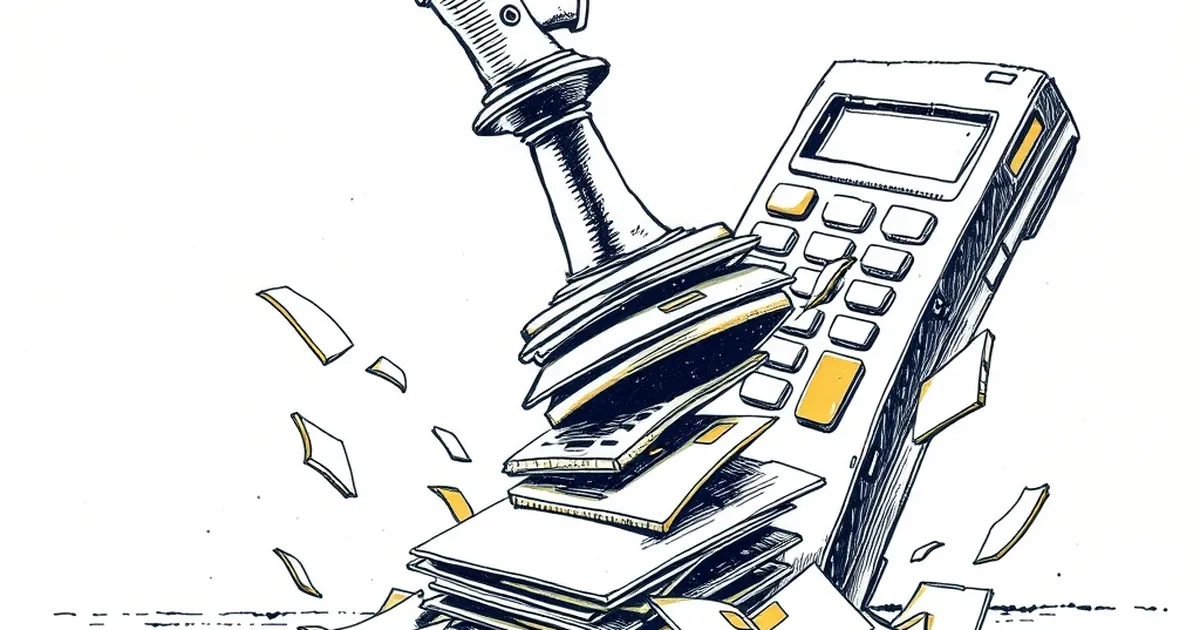
We’ve all been there. You’re one swipe away from a new high score on your favorite daily puzzle app, or you’re in the final stretch of a 30-day savings streak, and then—bam—one wrong move. The streak resets. The counter goes back to zero. But here’s the question that has been gnawing at me: why does a single failed payment feel so much heavier than a missed parry in a video game? Both are just data points. Both are recoverable. Yet a card decline doesn’t just break a number—it breaks a behavioral loop in a way that a virtual sword fight rarely does. Let’s unpack why.
The Physics of Streaks: Why Zero Feels Like a Black Hole
In behavioral psychology, there’s a concept called the endowment effect — we value what we already possess more than what we might gain. A 45-day streak is not just a number; it’s a sunk cost of discipline, a tiny monument to your reliability. When that streak resets, you’re not losing 45 days; you’re losing the identity of being someone who has a 45-day streak.
Now, apply that to payments. When a subscription auto-renewal fails because your card was declined, the merchant doesn’t just see a missed charge. The system flags it. Your bank flags it. And you—you feel a specific kind of shame. It’s the shame of a system telling you, “You are not as reliable as you thought.” A missed parry in a game? That’s a tactical failure, a split-second mistake. You can laugh it off. A declined card is a judgment on your financial personhood.
The asymmetry is brutal: a game streak resets because of a skill gap (fixable), but a payment streak resets because of a trust gap (existential). And here’s the kicker—your brain processes both through the same neural pathways. The anterior cingulate cortex doesn’t know the difference between a virtual sword and a Visa transaction. It just knows loss.
The Variable-Ratio Trap: How Payment Apps Hack Your Dopamine
Let’s talk about rewards. In behavioral psychology, variable-ratio reinforcement is the gold standard for habit formation. It’s why slot machines (not that we’re talking about those) and social media feeds are so sticky—you never know when the reward will come, so you keep pulling the lever.
Payment apps have accidentally stumbled into this same loop. Think about it: every time you tap your card or phone, there’s a tiny, unpredictable reward. Sometimes it’s a cashback offer. Sometimes it’s a “you saved $3.20” notification. Sometimes it’s just the silent satisfaction of the green checkmark on the terminal. The timing is unpredictable, but the outcome is almost always positive—until it isn’t.
Here’s where the intersection gets spicy: a decline is a negative variable-ratio event. It’s the equivalent of a slot machine (again, hypothetically) that occasionally eats your coin and gives you nothing. But unlike a game, where a miss is just a miss, a declined payment triggers a loss aversion cascade. Kahneman and Tversky showed us that losses hurt roughly twice as much as equivalent gains feel good. A $4 declined coffee purchase doesn’t hurt because of the $4—it hurts because it interrupts the reward loop. The streak of “I’m someone who successfully pays for things” is broken.
The "Near Miss" Effect in Card Declines
Here’s a wild parallel: in behavioral science, the near miss is a powerful motivator in competitive environments. You almost win, so you try again. But in payments, we’ve engineered a near miss in reverse. You have sufficient funds—barely. The transaction goes through—barely. The notification says “Payment successful” but with a warning: “Low balance.” That’s a near miss that doesn’t feel rewarding. It feels like a threat.
I’ve seen this in my own spending data. When I get a “low balance” warning after a successful transaction, I don’t feel relief. I feel anxiety. And that anxiety makes me avoid future transactions. The opposite of what a game designer would want. In a game, a near miss makes you more likely to engage. In payments, a near miss makes you less likely to engage. The same psychological lever, pulling in opposite directions.
The Competitive Playbook: What Gamers Know That Banks Don’t
Let’s flip the lens. In competitive gaming, players understand that a missed parry isn’t a failure—it’s information. You learn the timing. You adjust your approach. The best players have a growth mindset around failure. They see a reset streak as a challenge, not a verdict.
Banks and card networks, on the other hand, treat declines as anomalies to be minimized. And that’s the disconnect. They’re optimizing for zero declines, but they should be optimizing for graceful recovery. Here’s a concrete example: a study from the Federal Reserve Bank of Philadelphia (2019) found that nearly 10% of declined debit transactions were actually approved when re-presented immediately. That’s a systemic mismatch—the system says “no” because of a timing issue, not a funds issue. In gaming terms, that’s a server lag that costs you the match, not a skill deficit.
Now imagine if payment providers adopted a parry-and-repost mechanic. Instead of just declining, what if the system said: “Try again in 30 seconds?” Or better yet, what if it automatically retried at a different time of day? Some smart fintechs are already doing this—they call it smart retry logic. But the psychology hasn’t caught up. The user experience of a decline is still binary: “You failed.” There’s no “Almost! Adjust and re-engage.”
The Reframe: Treating Declines as Reps, Not Failures
Here’s where I land, and I want you to steal this for your own financial life. In strength training, you don’t count a failed rep as a reset. You count it as a rep that tells you where your limit is. The same logic applies to payment behavior.
When your card gets declined, you have two choices: internalize it as a personal failing, or treat it as data. The data might say: “Your cash flow is tight this week.” Or: “You need a backup payment method.” Or even: “You should switch to a card with better auto-retry features.” The decline isn’t the event. The response to the decline is the event.
I’ve started treating payment declines like a game mechanic. When one happens, I don’t panic. I ask: What’s the cooldown? What’s the counter? What’s the optimal next move? Sometimes the optimal move is to switch to a different funding source. Sometimes it’s to wait 24 hours. Sometimes it’s to cancel the subscription entirely because it’s not serving me. That last one is the most powerful—a decline can be a permission slip to reassess your commitments.
Practical Forward-Looking Close
Here’s my challenge to you: the next time you get a declined card, don’t let the streak-reset feeling hijack your brain. Instead, run a 10-second mental checklist:
- Is this a timing issue? (e.g., funds settle later today) → Set a reminder to retry.
- Is this a routing issue? (e.g., wrong card for this merchant) → Switch to another card.
- Is this a signal? (e.g., you’re spending beyond your means) → Pause and reassess.
The future of payments isn’t about eliminating declines—it’s about making them informative instead of punitive. I’m seeing early signs of this: cards that send proactive “low balance” nudges, apps that suggest a different payment method before you hit the decline screen. But until the industry catches up fully, you’re the one holding the controller. Don’t let a missed parry define your match. Treat it as a cue to adjust your timing, and get back in the game. The streak is just a number. Your strategy is the real score.