Decline Codes Rewire Your Focus Faster Than a 3 AM Queue
Why declined payments hijack your brain—and how understanding that response can rewire your focus faster than any queue
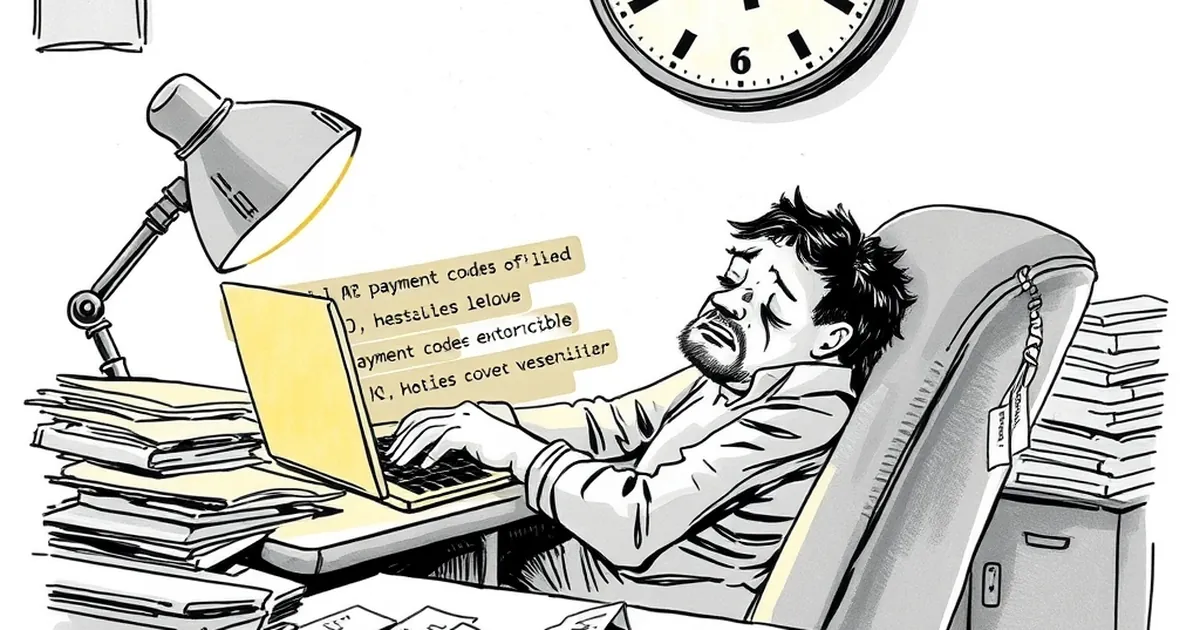
It’s 3 AM. You’re staring at a glowing rectangle, waiting for a transaction to clear, and your brain is doing something fascinating: it’s treating a declined card like a biological threat. We assume that payment logic is pure math—a binary yes/no—but the experience of a decline is pure behavioral psychology.
The question I keep circling is this: If a rejected micro-interaction can trigger a cortisol spike strong enough to override rational thought, what does that tell us about the architecture of our attention? And more importantly, can we reverse-engineer that response to build better financial habits, not just better software?
The Psychology of the "Hard Stop"
We talk about friction in user experience as if it’s a design flaw. But friction is information. When a card is declined, the payment network isn't just saying "no"—it’s delivering a shock to a system that was expecting a dopamine hit.
Consider the research on loss aversion by Daniel Kahneman and Amos Tversky. They demonstrated that the psychological pain of losing is roughly twice as powerful as the pleasure of gaining. A decline isn't a loss of money; it's a loss of momentum, a loss of social standing (if you're at a counter), or a loss of control. Your brain doesn't process that as a "transaction error." It processes it as a miniature personal failure.
Here’s where it gets weird: The speed of the decline matters more than the reason. A 3 AM queue—whether it’s for a game server or a payment authorization—creates a state of anxious anticipation. When the result finally arrives (denied), the relief of knowing is often stronger than the frustration of the no. This is why we refresh, retry, and obsess. We’re not chasing approval; we’re chasing the termination of uncertainty.
Variable-Ratio Reinforcement in Your Wallet
Let’s talk about the elephant in the room that isn't a casino. B.F. Skinner’s work on variable-ratio reinforcement schedules is the gold standard for understanding compulsive behavior. In simple terms: if a reward comes after an unpredictable number of responses, you’ll respond faster and more persistently than if the reward is fixed.
Now, look at your spending habits. You don't get declined every time. In fact, 98% of your transactions go through without a hitch. That 2% decline rate is the variable in the schedule. Your brain is wired to treat the approval as the reward, but the decline is what actually trains you.
- The Retry Loop: When a transaction fails, you immediately check your balance, switch cards, or try a different amount. This isn't logic; it's a behavioral response to an interrupted pattern.
- The Threshold Effect: You learn your "limits" not by reading your statement, but by hitting the wall of a decline. That wall becomes a psychological boundary marker, reshaping your perception of what you can afford.
This is why a decline is so effective at rewiring focus. It’s not a suggestion. It’s a punishment (in the behavioral sense) that forces a re-evaluation of the current strategy. In a split second, your brain shifts from "buying mode" (open, expansive) to "survival mode" (narrow, analytical).
The Competitive Edge of "Playing the Error"
Let’s take this into a competitive context. In high-stakes gaming or trading, the best players don't fear the "error" state—they hunt for it. They know that the moment a system rejects their input, a new set of information becomes available.
Here’s a concrete example from the payments world that blew my mind: A study on credit card authorization rates (published by the Federal Reserve Bank of Philadelphia) found that a significant portion of declines are not due to insufficient funds, but due to fraud scoring models that flag "out-of-character" behavior.
Think about that. The network is using behavioral psychology against you—specifically, your predictability. If you usually buy coffee at 8 AM and suddenly you're buying electronics at 3 AM, the algorithm assumes a compromised state. It declines you to protect you. That decline is a "nudge" in the most literal sense, forcing you to verify your identity.
For the user, this is a lesson in meta-cognition. The decline isn't the enemy. The enemy is your own predictable pattern. The most resilient financial actors are those who treat a decline as a diagnostic tool—a signal that either their external environment changed (fraud) or their internal environment changed (spending habits).
How to Use a Decline to Recalibrate
So, how do we take this ugly, stressful moment and turn it into a forward-looking tool? We stop trying to avoid the pain and start using it as a calibration point.
1. The "Pause" Protocol
When you get a decline, your first instinct is to retry immediately. Fight that. The research on ego depletion suggests that willpower is a finite resource. A decline is a direct hit to your self-efficacy. Instead of retrying, physically close the app or step away from the terminal. Give your prefrontal cortex 90 seconds to come back online. You'll be amazed at how many "emergencies" turn out to be non-urgent once the adrenaline drops.
2. Map Your "Decline Triggers"
Start tracking why you get declined, not just that you got declined. Is it always at the end of the month? Is it always when you're buying something for a "future self" (like a gym membership)? The data from your payment history is a mirror to your impulsive tendencies. If you notice a pattern of declines on entertainment subscriptions, that’s not a bank error—that’s your subconscious trying to set a boundary your conscious mind keeps overriding.
3. Reframe the Risk
In behavioral finance, there’s a concept called myopic loss aversion—we focus too much on short-term losses and not enough on long-term gains. A decline is a short-term loss of convenience. But if that decline prevents you from overdrawing your account, it’s a long-term gain in stability. When you reframe the "no" as a protective firewall rather than a rejection, your brain’s threat response diminishes. You stop fighting the system and start cooperating with it.
The Future is "Conscious Friction"
The most interesting development in payments isn't faster approvals—it's smarter declines. The industry is moving toward "dynamic friction" where the system intentionally slows down or adds a challenge step based on your current cognitive load.
Imagine a world where your card app notices you’re purchasing something during a period of high stress (measured by your typing speed or heart rate via your watch). It doesn't just decline you; it sends a gentle prompt: "This is a big purchase. Are you sure you want to allocate funds here, or would you prefer to wait 24 hours?"
That's not a decline. That's a coach.
The technology for this exists. The Visa and Mastercard networks already process trillions of data points. The next frontier is using those data points not just to prevent fraud, but to prevent regret.
The Takeaway That Isn't a Conclusion
We spend so much time optimizing for the "yes" that we forget the "no" is often the most honest feedback we get. The decline code is a moment of pure, unadulterated reality—a break in the matrix where the system tells you the truth about your liquidity, your habits, or your security.
Next time you get that red error, don't just curse the bank. Ask yourself: What is this trying to teach me about my own predictability? The machine is watching you. It’s time you started watching yourself.
The goal isn't to never see a decline again. The goal is to become so aware of your own patterns that you approve or decline yourself before the network does. That is the ultimate reward loop—not the one that gives you points, but the one that gives you control.