Decline Codes Reset Your Focus Faster Than a Missed Parry
Why declined payments sting more than approvals satisfy—and how this asymmetry shapes customer behavior
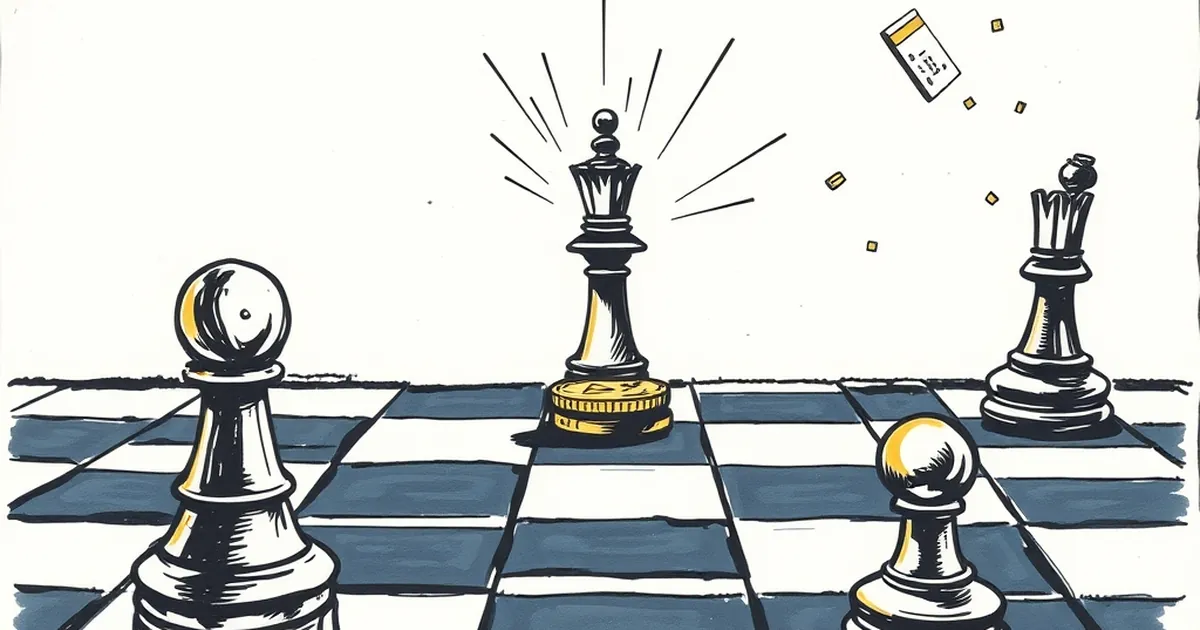
The question I keep circling back to is this: why does a declined transaction sting so much more than a successful one feels good? You’d think the math would be simple—one is a win, the other is a loss, so they should cancel each other out emotionally. But they don’t. A single "Transaction Declined" notification can derail your entire afternoon, while a smooth approval barely registers as a blip. For anyone working in payments, this asymmetry isn’t just a curiosity; it’s the hidden engine of customer behavior. And the more I look at it, the more I realize that the psychology of a decline is less like a technical error and more like a perfectly executed parry in a fencing match—a sudden, sharp counter-move that snaps your brain back to the present moment with brutal clarity.
The Brutal Efficiency of the Interrupt
Think about the last time you swiped your card and it didn't go through. For a split second, the world goes quiet. The background noise of the grocery store, the conversation with the cashier, the mental list of what you need to cook for dinner—all of it evaporates. Your entire cognitive bandwidth is suddenly laser-focused on the terminal, waiting for the next word. That’s not an accident. That’s your brain’s threat-detection system kicking in.
In behavioral psychology, this is known as the "orienting response." We are hardwired to pay attention to anomalies. A successful transaction is expected; it’s the baseline. It requires no extra processing power. But a decline is a violation of the expected sequence. Your brain treats it as a minor emergency, flooding you with a tiny dose of adrenaline and cortisol. In that moment, you aren't just a customer; you are a problem-solver facing a sudden obstacle.
This is where the payments world intersects with the concept of "flow state." Mihaly Csikszentmihalyi described flow as the optimal state of consciousness where we perform at our best—losing track of time, fully immersed. A decline is the anti-flow. It’s a deliberate, jarring stop. But here’s the twist: that jarring stop is often more memorable than the flow itself. We remember the interruptions, not the smooth sailing. For a merchant, that means a decline isn't just a failed transaction; it's a memory anchor. The question is whether that anchor is a negative one that chases customers away, or a neutral one that just resets their focus.
Loss Aversion and the "Sunk Cost" of the Swipe
Daniel Kahneman and Amos Tversky’s prospect theory gives us the perfect lens here. Their work on loss aversion shows that the pain of losing is psychologically about twice as powerful as the pleasure of gaining. When you present your card, you are mentally spending the money before the terminal even processes it. You’ve already allocated the funds in your head.
So, when the decline hits, you aren't just losing the item in your cart; you are losing the imagined purchase. You’re losing the new sneakers, the airline upgrade, the fancy coffee. The immediate, tangible loss is the item, but the hidden loss is the future state you had already constructed. This is why a decline often feels like a personal rejection, even when it’s a simple technical glitch like an expired magnetic stripe.
This is also where the concept of "variable-ratio reinforcement" gets a bad rap. Often associated with games of chance, the principle simply states that behaviors reinforced on an unpredictable schedule are the most resistant to extinction. In payments, a reliable approval is a fixed-ratio reinforcement—you do X, you always get Y. But when you add in the risk of a decline, the approval becomes slightly variable. This can actually make the approval feel sweeter. You got the card to work! You beat the system! This is why some customers will aggressively re-try a card multiple times after a decline, even when they know funds are low. The potential reward of a successful "second try" becomes a mini-thrill.
The "Parry" Analogy: Deflection as a Form of Control
I used the fencing metaphor in the title for a reason. In fencing, a parry isn't just a block; it’s a deliberate, controlled deflection that puts your opponent off-balance. A well-timed parry doesn't just stop the attack—it creates an opening. A decline code works the same way.
When a transaction is declined, the issuer is essentially parrying the merchant's request. But the response to that parry determines the next move. This is where the concept of "decision fatigue" comes into play. We have a limited amount of mental energy each day. A decline forces you to make a new decision: Do I try another card? Do I call the bank? Do I abandon the cart? Each of these options costs cognitive energy.
The most effective payment systems understand this and design for the "riposte"—the counter-attack. Think about modern card-present terminals that instantly show a decline code like "Insufficient Funds" versus a vague "Contact Issuer." The former gives you actionable information. It allows you to quickly pivot, perhaps selecting a different payment method without losing your place in line. The latter leaves you in a state of uncertainty, which is cognitively more expensive. You aren't just resetting your focus; you're stuck in a loop of "what if."
The Global Nuance of the Reset
Here’s where it gets interesting for a global audience. The behavioral response to a decline isn't universal. In high-trust societies with robust consumer protections, a decline might be met with mild annoyance—it’s a blip. But in markets where cash is still king or where credit history is fragile, a decline can carry a massive social stigma. It’s not just a payment failure; it’s a status signal.
I recall a study from the Federal Reserve Bank of Boston on debit card usage patterns. They found that consumers who were "declined" at the point of sale were significantly more likely to switch to cash or reduce their overall card usage in the following weeks. It wasn't about the money; it was about the embarrassment. The decline created a negative emotional anchor to the card itself, not the merchant. This is a critical insight for fintechs building for emerging markets. If you are building a payment app in a region where "declined" is a public shame, your UI/UX needs to handle that moment with extreme care. The reset needs to be quiet, private, and fast. It shouldn't feel like a parry that leaves you sprawling; it should feel like a subtle step backward.
Designing for the Recovery, Not the Error
So, what does a forward-looking approach look like? It’s not about eliminating declines—that’s impossible. It’s about engineering the recovery. The decline is the parry; your system's response is the riposte. And the best ripostes are pre-emptive.
- Soft Declines: The industry is moving toward "soft declines" for subscription services. Instead of cutting off access immediately, the system attempts a retry over a few days. This acknowledges the psychology of the user—it buys time for the user to fix the issue without the jarring "hard stop" that causes churn.
- Contextual Prompts: If a decline happens, the next screen shouldn't just say "Try Again." It should say, "Your card expired on 03/24. Update your details to continue." This reduces the cognitive load. You aren't resetting your focus to figure out what went wrong; you are resetting your focus to fix the specific problem.
- The "Silent" Decline: For low-value transactions, some issuers are experimenting with "silent" approvals that temporarily overdraw the account but flag the user in-app later. This is controversial, but it’s based on the idea that the interruption is more damaging than the fee.
The future of payments isn't about making the approval faster; it's about making the decline smarter. The goal is to weaponize that moment of sharp focus. Instead of letting the customer spiral into frustration, we can use that reset to guide them toward a solution. A decline should feel less like a slap in the face and more like a coach tapping you on the shoulder to say, "Hey, look left." The best systems won't just deflect the attack; they’ll set you up to win the next point. That’s the kind of focus we should be designing for—not the kind that makes you stare at the terminal in disbelief, but the kind that makes you confidently reach for the right answer.