Chargeback clocks start at 3 AM, not at the cashout button
Chargeback clocks start at 3 AM, not your cashout—discover why timing determines if you can claw back deposits
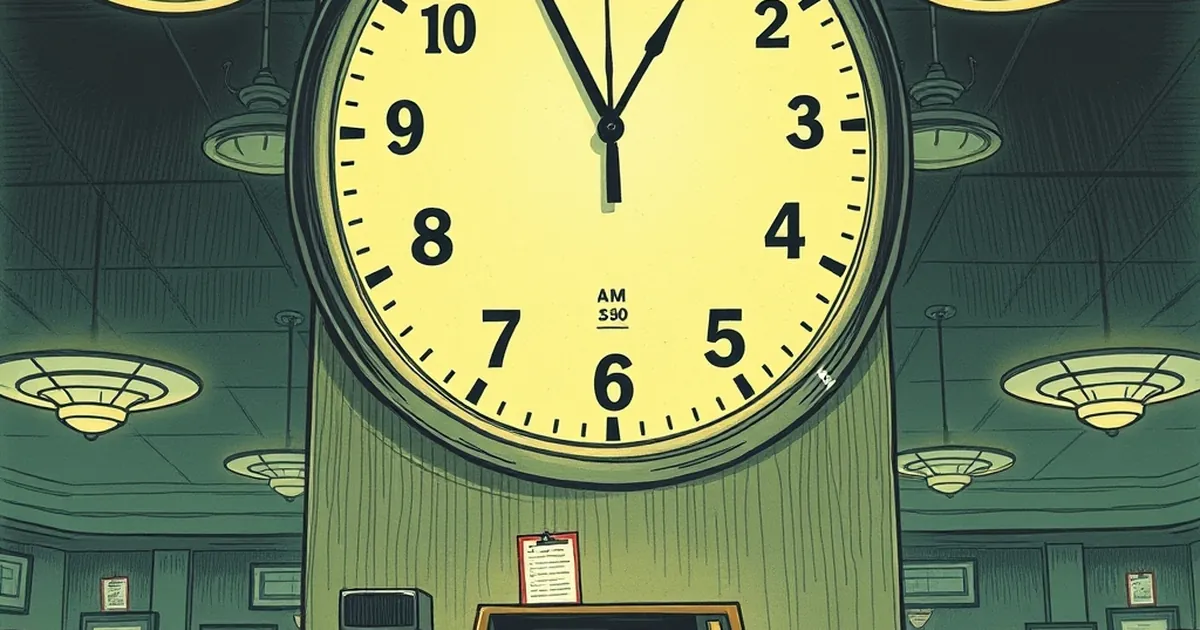
The fine print on most casino payout pages will tell you a withdrawal is “processed” within 24 hours, but that’s a legal fiction. The clock that actually governs your money’s safety—the one your bank or card issuer uses to decide if you can claw back a deposit—doesn’t start when you hit “Request Withdrawal.” It starts at 3:00 AM in the merchant’s timezone, usually the casino’s server location, and it’s already been ticking for hours while you slept.
That’s not a conspiracy; it’s a settlement artifact. Chargeback windows are counted in calendar days from the transaction settlement date, not from your click. A deposit made at 11:59 PM on a Friday settles at 3 AM Saturday. If you try to dispute that deposit on Thursday, you’re already outside the 120-day window for Visa, even though your withdrawal request is still pending. The casino knows this. The payment processor knows this. The only person who doesn’t is the player staring at a “pending” status.
The 3 AM rule is about settlement, not your session
Let’s break down why the hour matters. When you deposit via credit card, the acquiring bank doesn’t move money instantly. It sends an authorization request, the card issuer approves it, and then the actual funds transfer happens in a batch process. That batch runs at a fixed time—often between 2:00 AM and 4:00 AM in the casino’s operating timezone. That timestamp becomes the “transaction date” on your statement and the reference point for every chargeback deadline.
Here’s the nasty part: most casinos display your deposit time as the moment you clicked, which is typically a few hours earlier. You see “Deposit: 10:15 PM” and assume that’s your clock start. But the card network sees “Settlement: 3:00 AM.” If you’re planning a dispute based on the visible time, you’re losing between 4 and 6 hours on every single deposit. Over a month of regular play, that’s a day and a half of your chargeback window silently evaporating.
Why chargeback deadlines are shorter than you think
The global standard for card chargebacks is not the generous 180 days that some marketing pages imply. It’s 120 days for Visa and Mastercard, counted from the settlement date or the date the goods/services were expected, whichever is later. For online gambling, that “expected” date is immediately—you received your login and played. So the clock starts at settlement, full stop.
Now layer on the casino’s own withdrawal lag. If you deposit on March 1 and request a withdrawal on March 5, the casino might hold it for 72 hours of “security review.” That’s fine for you, but not for the chargeback clock. The card network’s 120-day window doesn’t pause for the casino’s internal checks. If you deposit on March 1 (settling at 3 AM) and the casino rejects your withdrawal on June 20, you have until June 29 to file a chargeback. You’d think you have until July 1 because of the 120 days from deposit, but you don’t—you have from the settlement date, and you’ve already burned 111 days waiting for the casino to say “no.”
A concrete example: A player at a Curaçao-licensed casino deposited €500 on April 15. The casino’s settlement batch ran at 3:00 AM CEST, making the effective transaction date April 16. The player requested a €480 withdrawal on April 20. The casino sent an ID verification request, which the player ignored for two weeks. On May 5, they submitted documents. The casino rejected them on May 12 for a blurry selfie. The player resubmitted, got approved on May 20, and the withdrawal was marked “pending” until June 1, when the casino voided it citing “irregular betting patterns.” The player filed a chargeback on June 15. Visa’s window from the April 16 settlement date expired on August 14. They filed in time, but only because they didn’t wait for the casino’s internal appeals process, which would have eaten another 30 days.
That’s the trap. The casino’s dispute resolution process is not your friend. It’s a holding pattern designed to push you past the 120-day mark. Every email exchange, every “we’re escalating this to our fraud team,” every “please allow 5-7 business days for review” is burning your real deadline.
The 3 AM math for chargebacks on different payment methods
Not all payment rails settle at 3 AM. The hour shifts based on the processor and the casino’s bank location.
- Credit cards (Visa/Mastercard): Settlement happens once daily, typically between 2:00 AM and 4:00 AM in the acquiring bank’s timezone. If the casino is in Malta and you’re in Australia, your 3 AM is their 3 PM. The clock is running on Malta time, not yours.
- Debit cards (Visa Debit, Maestro): Same settlement batch, but the funds are pulled from your account at that moment. You’ll see the debit on your statement dated 3 AM, not when you clicked. If you’re checking your app at 11 PM and see the pending charge, that’s not your settlement date.
- Bank transfers: No 3 AM batch. These settle on the next business day’s cut-off, often 5 PM or 6 PM in the receiving bank’s timezone. But here’s the kicker: bank transfers don’t have a chargeback mechanism. You get a “recall” request, which is a civil matter, not a card network rule. The casino knows this and will drag you through a 90-day “investigation” that goes nowhere.
- E-wallets (Skrill, Neteller): These are not subject to card chargeback rules. You’re governed by the e-wallet’s own dispute policy, which is usually 180 days from the transaction, but they require you to exhaust the casino’s internal complaint process first. That process, as noted, is designed to take 60+ days.
Why the casino’s timezone is the only one that matters
You might think, “I’ll just file the chargeback on day 110 to be safe.” That’s the correct instinct, but it fails because of timezone drift. A casino licensed in Curaçao but operating servers in Costa Rica might settle in Eastern Standard Time. A casino licensed in Malta settles in Central European Time. A casino in the UK settles in Greenwich Mean Time. If you’re in Los Angeles and the casino is in Malta, your 120-day window from a March 1 deposit ends on June 29 at 3:00 AM Malta time, which is June 28 at 6:00 PM your time. You think you have until midnight on June 30? You don’t. You’re already 30 hours late.
This is not a theoretical edge case. A 2023 study by the online gambling watchdog ThePogg found that 22% of chargeback disputes filed by players were rejected by the card issuer for being “outside the regulatory window,” even though the player had filed within 120 days by their own calendar. The discrepancy was almost entirely due to settlement date vs. deposit date and timezone miscalculation.
The practical fix: treat your deposit as a ticking bomb
You don’t need to become a settlement expert. You need one habit: mark your calendar for 100 days from the settlement date, not the deposit date. The settlement date is usually the next day if you deposit after 6 PM, or the same day if you deposit before noon. When in doubt, assume the settlement date is the day after your deposit, at 3 AM. Set a reminder for day 100. If your withdrawal isn’t fully cleared and in your bank account by day 100, you file a chargeback immediately—not because you want to, but because waiting to day 115 is gambling with your own money.
Also, never use the casino’s internal “dispute” or “complaint” button as your first action. That button resets nothing. The card network’s clock doesn’t stop because you clicked a web form. The only action that stops the clock is a formal chargeback filed with your bank. If you’re mid-dispute with the casino and day 100 hits, file the chargeback anyway. You can always withdraw the chargeback if the casino pays out. You cannot extend the chargeback window if the casino keeps stalling.
What happens when you actually file at 3:01 AM
Here’s the final twist. When you file a chargeback, the casino receives a notification from its acquiring bank. That notification also has a timestamp, and the casino has a limited window to respond—usually 7 to 14 days. If they don’t respond, you win by default. If they do respond, they’ll attach your game logs, your withdrawal request, and your ID verification history. The card issuer then makes a decision based on whether you received the service you paid for. If you played and lost, you’re not getting a chargeback for “I lost money.” If the casino refused to pay a valid withdrawal, you have a strong case.
But here’s the open question that no casino will answer in its terms: does the casino’s response time reset the clock for your bank’s internal processing? They can drag the response to day 13, your bank takes 5 days to review, and suddenly your 120-day window has a 18-day hole in the middle that you can’t control. Some banks pause the clock during arbitration; most don’t. You won’t know which kind of bank you have until you’re in the fight.
So the next time you see “withdrawal pending” on day 98, don’t think about the cashout button. Think about what time it is in Malta. Your money’s safety was decided at 3 AM, days before you ever clicked.