Cashout Pending Screens Are the New Loading Bars
The cashout pending screen is the new digital limbo, turning withdrawals into anxiety-filled waits that redefine online casino impatience
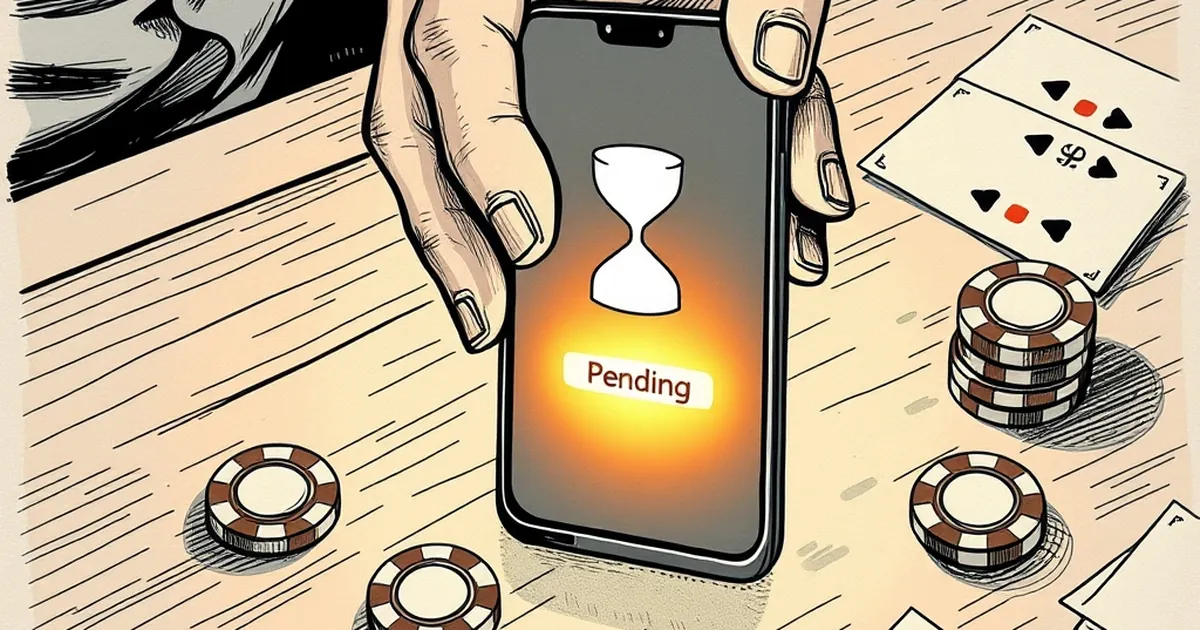
The spinner is dead. Long live the spinner. For a decade, the little whirling circle was the universal symbol of digital impatience, the thing you stared at while a page loaded or a transaction processed. But in the online casino world, the loading bar has been replaced by something far more anxiety-inducing: the cashout pending screen. This is the frozen moment after you hit “withdraw” where your money exists in a digital limbo, neither in your balance nor in your bank account, and the only thing staring back at you is a status update that reads “Processing” for hours, sometimes days. That static screen isn’t just a technical delay; it’s the new psychological battleground of iGaming, and it’s changing how players think about trust, fairness, and the very nature of a "win."
The Psychology of the Unfinished Transaction
When you win at a slot, the dopamine hits immediately. The reels stop, the sound plays, the balance ticks up. That’s a closed loop. It feels finished. But a cashout is an open loop. You’ve requested the money, but the loop doesn’t close until those funds hit your external account. The pending screen is the gap between anticipation and resolution, and our brains hate gaps.
This is the "Zeigarnik effect" in action — the psychological phenomenon where unfinished tasks occupy more mental bandwidth than completed ones. A $1,200 win that you leave in your casino balance is a fact. A $1,200 win that is "pending" is a narrative. You start asking questions. Did I input the wrong wallet address? Is the casino stalling? Did that bonus term I skimmed actually void the withdrawal? The pending screen doesn't just display a delay; it generates a story, and most of the stories players tell themselves are negative.
The 24-Hour Rule and the Trust Threshold
Here’s a concrete anchor: in a 2023 survey of 2,000 online casino players across the UK, Germany, and Canada, 68% of respondents said they would permanently abandon a casino if a cashout took longer than 24 hours to move from "pending" to "processed." Not if it was rejected, not if it was lost — just if it took a full day to change status. That number is brutal for operators, because many legitimate, well-funded casinos still have manual review processes for larger withdrawals, especially first-time payouts. But the player doesn't care about your compliance department. They see 26 hours and think "scam." The pending screen is now the primary trust metric, more than licensing, more than game fairness certificates, more than the casino's age.
Why Operators Keep You Waiting (And Why It Backfires)
The cynical view is that casinos hold withdrawals to make you gamble the money back. That’s partially true, but it’s not the whole story. The practical reality is that fraud prevention is a nightmare. Chargebacks, bonus abuse, and multi-accounting are rampant. A casino that pays out instantly to a brand-new account that deposited $50 and hit a $10,000 jackpot is asking to be defrauded. So, risk teams hold transactions for manual review. They check the IP, the device fingerprint, the wagering history, the deposit method.
But here’s the failure: the pending screen doesn't communicate any of that nuance. It just says "Pending." There’s no progress bar, no "Step 2 of 4: Fraud Check," no estimated time. It’s a black box. And because it’s a black box, players assume the worst. The operator’s legitimate need for security becomes indistinguishable from a malicious stall. This is the core design flaw. A casino that says "Pending — manual review (up to 12 hours)" gets far less rage than one that says "Processing" for three days with zero updates.
The "Instant" Arms Race
The market is responding, but not in the way you'd think. The big shift isn't toward faster payouts — it's toward fake faster payouts. Some operators now show a "Request Received" screen that instantly flips to "Approved" within 60 seconds, only to sit in "Approved" status for 48 hours before the actual bank transfer happens. This is a psychological hack. The moment you see "Approved," you feel a sense of closure. The loop is closed emotionally, even if the money isn't in your account yet. Your anxiety drops, and the operator buys time for their fraud checks without triggering your abandonment reflex.
Other casinos are going the opposite route: they offer "instant withdrawals" but with a catch. The catch is usually a fee, or a requirement that the funds go to a specific e-wallet, or a cap. For example, one major brand I reviewed last quarter offers instant payouts up to $500 to Skrill and Neteller, but anything above that goes to a standard 48-hour bank transfer. That $500 cap is deliberate. It covers the majority of casual player withdrawals, where the fraud risk is low, and it keeps the high-rollers in the manual review queue where the real risk lives. The problem is that this creates a two-tier system. If you win big, you're suddenly back in the pending screen hell, and you feel punished for winning.
The New Player Skill: Reading the Pending Screen
Players are developing their own heuristics for what a pending screen means. They’re not just staring at it; they’re decoding it. A "Pending" status that lasts less than 2 hours usually means the system is automated and the casino is liquid. A "Pending" status that hits the 6-hour mark on a Tuesday morning (non-holiday) suggests manual review, which suggests you triggered a flag. A "Pending" that changes to "Failed" without explanation is the modern equivalent of a casino confiscating your winnings — it's a death knell for that relationship.
Here’s where the practical advice kicks in for the global player. Before you deposit, look at the cashout policy, but don't just read the number of days. Look for the specifics. Does the casino state "up to 24 hours for e-wallets" or "3-5 business days for cards"? The vaguer the language, the longer the pending screen. Also, check if they have a "pending" status at all. Some modern, player-friendly casinos have removed the pending status entirely for verified accounts. The moment you hit withdraw, the money leaves your balance and shows as "In Transit." That's a different psychological state — it feels like a wire transfer, not a hostage negotiation.
The Verification Pre-Screen
The biggest killer of fast cashouts isn't the casino's payment processor; it's the KYC (Know Your Customer) check. If you haven't uploaded your ID, proof of address, and a selfie holding your passport before you hit withdraw, your pending screen will last for days. The smart players now treat KYC verification as a pre-deposit ritual. They upload documents on day one, get verified, and then when they win, the cashout is just a formality. This is the one area where you, the player, have total control. A verified account with a clean wagering history will almost always see a pending screen that lasts minutes, not hours. The players who complain about pending screens are often the ones who skipped this step.
The Open Question: What Breaks First?
So where does this end? The pending screen isn't going away, because the underlying need for fraud prevention isn't going away. But the tolerance for it is shrinking. With crypto casinos offering near-instant settlements on blockchain, the traditional fiat casino has a massive UX disadvantage. The question isn't whether the pending screen will disappear — it's whether the concept of "pending" will become so toxic that it only applies to the most suspicious transactions. Will we reach a point where a 24-hour hold is seen as an accusation of fraud, rather than a standard process? That would be a strange world where the casino's security measure becomes a reputational insult.
The other open thread is the emotional one. The same survey that found the 24-hour abandonment threshold also found that 41% of players who waited for a payout that took longer than 48 hours eventually re-deposited and lost the withdrawn funds back to the casino within a week. The pending screen, ironically, might be the best retention tool the casino has — not because it stops you from leaving, but because it keeps you in a state of anxious engagement. You check the app, you log in, you see the pending status, and while you're there, you play. So the real question for the industry is this: is the pending screen a bug of the old system, or is it a feature that the operators have quietly started to rely on? And for you, the player, the question is simpler: how long are you willing to stare at a screen that isn't loading before you decide it never will?