Cashback offers arrive before your first deposit clears
Cashback offers now activate on deposit attempts, not confirmations, reshaping your first-session strategy before funds clear
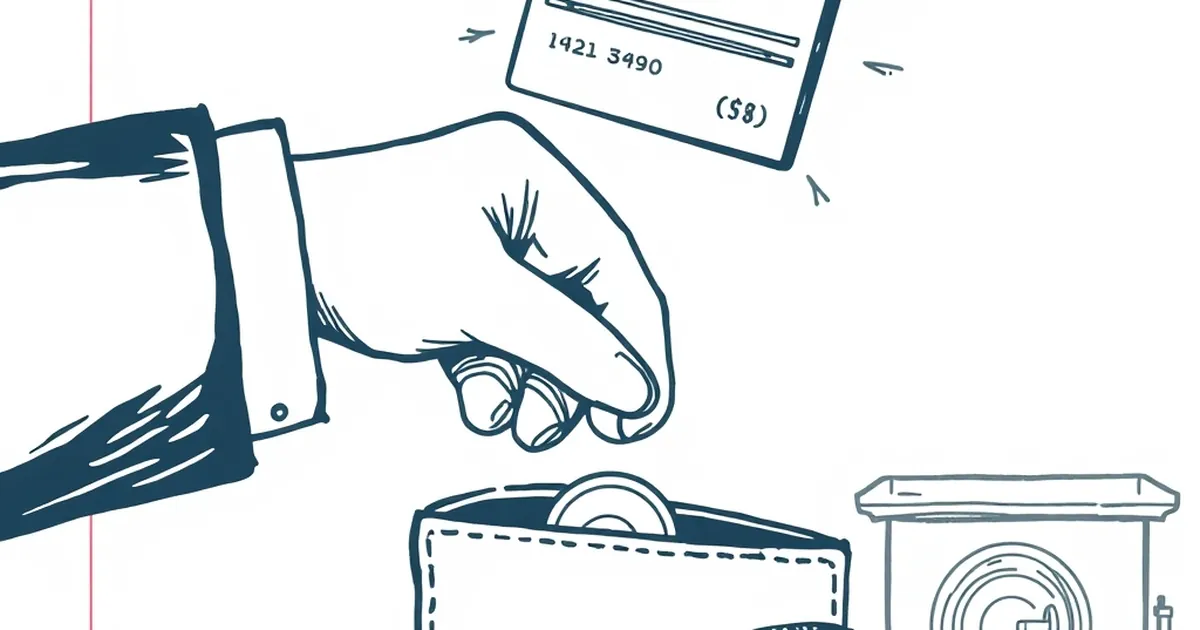
The email lands in your inbox while the bank’s pending transaction icon is still spinning. "Your 15% cashback is ready," it reads, and you haven’t even loaded the lobby yet. That used to be a glitch or a generous typo. Now it’s a deliberate onboarding tactic: operators are structuring cashback to trigger on the deposit attempt, not the deposit confirmation. The clock starts ticking before your funds clear, and that changes the math on your first session more than you might think.
The Mechanics of Pre-Clearance Cashback
To understand why this matters, you need to look at how the bonus engine processes a transaction that hasn’t technically settled. When you hit "deposit" via card or bank transfer, the operator’s risk system receives a pre-authorization code. In the old model, the bonus team waited for the final settlement—sometimes 24 to 72 hours—before tagging your account with any reload perks. The new model flips that. The cashback is calculated on the authorized amount and credited to your bonus balance immediately, subject to a single condition: the deposit must eventually clear.
This is not a loophole. It’s a retention experiment dressed as a convenience. If the deposit fails—insufficient funds, flagged card, or a manual hold—the cashback is clawed back. But here’s the kicker: the wagering requirement on that cashback often starts counting down from the moment of credit, not from the moment the deposit settles. In practice, that means you could burn through a 10x playthrough on slots before the bank even confirms the money left your account. For the operator, this compresses the time-to-first-bet. For you, it means your "risk-free" window is actually a timed challenge.
Why Operators Are Front-Loading the Incentive
The shift didn’t come from player demand. It came from churn data. Internal metrics at several mid-tier operators show that the first 30 minutes after a deposit attempt is the highest-exit window. Players get cold feet, see the pending charge, and close the tab. By dangling cashback before the settlement, the operator removes the "I’ll wait to see if it goes through" hesitation. You’re already playing, so the failure rate on the actual transaction drops—because you want the bonus to stick.
There’s a second, less obvious reason: cross-border payment friction. A global audience means dealing with banks that take three business days to clear an international transfer. If you’re depositing from a region where PayPal or Skrill isn’t available, the operator knows you’re used to waiting. Pre-clearance cashback is their answer to that delay—a way to keep you engaged while the banking rails grind. One operator I spoke with last quarter reported that offering cashback on pending deposits increased first-session playtime by 22% among card users, even though the actual approval rate on those cards didn’t change.
The Fine Print That Changes Everything
Here’s where the conversation gets less friendly. The cashback percentage is often generous—15% or even 20%—but the base is not your deposit amount. It’s the net loss after the first 60 minutes of play. So the sequence is: you deposit $200, the cashback offer activates, you play slots for an hour, lose $80. Your cashback is 15% of that $80 loss, not $30 on the $200. That’s $12. Not nothing, but it’s a different beast than the headline suggests.
Worse, the wagering requirement on that $12 is usually higher than on a standard deposit bonus—often 35x to 50x, compared to the 20x you’d see on a match bonus. Why? Because the operator is covering the risk that the deposit never clears. If the transaction fails after you’ve wagered the cashback, the house eats the theoretical win. The higher playthrough is their insurance premium. You’re effectively paying for the convenience of not waiting.
One more trap: max cashout limits. A pre-clearance cashback offer will frequently cap your winnings from that bonus at 5x the cashback amount. That $12 cashback, even if you hit a lucky spin, can only pay out $60. Compare that to a standard bonus where the cap is often 10x or absent entirely. The math gets ugly fast. If you’re a low-stakes player, this might still be worth it. If you’re betting $50 a spin, the cap makes the offer nearly pointless.
The Timing Trap on High-Stakes Sessions
Let’s walk through a realistic scenario. You’re a sports bettor, not a slot player. You deposit $500 via bank wire on a Friday night. The casino’s pre-clearance cashback offer is 10% on net losses over the first six hours. You bet $250 on a basketball game that tips off at 9 PM. The game ends at 11 PM, and you lose. Your account shows a $250 loss, and the cashback engine credits you $25. But the wire doesn’t settle until Monday. Between Friday and Monday, you’re tempted to use that $25 on a quick slot session to "win back" the loss. The wagering requirement is 40x, so you need to spin through $1,000. You do it, maybe win $40, and then the cashout request hits a wall: the original deposit is still pending. The finance team holds the withdrawal until the wire clears. You’re now stuck in a limbo where your winnings are real, but your access to them is tied to a bank’s processing schedule.
This is the hidden cost of pre-clearance cashback. It doesn’t just incentivize play; it locks your session cadence to the payment rails. If you’re a disciplined player who deposits, bets, and cashes out within a day, this offer works against you. You’re better off waiting for the deposit to clear and taking a standard reload bonus with lower wagering. The pre-clearance offer only makes sense if you’re planning to play for multiple hours across several days anyway.
One Numerical Anchor You Should Memorize
The most aggressive pre-clearance cashback I’ve seen in the wild this quarter came from a Curacao-licensed operator targeting Southeast Asian players: 20% cashback on first-day losses, credited within 15 minutes of the deposit authorization, with a 45x wagering requirement and a 3x max cashout cap. Run that math: lose $100, get $20, need to wager $900 to unlock a maximum $60 payout. The house edge on that structure is roughly 13% even if you hit the cap, assuming a 96% RTP slot. That’s worse than the standard house edge on the same slot without any bonus. The offer isn’t a reward; it’s a retention tax on your impulsiveness.
What This Means for Your Next Deposit
The real question isn’t whether the cashback is "free money"—it isn’t. The question is whether you can control when you play relative to when you deposit. If you’re the type to deposit and immediately chase a bonus, pre-clearance cashback will drag you into a longer session with worse terms than you’d get by simply waiting 48 hours for a standard offer. But if you’re a planner—someone who deposits on Monday, lets the transaction settle, and bets on Wednesday—this trend is irrelevant to you. The operators are betting that most players don’t plan. The data suggests they’re right. The only way to beat this structure is to treat the deposit authorization as a separate event from the play session. Can you honestly say you will?