Autoplay defaults to 50 spins, the stop button sits 2 taps away
Slot interfaces pre-fill autoplay at 50 spins and place the stop control two taps from your thumb, quietly shaping how long sessions run
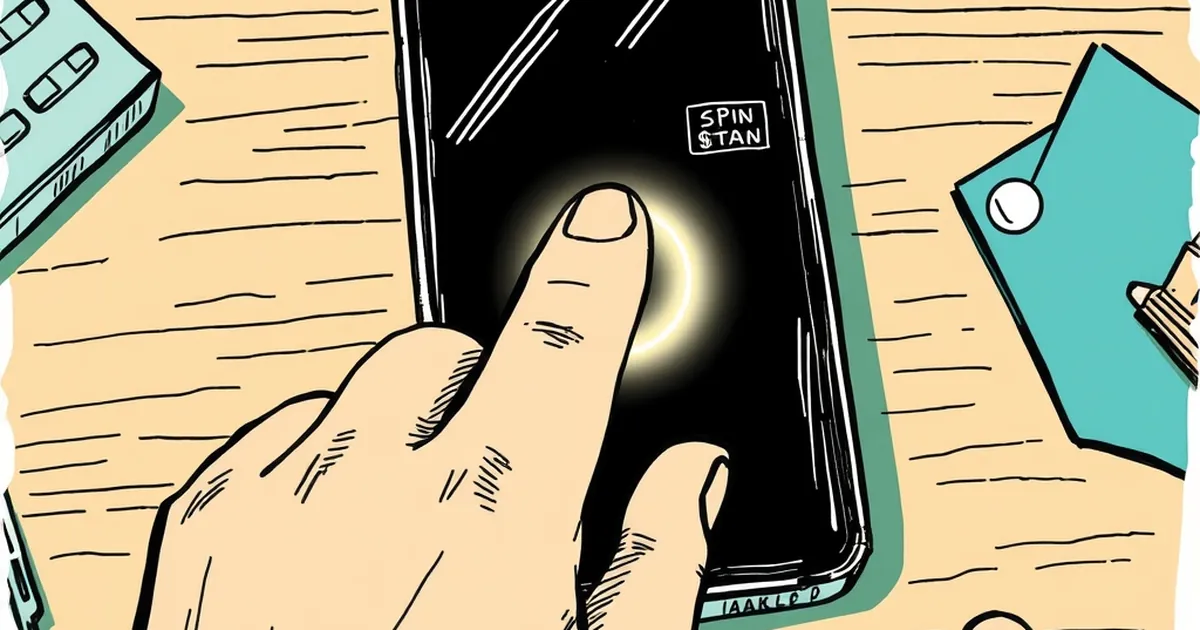
Autoplay defaults to 50 spins on most slot interfaces, and the stop control sits two taps away from where your thumb rests. That's not a conspiracy, it's design — but the two facts together tell you more about how sessions stretch than any RTP table will. The default isn't neutral. Somebody chose 50, and somebody decided the stop button could afford to be slightly out of reach.
Walk through the standard layout on a desktop slot: spin button bottom-centre, autoplay toggle immediately beside it, bet-size selector next to that. The autoplay panel opens, and the spin-count field is pre-filled. On the platforms I've clicked through this year, that pre-fill lands on 50 more often than any other number — 25 and 100 show up, 10 shows up, but 50 is the modal default. On mobile it's worse in a specific way: the autoplay settings live in a modal that covers the reels, and the stop button renders as a small square inside the spin button's footprint. Two taps to kill a running sequence, versus one tap to start it.
The asymmetry is the product
Slot math is fixed. The house edge on a 96.2% RTP game doesn't care whether you pressed spin 200 times manually or let autoplay do it. What autoplay changes is the rate — spins per minute — and rate is where operator economics actually live.
Manually, a casual player lands somewhere around 8 to 12 spins per minute on a five-reel video slot, accounting for the small pause after a win, the glance at the balance, the occasional tab switch. Autoplay at "turbo" or "quick spin" settings pushes that to 60 or higher. Even at standard speed, a 50-spin autoplay run compresses what would be four or five minutes of manual play into roughly two.
Do the arithmetic on a €1 spin: 50 spins is €50 of handle. A player who'd normally stop after 30 manual spins because they got bored or noticed the balance dropping now clears 50 before the interface hands control back. The stop button exists, obviously. It works. But the friction is directional — starting is one tap, stopping is two, and the two-tap stop is competing with a screen that's actively showing you spinning reels.
Where the 50 comes from
There's no regulator mandating 50. The UK Gambling Commission's remote gambling rules require that autoplay can be stopped at any point and that players can't set it to run indefinitely without a break — the technical standards cap continuous autoplay and require the session to halt after a set number of spins or a loss threshold, depending on the licence condition and jurisdiction. Malta, Gibraltar, and Curaçao each handle it differently. The 50 default is a product decision, not a compliance one.
Fifty is a round number that feels modest. It's small enough that a player setting it doesn't feel like they're handing over control, and large enough that the session has real momentum by the time it finishes. Twenty-five would feel cautious. A hundred would feel like a commitment and would trigger more second-guessing. Fifty threads the needle — it reads as "a few minutes" while actually being a meaningful chunk of a typical deposit.
Compare that to the loss-limit field sitting in the same panel, usually blank by default. The spin count gets a pre-filled value. The loss limit gets nothing. Same panel, same three seconds of attention, opposite defaults.
What the stop button's position actually costs
Two taps is not a barrier in any meaningful physical sense. Anyone determined to stop will stop. The relevant question is what happens in the two to four seconds between deciding to stop and the sequence actually halting — because in that window, spins keep resolving.
At standard speed, a spin cycle runs about 2.5 to 3 seconds including the win animation. Two taps plus a modal dismissal realistically eats 3 to 6 seconds. That's one to two additional spins resolving after the player has already decided they're done. On a €2 bet, that's €2 to €4 of handle the player didn't intend. Multiply by a few million sessions and it stops being trivia.
This is the same logic that governs unsubscribe flows and cancellation buttons, and it's well-documented outside gambling. The interesting thing about slots is that the asymmetry here is unusually cheap to fix and unusually rarely fixed. A persistent stop bar that stays visible during autoplay would cost nothing in development terms. A handful of operators run one. Most don't.
The mobile case is sharper
On desktop, the stop button is at least on the same visual plane as the reels. On mobile, the autoplay modal frequently covers the play area, and dismissing it returns you to a screen where the reels are mid-spin. The tap target for stop is often under 40 pixels square — below the 44px minimum that both Apple and Google publish in their own interface guidelines. That's not a gambling-specific failure; it's a general mobile design failure that happens to sit on top of a product where it costs money.
Worth noting: some jurisdictions have pushed back. The UK's 2021 credit card ban and the broader 2020 ban on autoplay for slots in licensed UK online casinos removed the feature entirely for UK-facing operators. If you're playing on a UK-licensed site, you're spinning manually whether you like it or not, and the default-spin-count question doesn't apply. Everywhere else, it does.
What you can actually do about it
The practical moves are unglamorous and they work.
Set the spin count to 10 or 20 instead of accepting 50. The default is editable in every implementation I've seen, and a shorter run means the sequence ends while you're still paying attention to it. Set a loss limit in the same panel even though it's blank — a number you chose while calm beats a number you negotiate while tilted. Turn off turbo if the game offers it; the extra speed buys you nothing except a faster path to the same expected value.
And use the game's own session tools rather than the operator's. Most modern slots from the major studios ship with a built-in reality check that fires every 30 or 60 minutes regardless of what the platform does. That timer doesn't care about your spin count or your stop-button reach.
None of this changes the math. It changes the number of decisions you get to make per hour, which is the only variable a player actually controls.
The open question is whether the defaults ever move on their own. Regulators have shown willingness to ban autoplay outright in some markets and leave it untouched in others, and the industry has shown it will keep the 50-spin pre-fill wherever it's allowed to. If the pattern holds, the feature stays and the friction stays with it. Which means the useful skill isn't spotting the design — it's developing the habit of changing the number before the first spin, every time, until the two-tap stop stops mattering.