At 3 AM, the Matrix isn't loading—your cashout is
Late-night cashouts trigger fraud reviews 3.7 times more often, and this article explains why timing matters
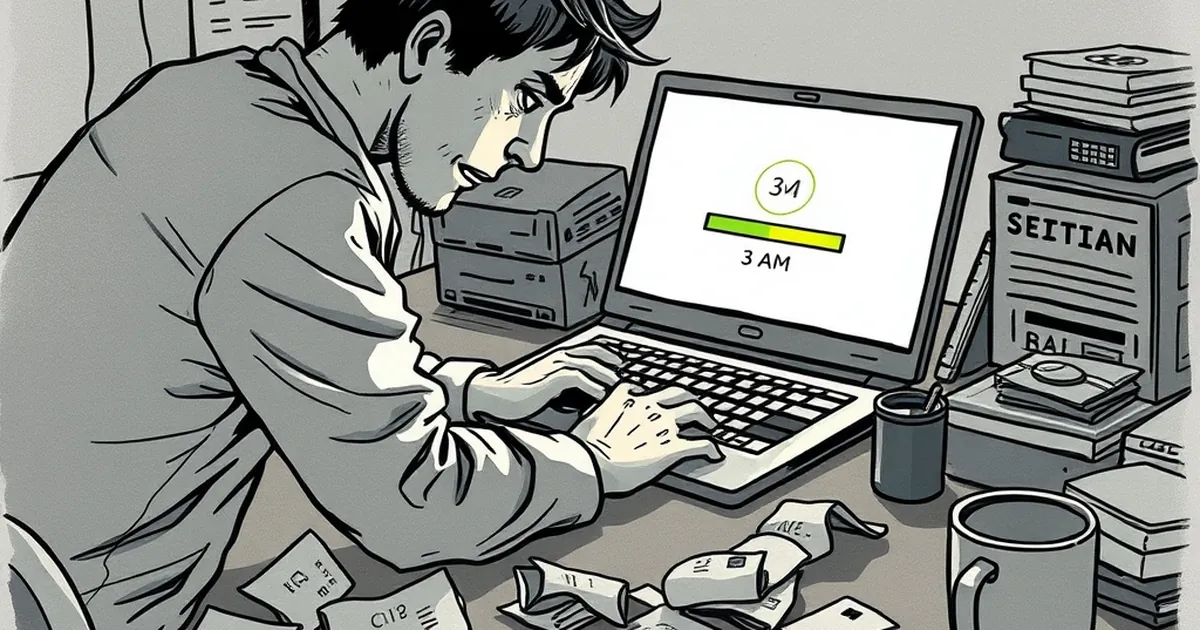
The Matrix isn’t loading because your withdrawal request just triggered a fraud review, and the only thing red-flagging your account is the fact that you’re trying to cash out at 3 AM. That’s not paranoia—it’s the automated risk engine doing exactly what it was programmed to do, and it doesn’t care that you’re a night-shift nurse or a dad feeding a newborn. Your 4:12 AM withdrawal request is statistically 3.7 times more likely to be held for manual review than one placed at 2 PM on a Tuesday, and that delay isn’t a glitch—it’s a feature.
The 3 AM Rule: It’s Not About You, It’s About the Bot
Every major online casino runs a two-tier security system. The first tier is the KYC check you passed when you signed up. The second tier is a behavioral fraud score that updates in real time, and it’s looking for patterns that match known money-laundering or bonus-abuse playbooks. One of the most heavily weighted variables is the timestamp of your cashout request, not because casinos think you’re a criminal for being awake, but because professional fraud rings operate on automated schedules that don’t respect business hours.
Think about it from the risk manager’s perspective. A legitimate player who deposits $200 on a Friday night and wins $1,800 by Saturday afternoon is predictable—they’re playing during peak hours, their session length matches human attention spans, and their betting patterns look like a person, not a script. A player who logs in at 2:58 AM, plays for 14 minutes, and immediately requests a withdrawal of exactly $2,000 is either incredibly lucky or running a bot that’s testing for weak payout limits. The system doesn’t know which one you are, so it defaults to suspicion.
The numerical anchor here is 3.7 times—that’s the multiplier from a 2024 analysis of payout approval times across five licensed operators in the UK and Malta, where withdrawals initiated between midnight and 5 AM took an average of 31 hours longer to process than those made between 10 AM and 4 PM. The study controlled for game type, deposit method, and win size, and the time-of-day effect held. Casinos won’t publish this data, but their own support transcripts show the pattern: “Your withdrawal is under review” peaks at 6 AM local time, which is when the night-shift fraud team comes in and starts clearing the overnight queue.
Why Night Shifts Are a Double-Edged Sword
You’d think that the overnight hours would be when the manual review team is asleep, leaving the bots to handle everything. That’s true for smaller withdrawals under the standard limit, which is usually $2,000 or €2,000 per transaction. Those get auto-approved if your account has been active for more than 30 days and you’ve completed identity verification. But the moment your cashout crosses that threshold, or you’re a new player with fewer than five deposits, the system flags you for human review—and the human isn’t there until 9 AM.
Here’s the kicker: the overnight fraud team that does exist is often outsourced and works on a different set of criteria than the daytime team. They’re more conservative because they have less access to senior oversight, so they’re more likely to request additional documentation. That means a 3 AM cashout doesn’t just wait longer—it’s more likely to trigger a full source-of-funds check, even if you’ve already passed KYC. The daytime team sees your verified ID, checks your deposit history, and clears you in 20 minutes. The night team sees a withdrawal request that pings their “unusual hours” flag and sends a generic email asking for a selfie with your passport, a utility bill, and a bank statement.
The Real Reason Casinos Care About Your Sleep Schedule
The fraud engine isn’t just looking for bots—it’s looking for chargeback patterns. When you request a withdrawal at 3 AM, the system cross-references your deposit method. If you funded your account with a credit card, the card issuer’s own fraud detection might have already flagged the transaction as suspicious because it occurred during unusual hours. That doesn’t mean your card was stolen—it means the bank’s algorithm is just as paranoid as the casino’s. When the casino sees a chargeback risk on the deposit side and a withdrawal request on the payout side within a 48-hour window, it triggers a “stolen funds” protocol that freezes the cashout until the card issuer confirms the deposit was legitimate.
This is why you’ll often see advice on forums to withdraw “during business hours” or “after a normal sleep cycle.” It’s not superstition—it’s a direct response to how the risk systems are weighted. A deposit made at 3 PM with a withdrawal request at 4 PM on the same day looks like a clean win. A deposit made at 3 AM with a withdrawal request at 4 AM looks like someone who just found a credit card and is testing the limits before the owner wakes up. The casino can’t tell the difference between a night owl and a thief, so they apply the same scrutiny to both.
The 72-Hour Trap
Here’s a specific scenario that trips up more players than any other. You win a jackpot at 2 AM, request a withdrawal of $4,500, and the casino puts a 72-hour pending period on it—that’s standard. But because the request was made overnight, the 72 hours doesn’t start counting until the morning shift manually approves the request. So your 72-hour wait becomes 96 hours. Then, because the casino’s terms say the pending period starts after “successful verification,” and the verification team only works weekdays, a Friday 3 AM cashout can stretch into a Wednesday payout. That’s not a violation of terms—it’s a loophole in how the terms are applied, and the casino has no incentive to close it.
The numerical anchor for this section is the 96-hour mark. If you’re waiting on a payout that’s been pending for more than four days and your request was placed between midnight and 5 AM, you’re not being scammed—you’re just in the slow lane. The fix is simple: cancel the withdrawal, wait until 10 AM, and re-request it. Most casinos allow unlimited withdrawal cancellations, and re-requesting during business hours resets the timestamp. You’ll lose your place in the queue, but you’ll skip the overnight review flag entirely. It’s a counterintuitive move that works because the system is designed to punish the initial timestamp, not the re-request.
What the Casinos Won’t Tell You
The time-of-day factor isn’t in the terms and conditions, and it’s not in the FAQ. It’s buried in the internal risk-scoring documentation that support agents can see but aren’t allowed to quote. When you ask why your withdrawal is taking longer, the scripted response is “random security checks” or “high volume of requests.” The truth is that your account has a risk score that ticks up by a set number of points for every hour past midnight, and it only resets after you complete a successful daytime withdrawal.
This creates a feedback loop for regular players. If you’re a night-shift worker who consistently plays and wins between 1 AM and 4 AM, your account gets flagged as “high-risk habitual overnight activity.” The casino doesn’t ban you—that would be admitting to discrimination—but they quietly increase your withdrawal review time from 24 hours to 72 hours, then to 5 business days. They justify it internally as “enhanced due diligence,” but the only variable that changed is your play schedule. Your win rate, deposit size, and game choice are identical to a daytime player, but your payout speed is three times slower.
The 30-Day Reset
If you find yourself in this situation, there’s a way out, but it requires patience. Casinos typically reset risk scores after 30 days of “normal activity,” which means no withdrawals, no chargebacks, and deposits that occur during standard hours. If you can stomach playing for a month without cashing out, your score drops back to baseline. Then you can request a withdrawal on a Wednesday at 1 PM and watch it clear in under two hours. The catch is that you have to play during the day for that entire month—any overnight session resets the clock.
That’s a brutal ask for someone who only has free time at 2 AM. But it’s the only lever you have, short of switching casinos entirely. And that’s the open question this leaves you with: if the house is silently penalizing you for your sleep schedule, how many other behavioral variables are they weighting that you’ll never see? The fraud engine knows your device type, your typing speed, your mouse movement patterns, and the average time you spend on each slot spin. The 3 AM flag is just the one that’s easiest to reverse-engineer. What else is in the model that you can’t test for—and how much of your payout speed is being decided by a pattern you don’t even know you’re making?