A 5% house edge feels fairer than a 2% one with a fee
Players tolerate a 5% house edge baked into the game far more than a 2% edge disguised as a fee, revealing where they draw the line between cost and being pl...
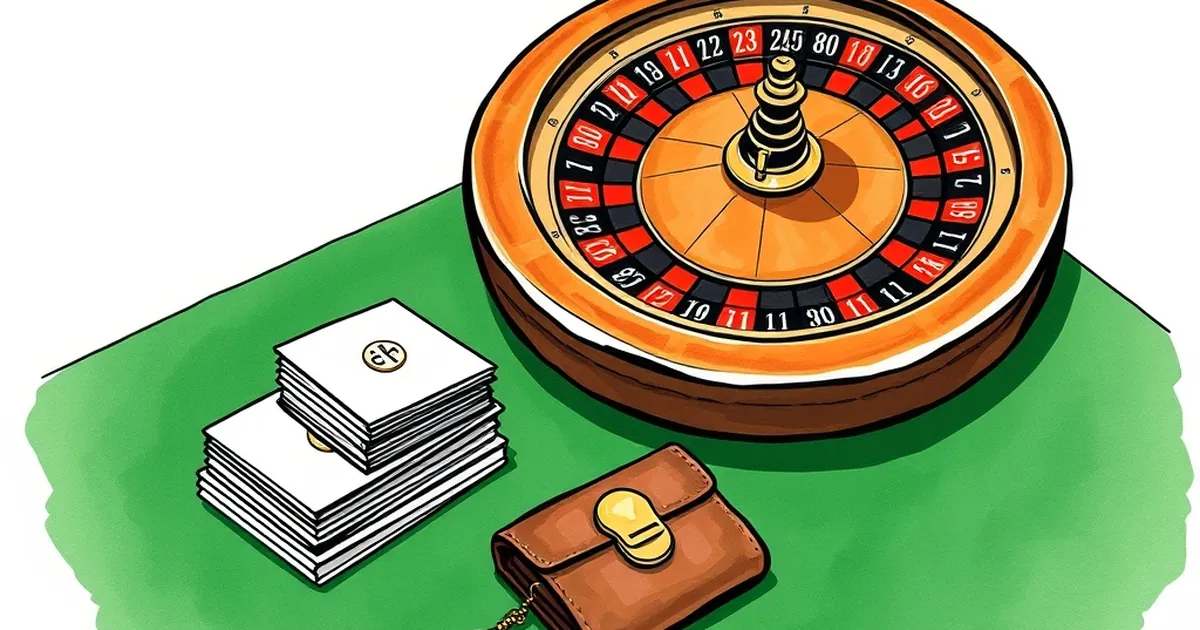
Players will accept a 5% house edge more readily than a 2% edge wrapped in a fee, because the first is priced into the game and the second is priced into the transaction. That's not a claim about arithmetic. It's a claim about where players draw the line between the cost of playing and the cost of being played.
The distinction shows up everywhere once you start looking for it. A blackjack table with strict rules and a 0.6% edge draws less complaint than a 0.4% game with a per-hand commission. A sportsbook that prices a 5.5% margin into its odds gets less grief than one quoting near-market prices and then deducting a withdrawal charge. The percentage is not the thing players are reacting to. The structure is.
The mental accounting behind it
Behavioural economists have a name for this: mental accounting. People sort money into buckets, and money that leaves one bucket feels different from money that leaves another. A house edge is absorbed into the price of the bet before the bet is placed. A fee arrives after the fact, as a separate line, and the brain files it under "loss I didn't choose" rather than "cost of the product."
This is why a 2% edge plus a 1.5% deposit fee (net 3.5%) can feel worse than a flat 5% edge. The player hasn't done the arithmetic. They've done the emotional bookkeeping, and the fee line is the one that stings.
Casinos know this. It's why the industry has spent two decades burying costs inside the product rather than itemising them. A slot with 94% RTP and no fees reads as "a game." The same economics expressed as a 96% game with a 2% per-spin charge would be a scandal. Nothing about the expected value changed. Everything about the perception did.
The transparency trap
There's a counterintuitive implication here for anyone pushing for more transparent pricing. Full transparency — spelling out every cost as a separate line — can make a product feel more expensive even when it's cheaper. Regulators in several markets have learned this the hard way. When the UK Gambling Commission tightened rules on bonus terms and forced clearer disclosure of wagering requirements, operators reported that some players became more suspicious of the offers, not less, because the fine print was now visible rather than buried.
The lesson isn't that opacity is good. It's that the format of disclosure matters as much as the content.
Why the 2% game with a fee loses
Take a concrete comparison. Game A: 98% RTP, no fees, no conditions. Game B: 98% RTP, but a 1% withdrawal fee and a 2% deposit fee on the round trip. On paper, Game A is better. In practice, Game B's fee structure creates three separate moments of irritation — deposit, play, withdraw — and each one is a chance for the player to feel nickel-and-dimed.
Game C: 95% RTP, no fees, no conditions. It's mathematically worse than both. It's also the one players describe as "fair."
The reason is that Game C has a single, legible cost. The player knows what they're paying and pays it at the point of play. There's no second invoice. There's no moment where they discover an extra line item. The 5% edge is the price of admission, and price of admission is a category people understand.
Where the arithmetic actually matters
None of this means house edge is irrelevant. It means house edge and fee structure are two different variables, and players weigh them separately. A 5% edge is fine if the game is fast, the interface is clean, and the withdrawal is painless. A 2% edge is intolerable if the withdrawal takes four days and arrives 1.2% short.
For operators, the practical takeaway is that fee simplification is worth more than edge reduction in most segments. Cutting the house edge from 5% to 4% costs margin and barely moves perception. Eliminating a 1% withdrawal fee costs less margin and moves perception a lot. The math of player satisfaction doesn't track the math of expected value.
The regulatory angle
Regulators have started to notice. Several jurisdictions now require operators to display "cost of play" metrics — expected loss per hour, or per 100 spins — rather than just RTP. The intent is to make the true cost visible. The effect is to convert a house edge into something that looks suspiciously like a fee, which may be the opposite of what players respond well to.
There's a tension here that nobody has resolved. Transparency is good for informed consent. But transparency about the house edge may make games feel more expensive than they are, in the same way that itemised fees do. The 5% edge that feels fair is the one the player never has to think about as a number.
A note on responsible gambling
This is where the conversation has to get careful. If players respond better to embedded costs than itemised ones, there's an obvious temptation to embed everything and disclose nothing. That's not a pricing strategy; it's a harm. The responsible middle ground is to keep the transaction simple — no surprise fees, no withdrawal deductions, no conditions that only surface at cashout — while keeping the cost of play visible through tools like session limits, loss trackers, and net-position displays. Players don't need every cost itemised. They do need to know, in aggregate, what they've spent.
What this means for how games get built
The structural insight generalises beyond fees. Any cost that arrives as a separate event — a bonus that's withdrawn, a jackpot contribution, a currency conversion spread — reads as a penalty. Any cost baked into the price of the bet reads as the game.
That has real design consequences. A slot with a 4% contribution to a progressive jackpot and a 96% base RTP is, economically, a 92% game. Players will call it a 96% game and treat the jackpot contribution as a feature, not a cost. A slot with 92% RTP and a 4% "jackpot fee" would be dead on arrival. Same money. Different story.
So the question for the next few years isn't whether a 5% edge can feel fairer than a 2% edge with a fee. It clearly can. The question is how far that logic stretches before it becomes a licence to hide costs. Every operator now has an incentive to move costs out of the fee column and into the edge column, because that's where players stop noticing them. At some point the aggregate edge creeps up, the fees disappear, and the player is paying more while feeling better about it.
Where's the line? Probably not where the industry thinks it is. Probably somewhere around the point where the player can still answer, without checking, roughly what an hour of play costs them. If they can't, the 5% edge wasn't fairer. It was just quieter.