A 40-second hold beats a 3-day refund in the memory
Why a 40-second payment feels safer than a reversible one, and how the gap between real and perceived guarantees shapes trust in consumer finance
Why does a payment that clears in forty seconds feel safer than one that can be reversed for three days? The money is identical, the merchant is identical, and the legal protections are, if anything, stronger on the slower option. Yet the fast one wins on trust, almost every time. That gap between what a payment system actually guarantees and what it feels like it guarantees is one of the more interesting problems in consumer finance right now — and it sits squarely at the intersection of payments infrastructure and behavioral psychology.
The clock is doing emotional work the contract can't
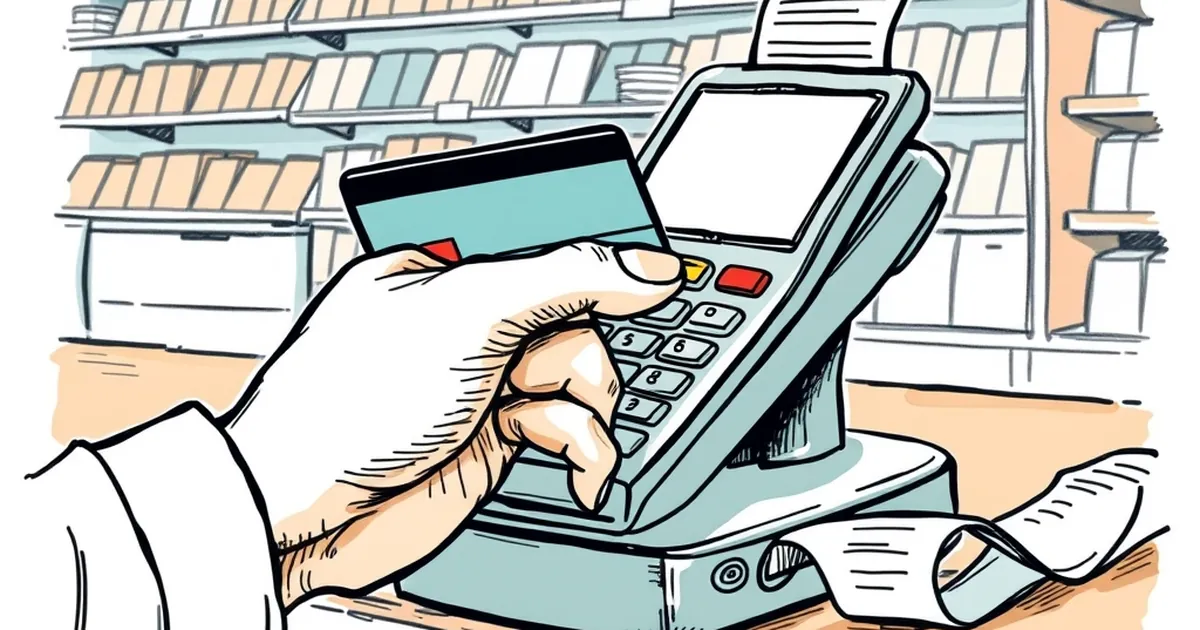
Think about what happens at a card terminal. You tap, the terminal chirps, a green checkmark appears, and you walk out with the coffee. The authorization took about a second. The settlement behind it — the actual movement of funds between acquirer, network, and issuer — takes longer, sometimes a day or two. But you never see that part. What you see is closure.
Now compare a bank transfer in a market where instant rails aren't universal. You enter an IBAN, confirm with a second factor, and then you wait. The screen says "processing." You check it again an hour later. Still processing. By the time it lands, you've spent cognitive energy on it three or four times.
Both transactions are equally final in the legal sense, more or less. But one produces a clean memory and the other produces an anxious one. The forty-second hold didn't just move money faster — it closed a loop.
Variable-ratio reinforcement, and why "pending" is a punishment
Behavioral psychologists have understood for decades that unpredictable rewards are stickier than predictable ones. B.F. Skinner's work on variable-ratio reinforcement schedules showed that when a reward arrives after an unpredictable number of actions, the behavior persists longer and extinguishes more slowly than when the reward is guaranteed every time. That finding has been applied to everything from product design to notification systems, and it's usually discussed in the context of keeping people engaged.
Payments flip it. A pending transaction is a variable-ratio schedule running in reverse: an unpredictable delay instead of an unpredictable reward. You don't know when the confirmation lands, so you keep checking. Each check is a small act of attention, and attention is the scarce resource. The unpredictability itself is the cost.
This is why "pending" is such an oddly punishing word on a banking app. It doesn't describe a state of the money. It describes a state of you.
The asymmetry Kahneman and Tversky documented
Loss aversion is one of the most replicated findings in behavioral economics: losses loom larger than equivalent gains, roughly by a factor of two in many experimental settings. Daniel Kahneman and Amos Tversky's prospect theory work in the late 1970s established that people don't evaluate outcomes in absolute terms — they evaluate them relative to a reference point, and they weight the negative side more heavily.
A three-day refund window sounds generous on paper. In practice, it creates a reference point where the money is not yet yours, and any delay in the refund process registers as a potential loss. Meanwhile, a forty-second authorization creates a reference point where the money has already left your account and the goods are already yours. There's nothing left to lose. The transaction is over.
The refund policy is objectively better for the consumer. The fast payment feels better. And feelings drive which rail people reach for at the counter.
Real-time payments changed the emotional architecture
The shift to instant settlement rails — UPI in India, Pix in Brazil, FedNow and RTP in the United States, SEPA Instant in Europe, Faster Payments in the UK — is usually discussed in terms of cost, liquidity, and financial inclusion. All of those matter enormously. But there's a quieter effect: instant rails collapsed the confirmation loop.
Brazil's Pix is a useful case. Launched in late 2020, it reached hundreds of millions of users within a couple of years, and one of the most-cited reasons people gave for preferring it over traditional transfers was simply that it finished. Not that it was cheaper — though it often was — but that the uncertainty ended immediately. The central bank built the rail; users built the habit around the feeling of closure.
India's UPI tells a similar story at even larger scale. When a payment is confirmed in seconds, the mental bookkeeping closes. There's no follow-up, no checking, no low-grade background anxiety. Multiply that across a few billion transactions a month and you've changed something structural about how a population relates to money movement.
Where cards still win, and why
Card networks understood this long before instant rails existed. The genius of card authorization wasn't speed of settlement — it was the appearance of instant completion at the point of sale. The green light. The receipt. The walk-away. Visa and Mastercard built their consumer trust on a loop that closes in front of the customer, even though the plumbing behind it takes longer.
That's a design decision as much as an engineering one. And it explains why card rails remain sticky even in markets where instant bank transfers are cheaper: the card gives you a completed story at the counter, and completed stories are what people remember.
What this means for the next wave of payment products
Three things follow from all of this, and they're worth thinking about if you build or buy payment products.
First, latency is a trust variable, not just a cost variable. Every extra second between intent and confirmation adds a small amount of doubt. That doubt compounds. Products that shave the confirmation loop — even by making the appearance of completion faster while settlement runs behind — tend to earn disproportionate loyalty.
Second, refunds are psychologically mispriced. A refund that takes three days feels like a penalty even when it's contractually generous. Merchants and issuers that compress refund timelines, or at least make the status visible and predictable, get a trust dividend that doesn't show up on the fee schedule.
Third, predictability beats generosity. A predictable two-hour refund is often preferred to an unpredictable "one to three business days," because the uncertainty is the painful part. This is a lesson straight out of prospect theory: people will accept a worse expected outcome if the variance around it shrinks.
The next competitive frontier in payments probably isn't fees or interchange. It's the shape of the confirmation loop — how fast it closes, how clearly it closes, and whether the user ever has to wonder. The forty-second hold isn't just faster than the three-day refund. It's a different emotional product entirely, and the memory of it is what brings people back.