A 40-millisecond lag reshapes which button you tap next
A 40-millisecond delay in payment approval quietly changes the next decision you make, revealing how latency shapes behavior at the terminal
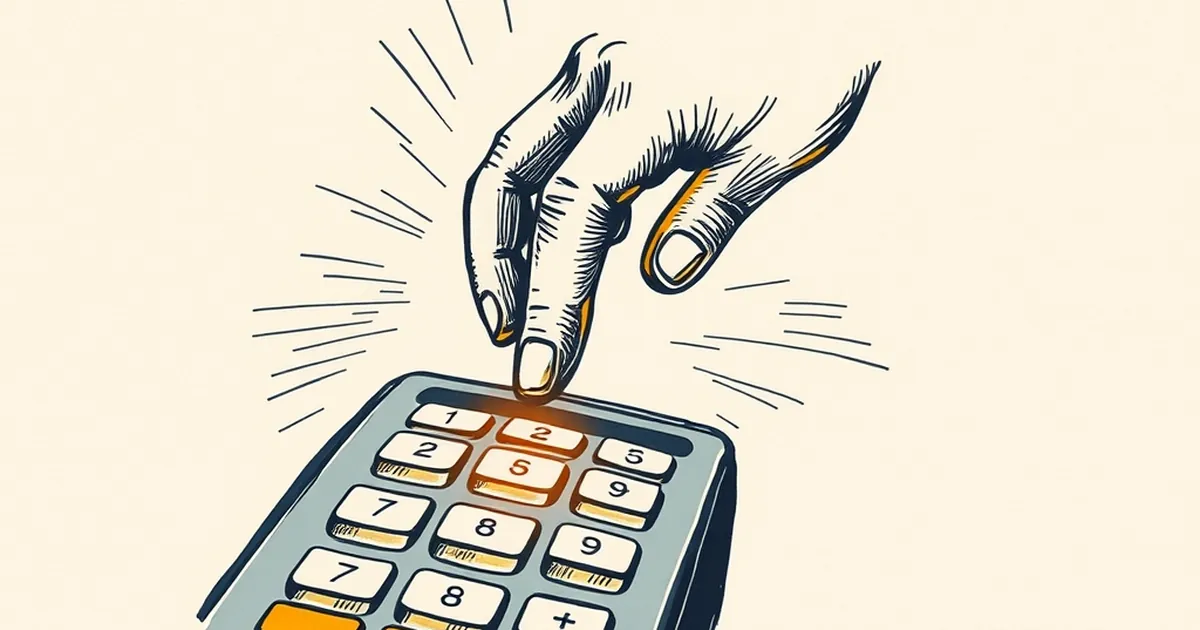
Every time you tap your card or phone at a terminal, a small negotiation happens in the dark. The terminal asks, the network answers, and somewhere in that round trip a number gets attached to you — approved, declined, or sent back for a second try. The question I keep coming back to is not whether that round trip works, but what happens to the next decision when it takes 40 milliseconds longer than it should.
The invisible tax on a fast approval
Payment people talk about latency the way pilots talk about headwinds: a constant, measurable drag. A card tap at a physical terminal typically resolves in well under a second — often a few hundred milliseconds from tap to green light — and the portion of that which is pure network round trip is measured in tens of milliseconds. Forty milliseconds is roughly the gap between a good connection and a mediocre one. It is also, apparently, enough to change behavior.
That last part is the interesting bit, and it comes from a place you might not expect: the study of how humans respond to delay in interactive systems. Researchers have known for decades that response time shapes not just satisfaction but strategy. When a system answers quickly, people explore. When it answers slowly, people repeat whatever worked last time. The threshold isn't dramatic. It's in the range of a few dozen milliseconds — right where our 40ms sits.
So the concrete claim is this: shave 40ms off a payment authorization, and you don't just make the experience feel snappier. You change which button the customer taps next.
Why milliseconds move behavior at all
The feedback loop is the product
A payment terminal is, functionally, a slot machine that pays out in groceries. You act, you wait, you get a result. That structure — action, variable delay, outcome — is the same skeleton that behavioral psychologists have studied since B.F. Skinner mapped out schedules of reinforcement in the 1950s. Skinner's central finding wasn't about rewards being good. It was that the timing and predictability of the reward determines the shape of the behavior that follows.
Variable-ratio reinforcement, the classic example, produces persistent, high-rate responding. But there's a less-discussed cousin: delay. Insert a pause between action and outcome and you get something subtler. People don't stop. They get conservative. They repeat. They stop trying the new thing.
Kahneman's system 1 doesn't wait
Daniel Kahneman's framing of fast, automatic thinking versus slow, deliberate thinking is useful here, though it's often over-applied. The relevant piece is narrower: the fast system is what's running when you're standing at a checkout counter with a line behind you. It's not evaluating the merchant category code. It's running a script — tap, wait, green, go.
Slow that script down by 40ms and you don't trigger deliberation. You trigger micro-uncertainty. Did it work? Should I tap again? The customer's hand hovers. And hovering is where behavioral drift starts.
The 40-millisecond finding, in plain terms
The most cited work in this space comes from human-computer interaction research on response-time thresholds. In the early 1990s, Jakob Nielsen and others popularized three numbers: 0.1 seconds for the feeling of instantaneous response, 1 second for uninterrupted flow of thought, and 10 seconds as the outer limit of attention. Those numbers have held up remarkably well, and they're why payment networks obsess over sub-100ms authorization.
But the sharper finding, and the one that matters for payments, is that within the "instantaneous" band, small differences still register. Studies of online retail and search have repeatedly shown measurable drops in engagement as page response moves from 100ms to 200ms to 400ms — well below the threshold anyone would consciously notice. The user doesn't say "that felt slow." They just do less.
Apply that to a payment terminal and the "doing less" takes a specific form. Fewer retries at a different terminal. Fewer attempts at the loyalty prompt. Fewer taps on the "add a tip" screen. The behavior change is small, cumulative, and invisible in any single transaction. It only shows up in aggregate, which is exactly why it's easy to miss.
Where this becomes a competitive question
Networks are already racing
Visa and Mastercard have spent years compressing authorization times, and the reason isn't purely customer satisfaction. Faster authorization means more transactions per terminal per hour, which means more revenue per square meter of retail space. It also means fewer abandoned attempts, which is the metric nobody puts on a slide but everybody tracks.
The 40ms question is a competitive one because it's a relative one. If two terminals sit side by side — one bank's card, one fintech's wallet — and one resolves 40ms faster, the customer's hand learns. Not consciously. But the hand learns. And the next time there's a choice, the faster one wins by a margin that no survey will ever capture.
Risk-taking gets quieter
There's a second-order effect that's more interesting than the first. Payment systems increasingly ask the customer to make small risk decisions: approve a subscription, accept a currency conversion, confirm a recurring charge. These are low-stakes individually, but they're decisions under uncertainty, and uncertainty is where delay bites hardest.
Loss aversion — the well-documented tendency to weight losses roughly twice as heavily as equivalent gains — shows up in payment prompts constantly. A customer facing a "convert to your home currency?" screen is being asked to accept a known fee now versus an unknown rate later. The prompt is a small gamble either way. And the research on decision-making under time pressure suggests that delay makes people default to the status quo. They decline the conversion. They skip the subscription. They tap the safe button.
A 40ms lag doesn't cause that. But it nudges the odds, and the odds are what matter when you're processing millions of them.
What to watch next
The forward-looking part isn't about making payments faster. They're already fast, and they'll keep getting faster. The interesting frontier is adaptive latency — systems that know when to be quick and when to deliberately slow down.
There's a real design question buried here. If a fast response encourages exploration and a slow one encourages repetition, then latency becomes a lever, not just a cost. A bank that wants customers to try a new feature might want the first interaction to feel instant. A bank that wants to reduce fraud might want a deliberate pause before a high-risk confirmation — not enough to frustrate, but enough to let the slow system catch up.
That's the version of this I'd bet on. Not a race to zero milliseconds, but a deliberate, measured use of delay as a design material. The 40ms that reshapes which button you tap next is the same 40ms that could be spent making you think. The trick is knowing which one you want — and being honest that you're choosing.