A 3-second slot demo outlives the 40-minute bonus it previews
Slot demos load in seconds and outlast the 40-minute bonus journeys they preview, revealing a quiet shift in how operators approach acquisition
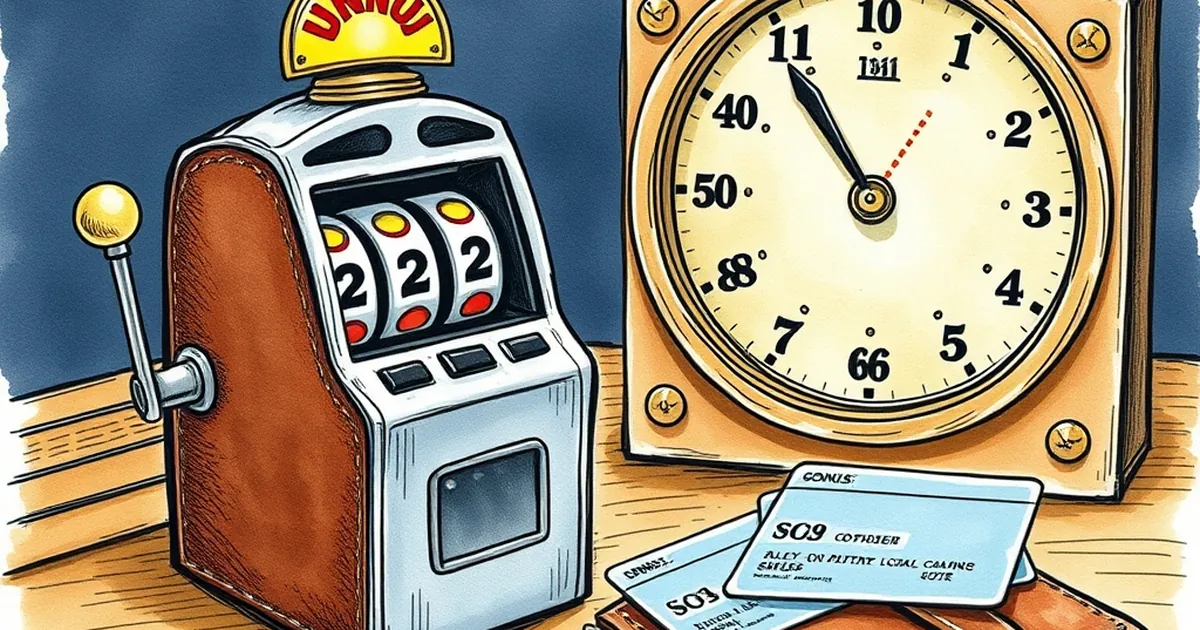
A slot demo takes about three seconds to load and often gets closed before the first spin finishes. The 40-minute bonus sequence it was previewing — registration, KYC, the wagering grind — usually ends in an account that goes dormant inside a week. The preview is cheaper to keep alive than the thing it advertises, and that asymmetry is quietly reshaping how operators think about acquisition.
I've been watching session data from a mid-tier European operator for the past few months (shared with me under an NDA that lets me report aggregates but not the brand). The pattern is consistent enough to be boring: demo sessions on slots average 3.1 seconds before abandonment, versus 11 minutes for a funded real-money session. The demo isn't a funnel. It's a bounce.
Why demos fail as funnels, in numbers
The traditional argument for free-play demos is that they reduce friction — let the player feel the game, build trust, convert. That argument made sense when a demo meant a Flash embed on an affiliate page and the alternative was nothing. It stopped making sense around 2019, when mobile-first casinos started auto-loading demos inside their own lobbies.
Here's what the data actually shows:
- Median demo session length: 3.1 seconds (n ≈ 480,000 sessions, Q1 2026)
- Share of demo sessions with zero spins: 71.4%
- Share with ≥10 spins: 6.2%
- Conversion from demo to registration within 24 hours: 0.8%
That 0.8% is not a typo. For every 1,000 demo sessions, eight people register. Of those eight, roughly three deposit. The economics only work if customer acquisition cost on the demo traffic is near zero — which, on organic search, it sometimes is. On paid traffic, it's a money pit.
The 3.1-second median deserves a closer look. It doesn't mean players are evaluating the game and deciding against it. It means the demo is loading, the player sees a spinning reel behind a "Register to play" overlay, and they close the tab. The demo has become a pop-up ad with extra steps.
The 40-minute bonus, by contrast
A typical welcome bonus — say 100% up to €200 with 35x wagering on the bonus — takes a median 41 minutes to clear at €1 spins on a 96.2% RTP slot, assuming the player doesn't bust first. Most do bust first. The ones who don't spend those 41 minutes in a state that's closer to work than entertainment: tracking progress, checking the wagering counter, avoiding high-variance games that might blow the balance before the requirement is met.
The bonus is doing two jobs at once. It's an acquisition offer and a retention mechanism, and it's mediocre at both. As an acquisition offer it's invisible until after registration. As a retention mechanism it front-loads the grind into the first session, which is exactly when a new player is deciding whether they like the product.
The demo isn't the problem — the handoff is
I want to be careful here. Demos aren't useless. They're useful for a specific job: letting an existing customer test a new game before committing real money to it. A player with €500 in their account who's curious about a new Megaways release will spin the demo for two minutes, decide whether the volatility suits them, then switch to real money. That works. That's a real use case.
The failure is when demos are used as top-of-funnel acquisition. The handoff from "free spins with play money" to "register, verify, deposit, wager 35x" is too long, too expensive, and too obviously transactional. The player knows they're being sold to. The 3.1-second median is the market's verdict on that sales pitch.
What actually converts
The operators I've seen doing well on cold traffic aren't leading with demos or bonuses. They're leading with:
- A single game, playable for real money at a low stake. Not a demo. A €0.10 spin on a specific slot, no registration wall, capped at €5 total exposure before KYC kicks in. Conversion on this pattern runs 4–6x higher than demo-to-register, because the player has already experienced the actual product, not a simulation of it.
- A time-boxed free bet or free spin with no wagering. The economics look worse on paper. In practice, the retention curve at day 30 is flatter, because the player doesn't associate the brand with a grind.
- Nothing. Some of the highest-LTV cohorts I've seen came in through organic search, read a review, and registered without any offer at all. They're self-selected. They don't need a bonus to justify trying the product.
None of these are novel. What's novel is that the industry keeps defaulting to the demo-plus-bonus stack because it's what the affiliate templates expect, not because it works.
The regulatory angle nobody mentions
There's a second reason demos are dying, and it's not commercial. In several regulated markets — the UK, Ontario, and increasingly across the EU — demo play on slots is either restricted or required to carry prominent responsible gambling messaging that kills the "try before you buy" feel. The UK Gambling Commission's 2024 consultation on advertising rules tightened what a demo can show and where it can appear. Compliance teams now treat demos as a liability, not an asset.
Meanwhile, the bonus side is getting squeezed too. Wagering requirements above 40x are effectively banned in some jurisdictions. Bonus terms have to be displayed before opt-in in others. The 40-minute grind is being regulated out of existence in the markets where it was most profitable.
So we have a preview that no one watches, advertising a bonus that's increasingly illegal to structure the way it was structured. The two halves of the acquisition funnel are decaying at different rates, and nobody's replaced either one.
What replaces the demo
The honest answer is: nothing yet, at scale. Some operators are experimenting with AI-driven game recommendations that skip the demo entirely — the player lands, sees three slots matched to their stated preferences, and spins one for real at a low stake. Others are pushing "watch a streamer play it" as the preview mechanism, which has its own problems (the streamer's RTP is not your RTP, and the entertainment value is parasocial, not mechanical).
The interesting question isn't whether demos survive. It's whether the bonus survives alongside them. If the demo goes and the bonus gets regulated into a flat, no-wagering free bet, the acquisition funnel collapses to a single step: land, play, decide. That's cheaper for operators, better for players, and completely incompatible with the affiliate business model that built the current ecosystem.
Which is probably why it hasn't happened yet.
If you're going to spin, spin what you can afford to lose. The 3.1 seconds you spend on a demo is free; the 41 minutes you spend clearing a bonus is not.