A 20-second streak bonus beats a 3-day cashback hold
Instant rewards feel more valuable than delayed ones, reshaping how payments and loyalty teams design incentives around human psychology
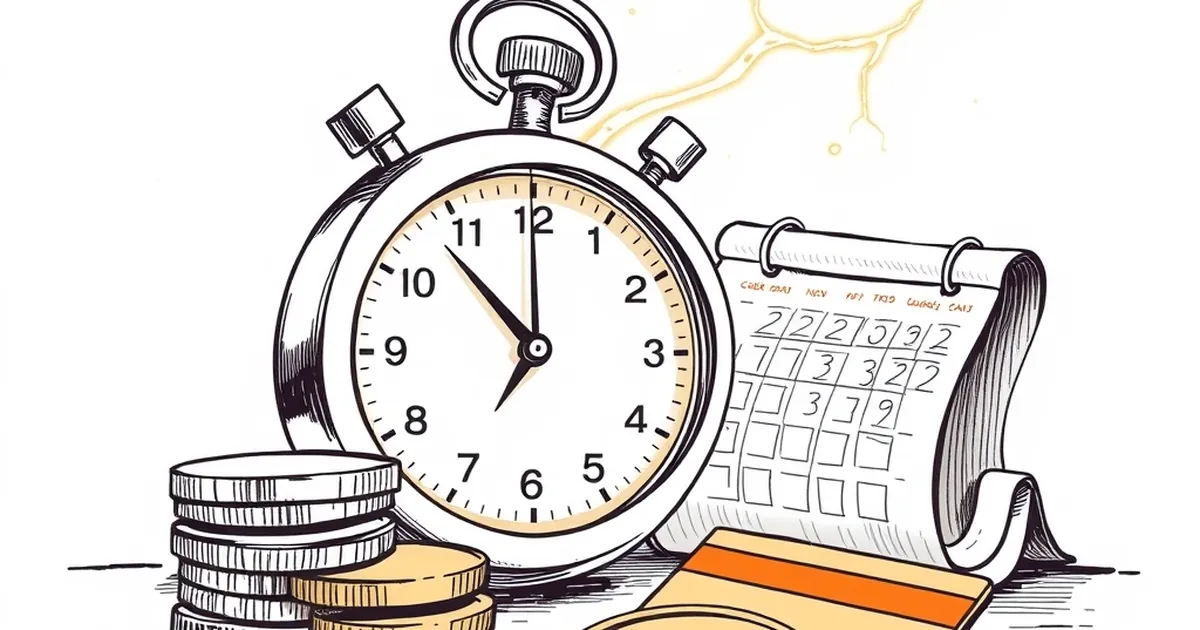
Why does a reward that lands in twenty seconds feel more meaningful than one that arrives after three days? Payments companies, loyalty teams, and card networks have spent a decade learning that the speed of a reward changes how people feel about it — sometimes more than the size of the reward itself. The question worth sitting with is whether that feeling is a bug in human psychology or a feature that financial products should design around.
The gap between knowing and feeling
Behavioral economists have a name for the way we discount the future: hyperbolic discounting. The further away a reward sits, the less weight it carries in the moment of decision. A cashback payment scheduled to clear in seventy-two hours is, mathematically, worth almost exactly what it's worth today. Psychologically, it isn't.
Daniel Kahneman and Amos Tversky's work on prospect theory showed that people don't evaluate outcomes in absolute terms — they evaluate gains and losses relative to a reference point, and they feel losses roughly twice as sharply as equivalent gains. What's less discussed is the temporal dimension layered on top: a gain that arrives immediately registers as a gain. A gain that arrives later competes with everything else happening in the meantime, including the mild irritation of waiting.
This is why a twenty-second streak bonus can outperform a three-day cashback hold even when the cashback is objectively larger. The streak bonus closes the loop while the action is still fresh. The cashback hold asks the cardholder to trust a promise.
What a streak actually reinforces
Variable-ratio reinforcement, minus the dark side
B.F. Skinner's variable-ratio schedules — rewards delivered after an unpredictable number of actions — produce the most persistent behavior of any reinforcement pattern he studied. That finding has been borrowed by a lot of industries, some of them predatory. But the mechanism itself is neutral. It describes how learning works when the reward timing isn't fixed.
A streak bonus is closer to a fixed-ratio schedule with a short interval: complete the action, get the reward, immediately. The persistence comes from the streak counter itself, which turns a series of independent transactions into a single continuous commitment. People don't want to break a streak once it's running. The reward doesn't have to be large; it has to be visible, and it has to arrive before the motivation fades.
The reference point problem
Here's where cashback holds get into trouble. If a card issuer promises 2% back but pays it at the end of a statement cycle, the cardholder's reference point shifts. The cashback stops being a reward for the purchase and starts being a monthly line item — something to check, question, or forget about. By the time it lands, the purchase that generated it is a distant memory. The emotional link between action and reward has been severed.
Streak bonuses avoid this by keeping the interval short enough that the link survives. Twenty seconds is well inside the window where working memory still holds the original action. Three days is not.
A concrete example from the loyalty world
Starbucks Rewards is the most-cited case study here, and for good reason. When the program shifted from a stars-per-visit model to a stars-per-dollar model, the company had to solve a problem: how do you keep low-frequency customers engaged when their earning rate is slower? Part of the answer was the "Double Star Days" mechanic — time-boxed windows where every purchase earns at an elevated rate, with the bonus reflected almost immediately in the app.
The result wasn't that customers spent more per transaction. It was that they opened the app more often, and the app opening itself became the habit. The reward was small and fast, not large and slow. That's the whole design principle in one sentence.
Visa and Mastercard have both watched this pattern play out at the network level. Issuer-side offers, merchant-funded rewards, and real-time card-linked promotions all compete on the same axis: how quickly can the reward be confirmed to the cardholder? The networks that can settle and surface rewards in near-real time have a structural advantage over those that batch.
Why three-day holds persist anyway
If fast rewards work better, why do so many cashback programs still hold funds?
Three reasons, and only one of them is a good one.
Settlement mechanics. Card transactions don't clear instantly. Authorization, clearing, and settlement are separate steps, and merchant-funded rewards often depend on settlement data that arrives hours or days later. Some of the delay is physics, not design.
Fraud control. Instant rewards are easier to farm. A hold gives risk teams a window to catch suspicious patterns before money leaves the building.
Inertia. This is the one that doesn't hold up. Many programs hold rewards because they always have, and because the finance team likes the float. That's a real business consideration, but it's worth being honest that it's a tradeoff, not a virtue.
The interesting frontier is programs that split the difference: a small, immediate reward for the action, plus a larger, delayed reward that feels like a bonus rather than a baseline. This is essentially what streak mechanics do when they're layered on top of an existing cashback structure.
The design question worth asking
The lesson from behavioral psychology isn't that fast rewards are always better. It's that the timing of a reward is a design variable, and most financial products treat it as a fixed constraint rather than a choice.
Kahneman's work on the "experiencing self" versus the "remembering self" is useful here. The experiencing self lives in the twenty seconds after a purchase. The remembering self builds a story about whether a card, an app, or a program is worth the effort. Fast rewards serve the experiencing self. Delayed rewards, if they're large enough, serve the remembering self. Most programs over-index on one and neglect the other.
The forward-looking question for anyone building in payments is this: can you make the reward visible before the customer's attention moves on? If the answer is no, the reward is competing with everything else in the customer's life for the next seventy-two hours — and it will usually lose. If the answer is yes, you've bought yourself a habit, not just a transaction.
The twenty-second streak bonus isn't magic. It's just a reward that arrives while the person still cares. That's a lower bar than it sounds, and a higher one than most programs clear.