A 15-minute cooldown outlasts the regret it prevents
Frictionless payments exploit reflex over reason. A 15-minute cooldown may outlast the regret that instant credit decisions create
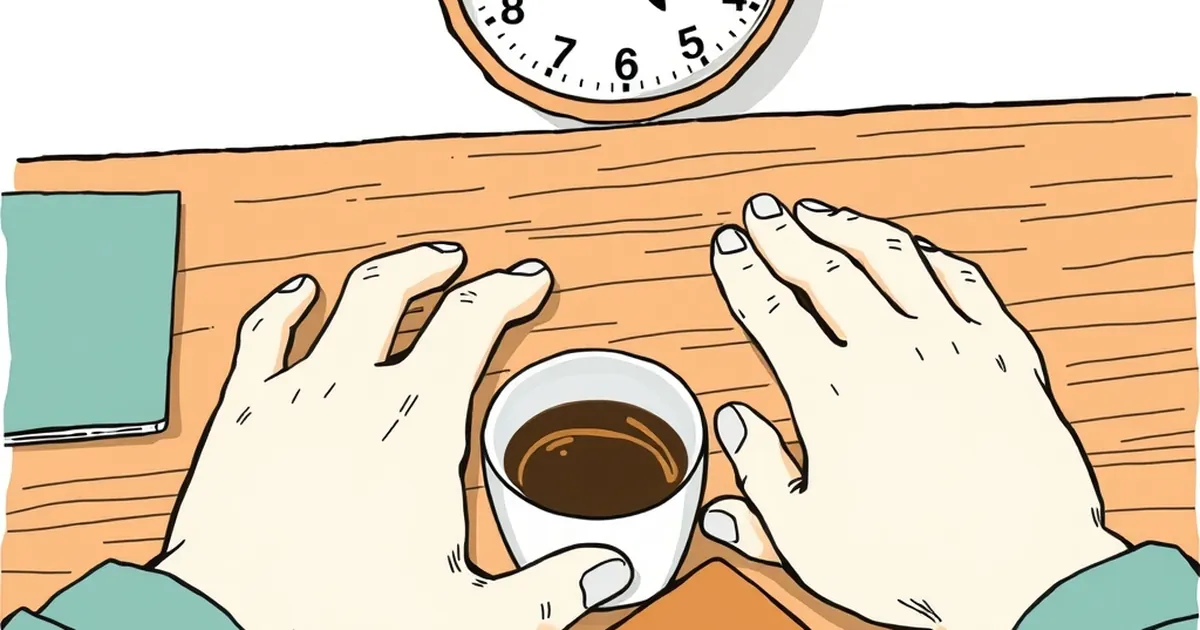
Your card gets declined at a train station kiosk in a city where you don't speak the language, and within ninety seconds you've opened your banking app, tapped through two screens, and approved a credit limit increase you'd quietly decided against two weeks earlier. What happened in those ninety seconds? Not a rational re-evaluation of your finances. Something closer to a reflex — the same reflex that payment networks, challenger banks, and buy-now-pay-later providers have spent two decades learning to speak to. The interesting question isn't whether frictionless payments are convenient. It's why a fifteen-minute delay, which costs almost nothing and blocks almost nothing, keeps outperforming the smarter-sounding alternative: trusting yourself to decide well in the moment.
The gap between your calm self and your tapped self
Behavioral economists have a name for the mismatch: hot-cold empathy gaps, described by George Loewenstein at Carnegie Mellon. In a cold state — sitting at your kitchen table, coffee in hand — you predict your future behavior with reasonable accuracy. In a hot state — hungry, embarrassed, late, or standing at a counter with a queue behind you — your preferences shift, and your memory of your cold-state intentions fades fast.
Card networks have effectively industrialized the hot state. One-tap checkout, stored credentials, tokenized cards that survive a lost wallet, and pre-approved limit increases delivered as a notification all shrink the distance between impulse and settlement. That's not a conspiracy; it's the natural endpoint of competing on conversion. But it means the decision architecture around your money is now optimized for the version of you that is least likely to be thinking clearly.
The counter-move that keeps showing up in research is almost embarrassingly simple: insert time.
What the cooling-off research actually shows
The strongest evidence for cooling-off periods doesn't come from payments at all — it comes from consumer protection law, where the concept has been tested at scale for decades.
The European Union's Distance Selling Directive, in force since the late 1990s, grants consumers a fourteen-day right of withdrawal on most online and off-premises purchases. The United States has a narrower version: the FTC's Cooling-Off Rule gives three business days to cancel certain door-to-door sales. The UK's Financial Conduct Authority went further in 2020, requiring firms to implement a twenty-four-hour delay before charging persistent credit card debt — a rule that measurably reduced interest charges for households that had been trapped in minimum-payment cycles.
Notice the pattern in all three cases. The delay isn't designed to stop the transaction. It's designed to stop the automatic transaction — to force the decision back into the cold state at least once. A fourteen-day window blocks almost no genuine purchase. It blocks the purchase you'd have regretted, which is a much smaller set.
There's a useful number buried in this: most people who use a cooling-off window never invoke it. The knowledge that the window exists changes behavior upstream. That's the part that gets lost when people dismiss cooling-off rules as bureaucratic friction.
Why fifteen minutes beats fifteen days for payments
Here's where payments diverge from retail. A fourteen-day return window works for a sweater because the sweater sits in your closet, unused, and returning it is a bounded action. It doesn't work for money you've already spent, because the money is gone and the merchant has been paid.
So the payment version of a cooling-off period has to sit before authorization, not after. And it has to be short enough that it doesn't break the transaction. Fifteen minutes is the number that keeps surfacing in fintech product research, and the reason is a small piece of arithmetic: a fifteen-minute delay is long enough to interrupt the physiological spike of a hot-state decision, and short enough that almost no legitimate purchase fails to complete.
Compare that to a fifteen-day delay, which would be absurd for a card authorization, or a fifteen-second delay, which is short enough that your thumb just waits it out.
The variable-ratio problem
There's a second reason short delays work better than people expect, and it comes from B.F. Skinner's work on variable-ratio reinforcement schedules. Skinner found that behavior reinforced on an unpredictable schedule — sometimes rewarded, sometimes not — is far more resistant to extinction than behavior reinforced every time.
Modern card products are, functionally, variable-ratio machines. Sometimes the tap works instantly. Sometimes it asks for a PIN. Sometimes it triggers a fraud check. Sometimes it offers a limit increase. That unpredictability is what makes the tap feel like a slot you keep pulling, and it's why "just be more disciplined" fails as advice. You're not fighting a single temptation; you're fighting an intermittent reward schedule that has been tuned to your specific behavior by a model you'll never see.
A fixed fifteen-minute delay does something specific here: it makes the schedule predictable. The reward is no longer intermittent. If the delay is consistent, your brain stops treating the tap as a variable-ratio pull and starts treating it as a scheduled event — which is the single most reliable way to reduce the behavior's grip.
The loss-aversion trap in "just wait"
Kahneman and Tversky's loss aversion finding — that losses loom roughly twice as large as equivalent gains — is usually cited to explain why people make bad financial decisions. It also explains why cooling-off advice often backfires.
If you frame a delay as "you might miss out on something," you trigger loss aversion against the delay itself. If you frame it as "you keep the option to buy in fifteen minutes," you don't. The transaction hasn't been blocked; it's been deferred. Nothing has been lost. The same fifteen minutes, framed differently, produces opposite behavior.
This is why the best-designed payment delays don't announce themselves as warnings. They don't say "are you sure?" — a question that itself triggers a hot-state defensive response. They just say "this will process in fifteen minutes," and they mean it.
A concrete example worth knowing
In 2021, the UK's FCA published data on its persistent-debt rules showing that firms which implemented a twenty-four-hour contact delay before charging interest on long-standing credit card balances saw measurable reductions in the number of accounts stuck in persistent debt — without a corresponding drop in overall card spending. Customers weren't buying less. They were paying down more. The delay didn't suppress activity; it redirected it.
That's the pattern worth internalizing. A well-placed delay doesn't reduce the volume of decisions. It changes which decisions get made.
What to build into your own setup
You don't need a regulator to install this. A few practical moves, ranked by how little they cost you:
Ask your issuer for a transaction notification delay. Most banks let you batch push notifications rather than sending them instantly. Batching turns a stream of micro-decisions into one daily review.
Separate the card you carry from the card that carries your limits. A low-limit physical card and a high-limit card kept out of your phone's wallet creates a natural fifteen-minute gap, because retrieving the second card is itself the delay.
Turn off one-tap for the categories where you know you're hot. Not all spending — that's the mistake people make, and it collapses within a week. Just the one or two categories where your cold self and your hot self disagree most.
Set limit increases to require a manual step. The notification that offers you more headroom is the single most effective hot-state trigger in modern banking. Making it a two-step process costs you nothing and blocks the reflex.
None of this requires willpower in the moment, which is the point. Willpower is a hot-state resource, and you're using it against a system designed by people who study hot states for a living. The delay is a cold-state resource. It works while you're not paying attention.
The forward-looking version of this is that payment design is slowly converging on the same insight consumer protection law reached thirty years ago: the most effective intervention isn't a wall, it's a pause. As real-time settlement becomes the default across more markets, the firms that win trust won't be the ones that shave another two hundred milliseconds off authorization. They'll be the ones that figure out where to deliberately put the milliseconds back.