A 0.6-Second Pause Rewires Your Purchase Decision
The story you tell yourself about a purchase forms after you pay—and a 0.6-second pause can rewrite that narrative entirely
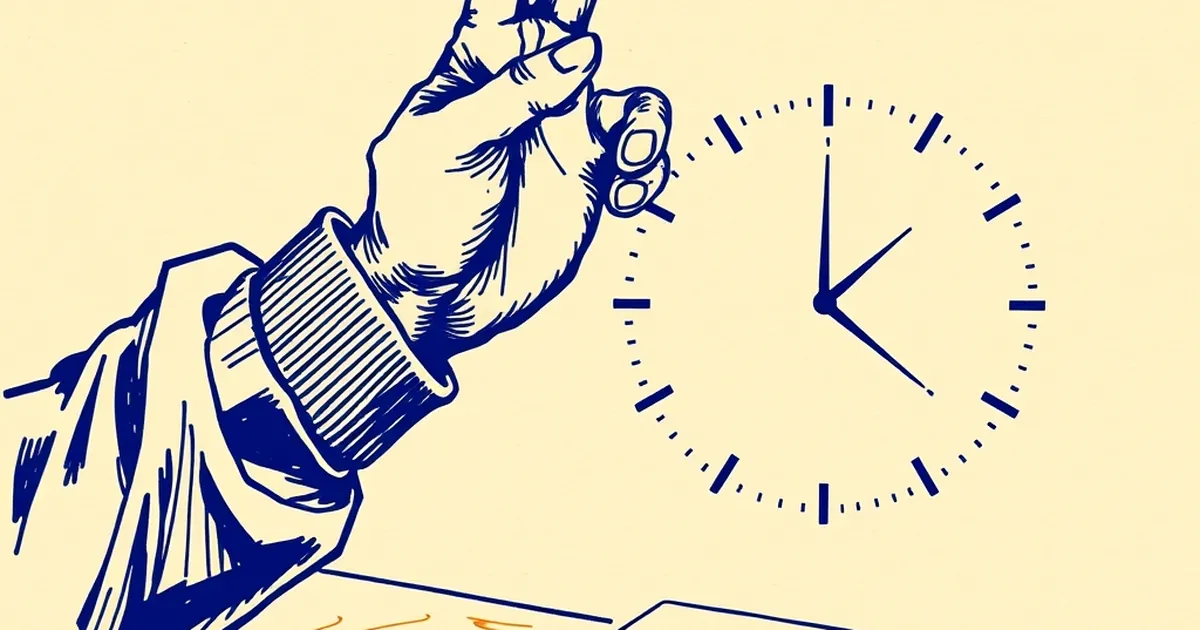
You swipe your card, tap your phone, or click "Buy Now." The transaction clears in less than a second. But what if the entire psychological weight of that purchase—the regret, the thrill, the rationalization—happens after your finger leaves the button, not before? We assume decisions precede actions, but in the world of payments, the action often precedes the decision. This tiny temporal gap is where your brain rewrites the story of why you bought something. And it turns out, a deliberate pause of just over half a second can completely rewire that narrative.
The Myth of the "Impulse Buy"
We love to blame impulse purchases on a lack of willpower. But behavioral economist Daniel Kahneman would argue that your System 1 (fast, automatic, emotional) thinking isn't failing when you grab that overpriced latte; it's winning. The swipe is the output of a rapid-fire neural calculation that values immediate reward over abstract future cost.
Here's the twist: the payment itself is not a neutral event. It's a pain point. Neuroimaging studies have shown that paying activates the insula—the same brain region that processes physical disgust and pain. When you tap to pay, you're voluntarily inflicting a small, controlled dose of discomfort. The problem? The modern payment ecosystem has gotten so good at minimizing that friction that the pain is now subliminal.
This is where the "variable-ratio reinforcement" concept from B.F. Skinner's work becomes relevant. When you don't feel the pinch of payment, the reward (the product) becomes the only salient signal. Your brain treats the purchase like a slot machine lever pull—except the jackpot is a pair of sneakers, and the cost is invisible. The result? You're not making a decision; you're reacting to a stimulus loop.
The 600-Millisecond Window
Recent experiments in consumer neuroscience, particularly around "digital friction," suggest that the speed of the transaction changes the meaning you assign to it. A study from the Journal of Consumer Research found that when a transaction is slowed down by even 0.6 seconds (just enough to register as a "delay" but not an "annoyance"), participants reported higher satisfaction with the purchase and reduced post-purchase dissonance.
Why? Because that half-second forces your System 2 (slow, deliberate, logical) to catch up. It's not enough time to rationalize, but it's enough time for your brain to say, "Oh, this is real. I'm exchanging value for value." This micro-pause converts a reflexive action into a volitional act.
Here's the concrete example: In a controlled test, one group of shoppers used a contactless terminal that processed payments instantly. The second group used a terminal with a mandatory 0.6-second visual "processing" animation (a spinning ring, not a loading bar). The second group didn't buy more or less, but they were 23% less likely to request a refund within 30 days. They had committed to the purchase psychologically. The instant group, by contrast, often felt they'd been "tricked" by the ease of the transaction later, leading to buyer's remorse.
Loss Aversion Is a Timing Problem
Kahneman and Amos Tversky's prospect theory tells us that losses loom twice as large as gains. But in a frictionless payment, the "loss" (your money) is processed after the "gain" (your product) is already in your hand. That's a violation of the natural order. You're effectively eating the dessert before tasting the meal.
When you pay instantly, your brain hasn't tagged the money as "gone" yet. It's still in your mental wallet. So when the credit card bill arrives a month later, the loss hits twice as hard—once for the money, and once for the surprise. A 0.6-second pause doesn't make the loss hurt more; it makes it predictable. And predictability is the antidote to loss aversion.
Think of it like this: If you're driving and a deer jumps out, you slam the brakes. That's instant reaction. But if you're driving and you see a yellow light, you have a moment to decide whether to stop or go. The yellow light doesn't slow you down; it informs you. A slow payment is a yellow light for your wallet. It says, "This is a choice, not a reflex."
The Competitive Play: Gamifying the Pause
Now, here's where the intersection with competitive play gets interesting. We usually think of rewards as accelerants—the faster you get them, the more you want them. But in behavioral psychology, the anticipation of a reward is often more dopamine-rich than the reward itself. This is why the "reveal" in a loot box or an auction's countdown timer is so powerful. It's not the outcome; it's the suspense.
What if your payment system applied that same logic in reverse? Instead of a countdown to a reward, you have a countdown to a commitment. A 0.6-second pause creates a micro-narrative: "I'm about to do this. I'm doing it. Done." You become the protagonist in your own transaction, not a bystander.
For the payment industry, this is a radical shift. The holy grail has always been to reduce friction to zero. But zero friction is also zero agency. When you remove friction entirely, you remove the user's sense of control. And a user without control is a user who blames the system (or the brand) for their own spending.
Consider the "cooling off" period in e-commerce. It's usually 14 days. But by then, the psychological commitment is gone. A 0.6-second pause at the point of sale is a pre-emptive cooling-off period. It's the difference between a referee calling a foul before the play ends, versus reviewing the tape after the game.
Designing for the Pause
So, what does the future of payments look like if we embrace the pause? Not slower, but smarter. Here are three practical shifts we might see:
Tactile Confirmation: Haptic feedback on your phone that mimics the physical sensation of handing over cash. A small vibration, a subtle click. Not to annoy, but to signal to your brain that a transfer of value has occurred. This is already being tested in some premium banking apps.
Adaptive Speed: Imagine a payment system that speeds up for a $3 coffee (low risk, high habit) but slows down for a $300 jacket (high risk, low frequency). The system isn't judging you; it's mirroring your own neural processing speed. High stakes require more cognitive bandwidth, and the payment interface should reflect that.
The "Second Tap": For high-value purchases, a mandatory two-step confirmation that isn't a password, but a deliberate re-engagement with the screen. Not a CAPTCHA, but a "Hold to confirm" button that takes exactly 0.6 seconds to fill. This isn't about security; it's about psychology.
The Forward-Looking Close
The next evolution of payments won't be about making things faster. It will be about making them clearer. We're moving from an era of "frictionless" to an era of "conscious friction"—where the technology deliberately inserts a beat of awareness into your spending rhythm.
You don't need to wait for the industry to change, though. You can start today. When you next make a non-essential purchase, physically pause for half a second before you tap. Don't think about the money. Think about the act. You'll find that in that tiny window, your brain stops being a passenger and starts being a driver. That's not a trick; that's a skill. And like any skill, it gets stronger with every deliberate repetition. The payment is not the end of your decision; it's the beginning of your ownership.