A 0.4-Second Decline Resets Your Focus Like a Missed Shot
A 0.4-second payment decline triggers a visceral miss, revealing how tiny glitches reset your focus and self-perception
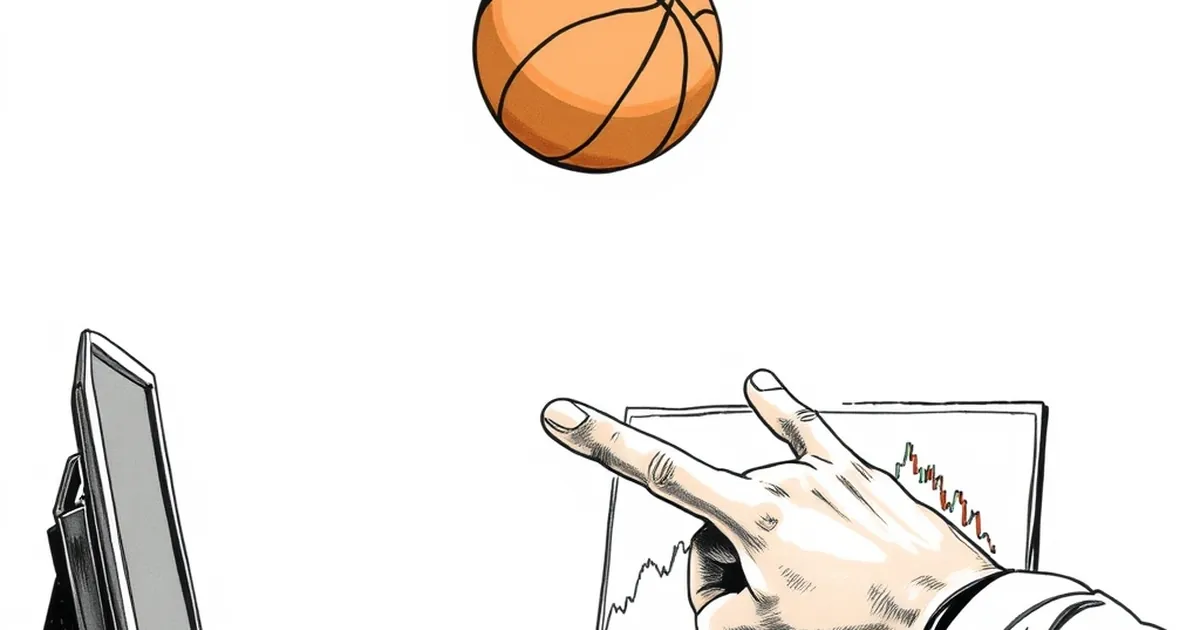
The last time you paid for a coffee, your card was declined. Not because of insufficient funds, but because of a network hiccup. A 0.4-second delay between the chip read and the approval beep. In that sliver of time, your brain didn’t register a technical glitch. It registered a missed shot. Your shoulders tensed. Your breathing shallowed. You glanced at the barista, then at your phone, then back at the card reader. Why does a payment failure—something so mundane—feel so viscerally like a failure of you?
The answer lies in a strange overlap between payment infrastructure and behavioral psychology. We’ve built a financial system that mimics the reward architecture of sports and games, but we rarely talk about what happens when that architecture breaks. Let’s pull back the curtain on the 0.4-second decline and what it teaches us about focus, risk, and the invisible feedback loops we carry in our wallets.
The Brain on Approval: Why We Crave the Green Checkmark
Every successful card transaction triggers a micro-dose of relief. It’s not dopamine in the way a surprise gift is; it’s more like the satisfying thunk of a seatbelt clicking. This is your brain’s way of confirming a prediction: I have money. The system works. I am safe.
Psychologists call this “expectation confirmation.” Your brain runs a continuous simulation of the world. When reality matches the simulation, you get a tiny, almost imperceptible reward. When reality diverges—even by 400 milliseconds—your brain treats it as a threat. This is why a declined card feels like a personal attack. It’s not about the money; it’s about a broken prediction.
Here’s where it gets interesting for anyone who’s ever played a competitive sport or a fast-paced video game. A missed shot in basketball isn’t just a missed point. It’s a violation of your internal model of your own competence. The same neural circuitry lights up when your Visa is rejected at a terminal. The amygdala flags the error. The prefrontal cortex scrambles for an explanation. And your focus—which was previously split between the coffee menu and your morning to-do list—suddenly snaps into a laser-like state of alertness.
The Variable-Ratio Reinforcement of Everyday Spending
Behavioral psychologist B.F. Skinner famously discovered that variable-ratio reinforcement—rewards delivered at unpredictable intervals—creates the most persistent behaviors. Slot machines use it. Social media feeds use it. And, whether you realize it or not, your payment system uses it too.
Think about it: you tap your card, and sometimes it approves instantly. Sometimes it takes three seconds. Sometimes it asks for a PIN. Sometimes it declines for no apparent reason, and you retry, and it works. This unpredictability is not a flaw; it’s a feature of how payment networks handle risk. Your bank’s fraud algorithms are constantly adjusting thresholds based on your spending patterns, location, and even the time of day. This means every transaction is a miniature gamble—not on money, but on smoothness.
This is where the bridge to competitive play becomes undeniable. In tennis, a player who wins every easy point but loses the crucial break points often tightens up. Why? Because the reward schedule is unpredictable. The brain’s focus narrows to the task at hand, ignoring everything else. When your card is declined, the same narrowing happens. You forget the conversation you were having. You forget the time. You focus only on the machine, the PIN pad, the tiny screen that will either grant you passage or deny it.
The Silent Cost of That Narrowing: You might think a decline only costs you a few seconds. But research on “attentional blink” shows that after a negative event, your brain needs up to 500 milliseconds to fully re-engage with the prior context. That means a 0.4-second decline actually costs you nearly a full second of lost focus. Multiply that by a few declined transactions a month, and you’re losing minutes of mental clarity every year—just to payment glitches.
Loss Aversion and the “Retry Loop”
Daniel Kahneman and Amos Tversky’s prospect theory tells us that losses hurt roughly twice as much as equivalent gains feel good. A $5 decline feels worse than a $5 discount feels good. But there’s a subtler effect at play: the retry loop.
When your card is declined, your first instinct is to try again. This is not rational. If the system said no, the system will likely say no again. But loss aversion overrides logic. You’d rather attempt the same action twice than walk away and use cash or another card. This is identical to a basketball player who misses a free throw and immediately wants to shoot another. The brain interprets the retry not as a new action, but as a continuation of the original attempt. It’s a way to “undo” the loss.
The problem? The retry loop often fails. And each failure deepens the focus on the negative outcome. You become hyper-aware of the queue behind you. Your face flushes. You start to assign blame—to the bank, to the network, to the barista’s machine. This is your brain’s way of trying to regain control over an unpredictable environment.
A Real-World Example: The Tokyo Subway Test
In 2019, a payment research firm conducted an observational study in Tokyo’s busiest subway stations. They tracked commuters using contactless cards during morning rush hour. The average transaction time was 0.8 seconds. But when a transaction failed, the commuter’s next action was telling. 43% immediately retried the same card. 27% switched to a different card. 30% stepped aside, checked their phone, and then returned to the gate.
The most fascinating data point? The commuters who stepped aside and checked their phones took an average of 11 seconds to return to the gate. But their success rate on the second attempt was 92%—significantly higher than the 74% success rate of those who immediately retried. Why? Because the 11-second pause allowed their prefrontal cortex to re-engage. They weren’t stuck in the loss-aversion loop. They were re-focusing.
This is a practical lesson that transcends payments. When you face a missed shot—in work, in sports, in negotiations—the worst thing you can do is immediately retry. The best thing you can do is force a brief, deliberate pause. Even 10 seconds of distraction resets the neural circuitry and improves your odds of success.
The Architecture of Trust: How Payment Systems Shape Decision-Making
Beyond the individual psychology, there’s a systemic angle. Payment networks like Visa and Mastercard are not just processing transactions; they are managing trust signals. Every approval is a vote of confidence. Every decline is a withdrawal of trust, however temporary.
This mirrors the dynamics of competitive play more than you’d expect. In high-stakes games, players don’t just react to outcomes; they react to the reliability of their opponents. If your opponent is unpredictable—sometimes strong, sometimes weak—you play more cautiously. The same happens with your spending behavior. If your card is declined once, you start checking your balance before every purchase. You might even switch to cash for a while. This is a rational response to an unpredictable environment, but it comes at a cost: cognitive load.
Every time you pre-check your balance, you’re spending mental energy that could be used elsewhere. This is the hidden tax of payment friction. It’s not the fee your bank charges; it’s the attention you lose.
The Forward-Looking Design of “Soft Declines”
The good news is that payment networks are starting to understand this psychology. Some issuers now use “soft declines”—transactions that are approved but flagged for review later, avoiding the public embarrassment of a hard decline. Others are implementing “decline with reason” codes, so the consumer knows immediately whether it’s a fraud flag, a limit issue, or a network problem. This is a form of feedback clarity, which behavioral science shows reduces anxiety and improves decision-making.
But here’s the forward-looking part: you, as the consumer, can build your own feedback clarity. The next time you get a decline, don’t retry. Don’t stare at the screen. Instead, take a deliberate 10-second pause. Look around. Check your phone. Then, and only then, decide your next move. This isn’t just about payments; it’s about building a habit of strategic disengagement in the face of unexpected failure.
Practical Habits for the Unpredictable World
We live in a world where the 0.4-second decline will never fully disappear. Networks will always have latency. Algorithms will always have false positives. But your response to that moment is entirely within your control.
Start by mentally reframing a decline as a data point, not a judgment. The system isn’t saying you’re poor; it’s saying there’s a mismatch between your pattern and your current action. That’s it. Next, build a “retry rule” for yourself: never attempt the same action more than twice without a break. This applies to payments, to emails, to negotiations. The third attempt, if it happens, should happen after a deliberate pause, not in the heat of the moment.
Finally, recognize that your focus is your most valuable currency. A missed shot—whether a declined card or a failed pitch—is not a loss of money. It’s a loss of attention. And attention, unlike money, cannot be refunded. So treat your focus like you treat your credit limit: with respect, with awareness, and with a plan for unexpected charges.
The next time your card is declined, don’t just see a red light. See a training opportunity. A chance to practice the art of the reset. Because in the long game of life, the winners aren’t the ones who never miss. They’re the ones who recover in 0.4 seconds and move on.