A 0.4-second chime beats a 30-day compounding chart
Why instant payment chimes feel more real than monthly interest statements, and what that asymmetry reveals about modern money design
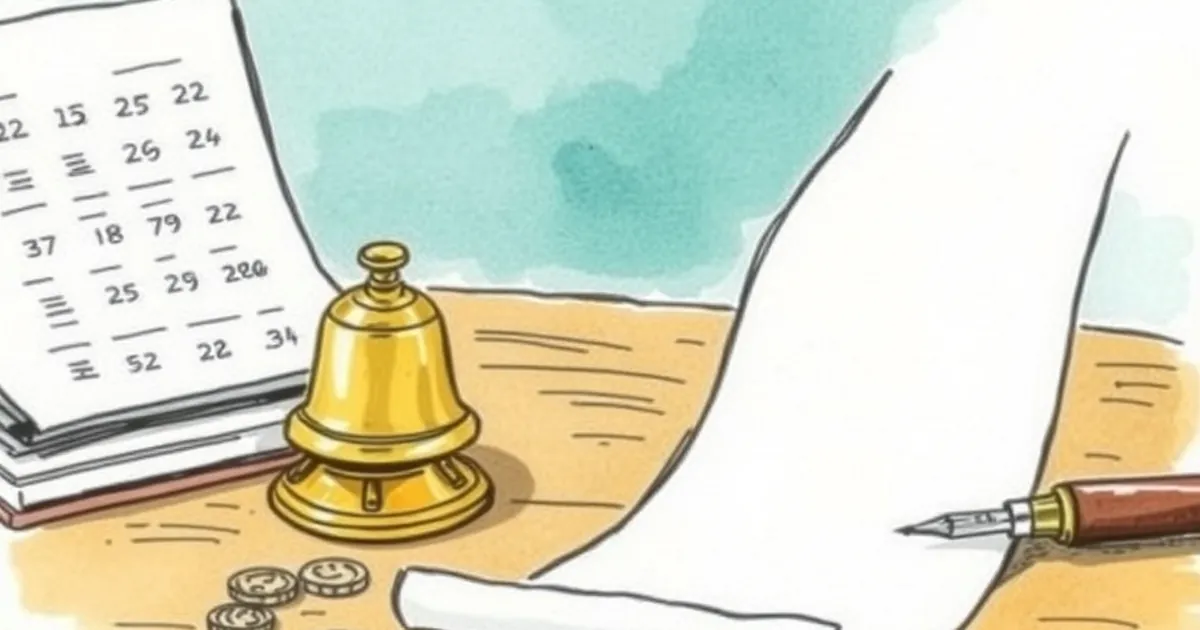
Why does a push notification about a $4.20 coffee purchase feel more real than a statement showing you earned $38 in interest over the past month? Both are numbers about your money. One arrives with a sound and a vibration. The other arrives as a PDF. The question worth sitting with is not which one is more useful, but why the payment networks, banks, and fintech apps have collectively decided that the tiny, instant signal deserves the engineering budget.
The asymmetry that payments was built on
Every card transaction is a two-message conversation. Authorization happens in under a second; clearing and settlement can take a day or two. That gap is not an accident of legacy plumbing alone. It reflects a design choice made decades ago and reinforced ever since: the part of the system the customer experiences must feel instantaneous, and the part that moves the actual money can wait.
Visa and Mastercard built their brands on the first half of that sentence. A declined card at a checkout counter produces shame in about 1.2 seconds. A settled transaction produces a line item you will never look at. The networks know which moment shapes consumer behavior, and they have spent enormous sums making sure that moment is smooth, fast, and accompanied by a satisfying little confirmation.
This is not cynicism. It is an accurate reading of how human beings process reward.
What the chime is actually doing
B.F. Skinner's work on operant conditioning gave us the term variable-ratio reinforcement: a reward delivered after an unpredictable number of actions produces the most persistent behavior of any schedule. The slot machine metaphor gets overused, but the underlying mechanism shows up everywhere payments touch consumer life — cashback offers that appear on some purchases and not others, "you've unlocked a reward" banners that arrive without warning, round-up savings that occasionally surface a milestone.
The chime is not the reward. The chime is the marker that a reward might have occurred. That distinction matters, because it explains why fintech apps invest so heavily in the notification layer while treating the ledger as an afterthought. A ledger is a record. A notification is an event. Brains are built for events.
Kahneman and Tversky's work on loss aversion adds a second layer. Losing $20 hurts roughly twice as much as gaining $20 feels good. So when an app tells you immediately that a charge went through, it is doing something subtle: it is converting a slow, abstract loss (money leaving your account over the next 48 hours) into a fast, concrete one you can react to. Some apps use this to prompt you to dispute. Others use it to prompt you to budget. The mechanism is the same.
The 30-day compounding chart problem
Now consider the other side. You deposit $5,000 in a high-yield savings account at 4.5% APY. Over a month, that earns you roughly $18.75. On a statement, that shows up as a single line. In a compounding chart, it shows up as a slightly steeper slope than last month.
Neither of those things produces a chime.
There is a real, measurable gap here, and the industry has a name for it: the "interest invisibility" problem. Behavioral economists studying savings products have found that when people can see interest accrue in real time — even in tiny increments — they save more and check balances more often. When interest arrives as a monthly or quarterly lump, engagement collapses. The number is the same. The perception is not.
Some neobanks have tried to solve this with daily interest displays, animated counters, and "you earned $0.61 today" notifications. The results are mixed but instructive. Users who receive daily micro-notifications about interest tend to keep more money in the account. Users who receive only monthly statements tend to treat the account as a parking lot.
The lesson is uncomfortable for anyone who believes in rational financial behavior: the format of the information changes the behavior, even when the underlying economics are identical.
Where this gets genuinely interesting
The payments industry is now in the middle of a quiet experiment. Open banking rules in the UK, EU, and increasingly the US are forcing banks to expose account data in real time. That means a third-party app can now show you, live, the moment interest posts, the moment a subscription renews, the moment a paycheck lands. The chime economy is expanding from spending into saving.
There are two plausible futures here.
One: the notification layer becomes the primary interface for personal finance, and the ledger becomes a backend detail. Your relationship with your money is mediated by a stream of small, timely signals. This is already true for a large chunk of younger users, who check their banking app the way previous generations checked a mailbox.
Two: notification fatigue sets in, users mute everything, and the industry is forced to invent a new form of signal — something that carries the emotional weight of a chime without the annoyance of a buzz. Some European banks are experimenting with haptic feedback patterns that differ by transaction type. Others are testing ambient indicators: a small light on a physical card that changes color based on spending pace.
Both futures share a premise worth naming. The 0.4-second chime is not a gimmick. It is a solution to a real cognitive problem: human beings are terrible at feeling slow, abstract, cumulative change. Compounding is one of the most powerful forces in finance, and it is almost completely invisible to the nervous system.
What to do with this
If you work in payments, product, or financial design, the practical implication is not "add more notifications." It is "decide which moments deserve a signal and which deserve silence." A chime for every transaction trains users to ignore all of them. A chime for the moments that actually change behavior — a subscription you forgot about, a savings milestone, a fee you did not expect — retains its power.
If you are simply someone with a bank account, the implication is different. The 30-day compounding chart is not going to get more emotionally satisfying, no matter how well it is designed. That is a feature of your brain, not a flaw in the chart. The workaround is to build your own signal: a monthly ritual, a calendar reminder, a screenshot you actually look at. Something that converts the slow accrual into an event you can feel.
The chime will keep winning by default. It was engineered to. The compounding chart only wins if you decide, deliberately, to give it a sound.