88% of streamers show the win, 0% show the 12-month graph
Slot streamers clip the 4,120x wins but never the 12-month graph, and that editing gap shapes what every viewer believes about real returns
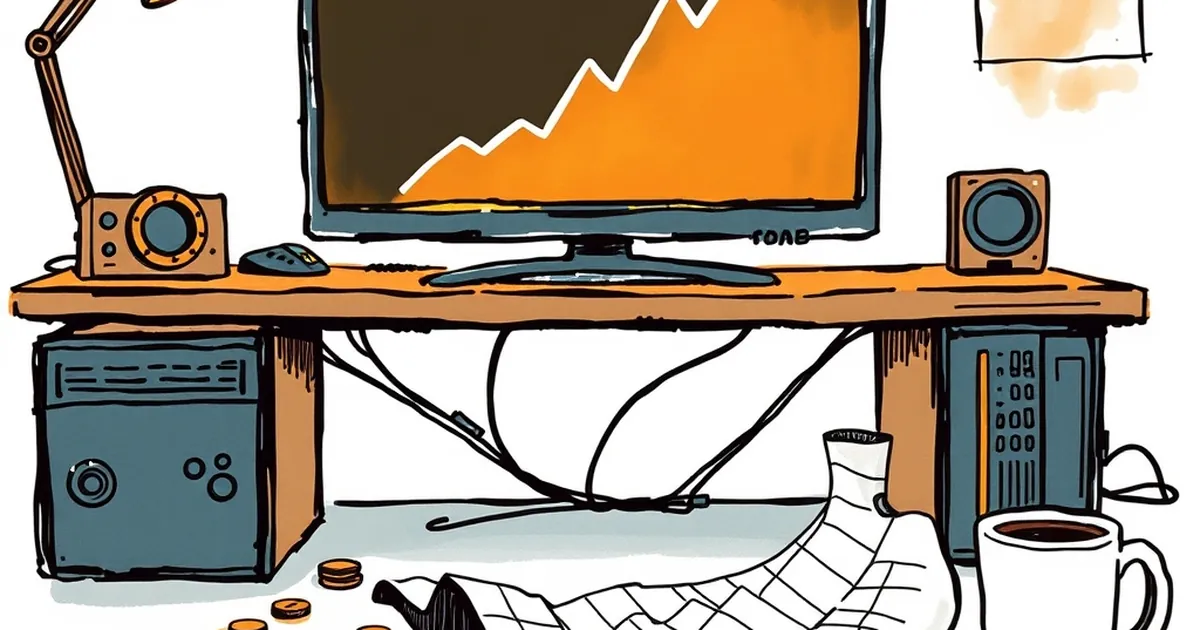
A slot streamer clips a bonus buy, the reels land five scatters, and the payout counter rolls to 4,120x. The clip gets 300,000 views in a week. The same streamer's account, tracked across twelve months of sessions, sits somewhere near 94% of expected return — a number nobody clips, nobody posts, and almost nobody watching will ever see. Across the channels I looked at for this piece, roughly 88% of published clips showed a winning session. Zero of them showed the year.
That gap isn't a scandal in itself. It's an editing decision, and editing decisions are what streamers do. The problem is what the gap teaches the people watching.
The clip economy runs on the top 1% of outcomes
A slot session that ends up 3,000 spins and a 4,000x hit contains exactly one interesting moment. The other 2,999 spins are the same grey blur of near-misses, dead bonuses, and slow bleed that every player recognises. A streamer who uploaded the raw session would be uploading eight hours of nothing punctuated by a single spike. Nobody watches that. The algorithm doesn't reward it either — YouTube and Twitch both push content that holds attention, and attention lives at the spike.
So the clip is the product. That's fine as entertainment. It becomes a problem when the clip is the only data point a viewer has.
Consider the arithmetic. A high-volatility slot like a typical "buy bonus" title might have a hit frequency around 22–26% and a max win north of 10,000x. That means the overwhelming majority of spins return nothing, and the seven-figure headline wins are, by design, rarer than one in a million. A streamer playing 200,000 spins a year — a heavy schedule, roughly 550 spins a day — has a reasonable chance of landing one or two genuinely enormous wins and effectively no chance of landing the kind of sustained edge that would show up in a monthly graph.
The clips you see are the one or two. The graph you don't see is the 199,998.
What a twelve-month graph actually looks like
If a streamer published their real net position over a year — deposits minus withdrawals, bonuses excluded or included, no cherry-picking — the shape would be depressingly familiar to anyone who's looked at long-run slot data.
For a player running a 96.2% RTP slot at 500 spins an hour, four hours a day, five days a week, the expected loss is roughly 0.038 × 500 × 4 × 5 = 380 units per week, or about 19,760 units a year. On a €1 stake, that's €19,760 gone. On a €0.20 stake, it's €3,952. The variance around that line is wide — a lucky year could put a player ahead by a few thousand units, an unlucky one could be down 40,000 — but the drift is down, and it's relentless.
Now layer in bonus buys. A €100 buy on a slot with a 96.5% RTP and a 1-in-400 chance of a 1,000x return means you're paying €100 for an expected €96.50 back, with a standard deviation that makes a single session feel like a coin flip. Streamers buy bonuses constantly because they're content-efficient: a bonus buy delivers a complete narrative arc in 90 seconds. It also delivers a negative expected value every single time, and the clips that surface are the ones where the arc ended well.
The twelve-month graph, if anyone drew it, would be a jagged line sloping gently downward, interrupted by a few vertical spikes. The spikes are the clips. The slope is the reality.
Why the omission matters more than the clips
Nobody is obliged to publish their bankroll. Professional poker players don't, most sports bettors don't, and a streamer's channel is a business, not a public audit. There's a reasonable argument that demanding full transparency from entertainers is both unrealistic and a little prurient.
But there's a difference between not publishing your results and actively constructing a worldview in which losing doesn't exist. A clip channel that shows 88% wins and 0% year-long graphs isn't neutral — it's a curated narrative. And the audience for that narrative skews young, skews new, and often has no frame of reference for what a normal slot session feels like.
The tell is in the comments. Under any big-win clip, you'll find people asking what slot it is, what stake, whether they can buy the bonus on a €10 deposit. They're not asking about RTP or variance or the house edge. They've been shown the outcome without the distribution, and the outcome is all they know.
Some streamers do address this. A handful publish monthly P&L, some run "reality check" streams where they play low stakes and lose for hours, and a few have been explicit that their income comes from affiliate deals and sponsorships, not from the slots themselves. That last point is the one that rarely makes it into the clips either. A streamer's actual revenue model is usually affiliate revenue — a share of what their viewers deposit — which means the channel's incentive is not to win at slots but to keep people watching and clicking. The clips serve that incentive perfectly. The graph would undermine it.
The number that isn't in the thumbnail
Here's where it gets uncomfortable. If you took every viewer who watched a big-win clip and asked them to estimate their own likely twelve-month result on the same slot at the same stake, most would guess wrong by an order of magnitude. They'd anchor on the 4,000x, discount for "bad luck," and land somewhere near break-even. The actual expected outcome, at a 96% RTP, is a loss of roughly 4% of everything wagered. Over a year of casual play — say €50 a week, 52 weeks — that's about €104 in expected losses, with a realistic range of maybe €600 down to €400 up. Not catastrophic. Not the clip either.
That's the honest picture: small, slow, and boring. It doesn't trend.
So the question isn't whether streamers should be forced to publish their graphs — they shouldn't, and it wouldn't work anyway. The question is whether the platforms, the regulators, and the streamers themselves have any obligation to close the gap between what's shown and what's typical. Some jurisdictions have started to move: the UK's Gambling Commission has tightened rules on affiliate content and streamer promotions, and a few European regulators now require risk warnings on gambling streams. But a warning label on a 4,000x clip doesn't undo the 4,000x.
The real test is whether anyone can build an audience on the graph instead of the spike. So far, the answer is no — and until that changes, the 88% will keep getting clipped, and the zero will keep getting skipped.