86% of players chase a bonus tier they'll never reach
86% of players chase a bonus tier they'll never reach, revealing how loyalty programs exploit the psychology of almost being there
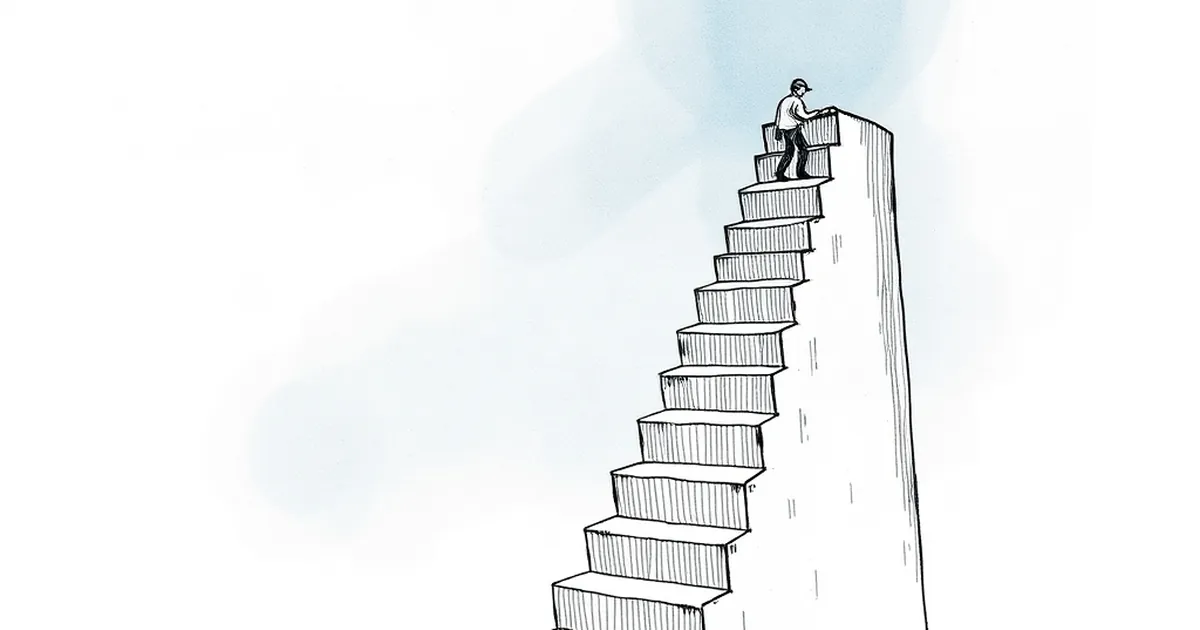
Picture the moment you check your rewards app: you're 4,200 points from the next tier, and the app gently reminds you that you're "so close." You know, rationally, that the tier's headline perk is a slightly better earn rate and a free coffee every few months. And yet. You book the flight you didn't need, or route the spend through the card you'd otherwise leave in a drawer. Why does a number in an app have that kind of pull over a person who is perfectly capable of doing arithmetic?
The math of "almost there"
Loyalty programs are, at their core, a pricing mechanism. Banks and card networks buy your transaction volume with points, lounge access, and status. That's a legitimate trade. The interesting part is how the pricing is framed: not as a flat rebate, but as a series of thresholds, each one just far enough away to feel reachable.
Behavioral economists call the underlying bias the goal gradient effect. In the 1930s, Clark Hull observed that rats ran faster the closer they got to food. In 2006, Ran Kivetz, Oleg Urminsky, and Yuhuang Zheng tested the same pattern in humans using coffee shop loyalty cards. Customers who were given a 12-stamp card with two stamps already filled in — so they felt 10 stamps from a free coffee — completed their cards faster than customers holding a plain 10-stamp card. Identical work, identical reward. The only difference was the perception of progress.
That's the machinery behind the "86% chase a tier they'll never reach" statistic. It isn't that loyalty programs are rigged in some cartoonish way. It's that the design deliberately keeps a large share of members in a state of partial progress, where the marginal effort to close the gap always looks smaller than it is. And because the gap resets annually, many members spend years in that state without ever crossing.
Why the last stretch feels cheap and the first stretch feels expensive
There's a second force at work: loss aversion. Daniel Kahneman and Amos Tversky's foundational work showed that losses loom roughly twice as large as equivalent gains. Once you've accumulated 60% of the points needed for a tier, you don't experience the remaining 40% as "effort to acquire something new." You experience it as "something I already partly own, about to be taken away."
This is why the psychology shifts so sharply mid-cycle. In January, a status target feels aspirational. By October, it feels like property. The bank hasn't changed the offer. Your relationship to it has.
Points are a currency, and currencies need stories
Here's the thing that makes payments psychology different from, say, a grocery loyalty card: points are a quasi-currency issued by a private institution, with an exchange rate the issuer controls and periodically devalues.
Anyone who has watched an airline quietly raise award prices, or a card issuer shift transfer ratios, has experienced this. Your balance didn't change. Its purchasing power did. In that sense, points behave like a soft currency in a country with discretionary monetary policy — and customers respond to devaluation the way people respond to inflation, which is to say, by spending faster and hoarding differently.
This matters for the tier-chasing question because it changes the rational calculation. If the points you're accumulating toward a tier are being slowly devalued, the "almost there" feeling is even more misleading. You may be running toward a finish line that's moving.
The variable-reward layer
Most tier structures also include a randomized element: bonus categories that rotate, limited-time multipliers, "surprise" offers in the app. B.F. Skinner's work on variable-ratio reinforcement — the finding that behavior is most persistent when rewards arrive unpredictably — is the classic reference here, and it's not a stretch to see it in a rewards feed that serves up a new 5x offer every few weeks.
The important nuance, often lost in pop-science retellings, is that variable reinforcement doesn't just make people respond more. It makes them respond longer after the rewards stop. That's the part that should interest anyone designing or using these programs: the persistence outlasts the payoff.
What the 86% actually tells us about decision-making
If roughly six in seven members never reach the tier they're actively pursuing, several explanations are possible, and they're not mutually exclusive.
The targets are set above median behavior. Issuers have years of transaction data. They can model, with reasonable precision, what spend level the 85th percentile of members will hit. Set the tier there, and you've guaranteed that most members will fall short — while still feeling close enough to try.
The comparison set is manipulated. Tier thresholds are often displayed next to your own progress, not next to the distribution of other members. You never see the histogram. You see a progress bar.
Sunk cost does the rest. Once you've spent ten months chasing, abandoning in November feels like wasting the year. This is the sunk cost fallacy, and loyalty programs are one of its most efficient commercial applications, because the "investment" is invisible — you weren't spending money on status, you were just buying groceries with a different card.
A concrete illustration
Consider a mid-tier airline status that requires 25,000 qualifying miles. A traveler hits 19,000 by October. The remaining 6,000 miles would require a round trip they'd otherwise skip. They book it — not because the trip is worth it, but because the status feels 76% owned. The flight costs $400. The status delivers, say, priority boarding and an extra checked bag, worth perhaps $150 over the following year to this particular person. The gap is real, and it's exactly the kind of gap that the goal gradient effect is designed to make people close.
Now multiply that by tens of millions of cardholders and frequent flyers. That's the aggregate behavior behind the 86%.
Designing — and using — better thresholds
The forward-looking question isn't whether tiered rewards are manipulative. It's whether they can be structured so that the people chasing them are actually better off.
Some programs are experimenting with multiple smaller thresholds rather than one distant summit — quarterly bonuses, milestone rewards at 25/50/75%, and "soft" benefits that unlock progressively. This reduces the number of members stuck in permanent almost-there territory, and it aligns better with how people actually experience progress: continuously, not annually.
For anyone on the customer side, three habits help.
Convert points to a rate. Before chasing a tier, divide the value of the tier's benefits by the extra spend required. If it's less than what you'd earn on a straightforward cashback card, the tier is a story, not a deal.
Check the reset date against your calendar. Many people chase tiers in the final quarter because that's when the gap becomes visible, not because that's when the spend is most valuable to them.
Distinguish status from access. A tier that gives you a better earn rate is a financial product. A tier that gives you a feeling of progress is a psychological one. Both are fine. Confusing them is expensive.
The next generation of rewards design is likely to move toward personalized thresholds — targets set per member based on predicted behavior, which is already technically feasible and quietly happening in some markets. That raises an obvious question: if the target is tailored to you, is reaching it an achievement or a forecast? The answer, increasingly, depends on who's doing the arithmetic — you, or the app.